By Yifan Yang
In the turbulent decades following 1949, a number of Chinese Communist troops attempted to escape to Taiwan by air or sea, often risking their lives to flee what they viewed as an oppressive system. Among these cases, an incident in early 1966 remains one of the most dramatic—and the most tragic.
On the night of Jan. 8, 1966, three soldiers from a coastal defense unit under the PLA’s Fuzhou Military Region seized control of a small landing craft and drove it toward the Nationalist-held Matsu Islands. Hours later, their defection triggered a chain of decisions in Beijing that would end with a Taiwan-bound transport plane shot out of the sky, resulting in the death of all 17 people aboard.
Declassified documents later indicated that Premier Zhou Enlai personally authorized the interception.
A desperate escape and a deadly decision
According to historical records, the incident began when landing craft F131, a 50-ton vessel carrying supplies from Fuzhou’s Mawei port toward Xiapu, made its night crossing with ten men aboard. Sailing under blackout rules near the Matsu area, the crew expected an uneventful run.
Success
You are now signed up for our newsletter
Success
Check your email to complete sign up
Instead, three soldiers—Wu Wenxian, Wu Zhenjia, and Wu Chunfu—opened fire, killing their captain Gan Jiulang and six others. They then steered the vessel straight toward Matsu, where the Republic of China controlled the islands.
News of the defection quickly reached the top of the CCP leadership. Through internal channels, Beijing learned that Taiwan planned to send an aircraft the next morning to bring the three men back. The Fuzhou Military Region proposed intercepting the plane over the Taiwan Strait.
The Central Military Commission approved the operation.
Zhou Enlai, according to the documents, gave a terse assessment: “If we are certain and conditions are favorable, shoot it down. If not, it isn’t essential—but we must not take losses.”
The shootdown over the Taiwan Strait
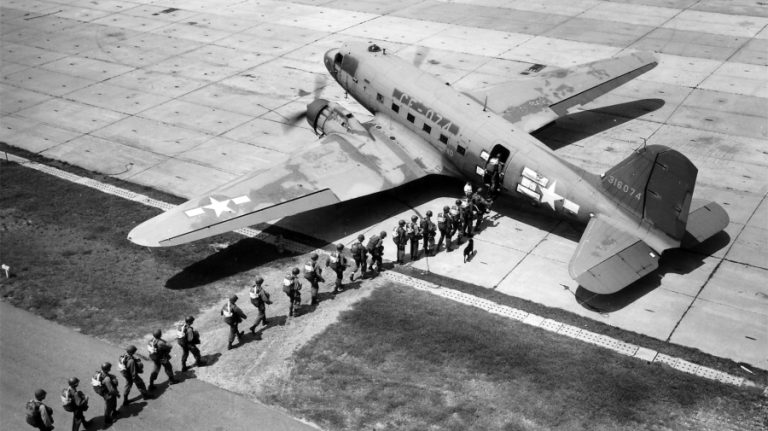
On the morning of Jan. 9, Taiwan dispatched a C-type transport aircraft to Matsu. The plane landed at 8:37 a.m., but damaged a wing in the process. A second aircraft—the HU-type rescue plane—was then sent to retrieve the defectors, along with journalists and ROC Air Force intelligence personnel.
At 3:35 p.m., the HU-type plane carrying 17 people lifted off from Matsu.
Beijing had already placed its Fuzhou air units on first-level combat readiness at 3:33 p.m. At 3:51:15, a fighter wingman, Hu Yingfa, spotted the Taiwanese aircraft. Squadron leader Li Chunguang gave the order to attack.
Multiple fighters from the PLA Air Force’s 24th Division opened fire. The Taiwanese aircraft fell into the sea.
There were no survivors.
Other PLA pilots who reached Taiwan alive
The 1966 incident was far from the only attempt by PLA servicemen to flee Communist China. Several pilots managed to escape in the years that followed, often flying at extremely low altitudes to avoid detection.
1977 — Fan Yuanyan
A squadron leader from the PLA Air Force’s 2nd Reconnaissance Regiment flew a J-6 (MiG-19) from Fujian’s Jinjiang to Tainan on July 7, 1977.
1982 — Wu Ronggen
On Oct.16, 1982, he flew a JZ-6 from Shandong’s Wendeng to Seoul’s K16 airfield, later arriving in Taiwan and joining the ROC Air Force as a major.
1983 — Sun Tianqin
A deputy regimental-level pilot temporarily assigned to naval missile trials, he flew a J-7 (MiG-21) from Dalian to Seoul on Aug. 7, 1983, later transferring to Taiwan.
1983 — Wang Xuecheng
On Nov. 14, 1983, he flew a J-5 (MiG-17) from Zhejiang’s Daishan to Taoyuan Airport and joined the Taiwanese Air Force as a major.
1985 — Xiao Tianrun
He piloted an H-5 bomber from Jiaoxian, Shandong, to South Korea on Aug. 25, 1985, later arriving in Taiwan.
1987 — Liu Zhiyuan
A PLA Air Force 49th Division pilot, he flew a J-6 from Longxi, Fujian, to Taiwan’s Ching Chuan Kang Air Base on Nov. 19, 1987.
1989 — Jiang Wenhao
On Sept. 6, 1989, the 24-year-old flew a J-6 from Longxi to Kinmen’s Shangyi Airport.
Together, these accounts reflect the risks some Chinese servicemen were willing to take in pursuit of a different life—often crossing heavily militarized skies to reach Taiwan’s airfields alive.