On Dec. 2, “The Wall Street Journal” published a sharply-worded editorial titled: “The Lesson of China’s Japan Bullying.” Featured in the paper’s Asia and global editions, the piece quickly drew international attention for its blunt assessment of Beijing’s escalating pressure campaign against Tokyo, and for what that campaign revealed about China’s broader diplomatic posture.
The editorial’s core message underscored that Japanese Prime Minister Sanae Takaichi’s recent remarks on Taiwan were not provocation, but realism. If Taiwan were to fall, the Journal argued, Japan’s defensive island chain would be fractured, leaving the country’s shipping lanes — critical for food and energy imports — dangerously exposed. China’s reaction, far from deterring Japan, instead previewed how Beijing would likely wield power if it achieved maritime dominance in East Asia: Through economic punishment, intimidation, and coercion.
RELATED: Beijing’s Coercion Backfires, Boosting Japan’s Takaichi
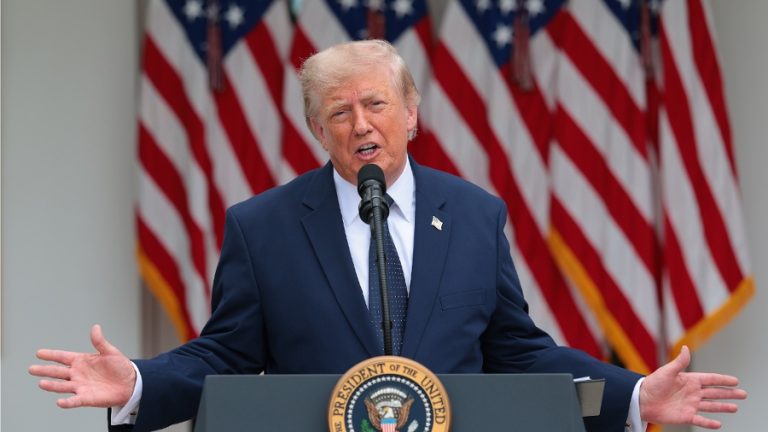
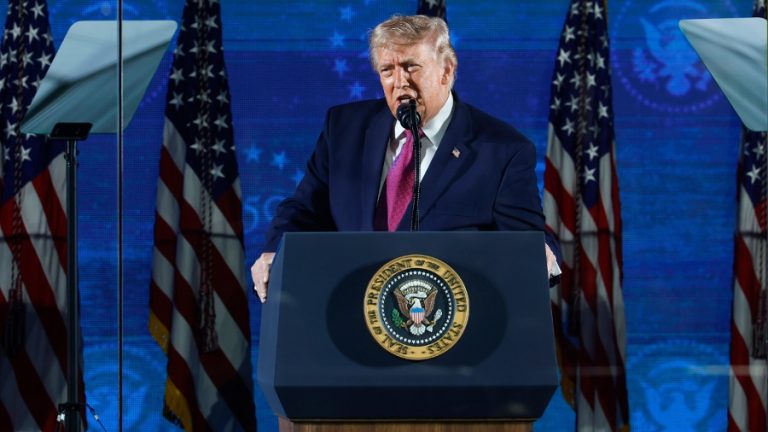
The Editorial Board urged U.S. President Donald Trump to deepen cooperation with Tokyo as China’s ambitions expand. The real danger, the paper stressed, lies not in Japan’s candor but in Beijing’s mounting military and economic threats to Taiwan’s democracy.
China’s attempt to silence Japan backfired. Rather than forcing Tokyo into retreat, Beijing unintentionally offered the world a case study in how it handles dissent, thereby turning pressure into spectacle and restraint into overreaction.
Takaichi breaks with tradition, Beijing erupts
Success
You are now signed up for our newsletter
Success
Check your email to complete sign up
Only recently sworn in, Takaichi has disrupted Japan’s long-standing strategic ambiguity on Taiwan. She stated openly that an attack or blockade of Taiwan could constitute a “survival-threatening crisis,” a formulation that would allow Japan to exercise collective self-defense. Beijing views Taiwan as a breakaway province that must be reclaimed by any means necessary, even if that means resorting to military force. Taiwan maintains its de facto independence and democratic rule as the Republic of China (ROC), which governed all of China before being driven off the mainland by communist rebels in 1949.
Her position echoes the late Shinzo Abe’s now-famous warning: “A Taiwan contingency is a Japan contingency — and a contingency for the U.S.–Japan alliance.”
Takaichi also referenced the San Francisco Peace Treaty, noting that Japan relinquished sovereignty over Taiwan and therefore holds no legal position on its status, remarks widely interpreted as reinforcing the argument that Taiwan’s legal status remains unresolved. For Beijing, this crossed a red line.
RELATED: Taiwan Revokes Residency of ASUS Employee Who Promoted ‘Armed Reunification’ by China
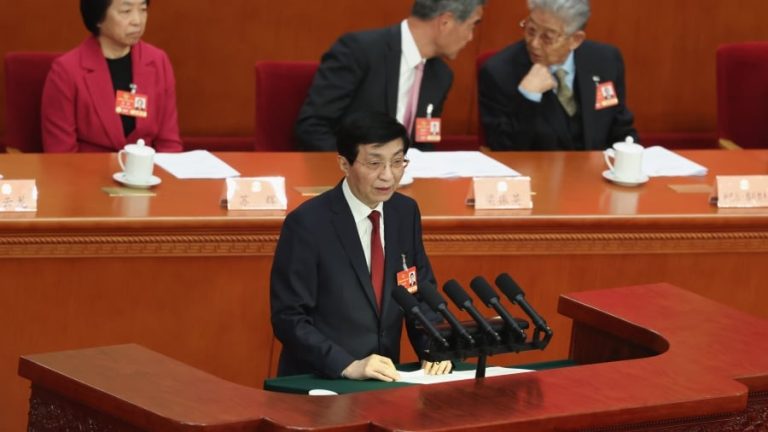
State media accused Takaichi of violating China’s sovereignty, “reviving militarism,” and trampling on “human justice.” Authorities even compiled a list of “nine sins.” The response quickly escalated from rhetoric to retaliation. Chinese airlines canceled flights. Concerts were abruptly halted due to alleged “power issues.” Travel advisories warned citizens against visiting Japan.
Observers soon labeled the spectacle “giant-baby diplomacy” — a tantrum-like display at odds with the behavior expected of a major power.
China’s miscalculations laid bare
Analysts say Beijing’s overreaction revealed a fundamental misreading of Japan. For years, China portrayed Japan as a diminished power — a “small Japan” — assuming economic pressure would suffice. That assumption collapsed almost immediately. Takaichi, a seasoned conservative known for hawkish clarity, simply articulated what many in Japan already accept: the Taiwan Strait is Japan’s lifeline. Its energy supplies, food imports, and manufacturing exports all depend on stability near Taiwan. Her statement was not escalation; it was acknowledgment.
Beijing’s second miscalculation was underestimating Japan’s role as the decisive hinge in any Taiwan conflict. CSIS simulations in 2023 found China prevailed in only two of 24 scenarios, either if the U.S. stayed out entirely, or if Japan remained neutral and denied U.S. access to its bases. In every other case, a U.S.–Japan–Taiwan coalition defeated China.
Japan’s stance, therefore, is pivotal. Once Tokyo commits, even politically, China’s prospects collapse. Beijing’s strategy hinges on Japanese neutrality. Takaichi shattered that premise.
The third miscalculation was global context. Beijing assumed Washington would be distracted by trade disputes. Instead, the U.S. quietly reinforced support for Tokyo and encouraged Japan to accelerate defense reforms. Far from weakening Takaichi politically, China’s retaliation strengthened her standing. Her approval ratings, hovering around 75 percent, remained solid, effectively uniting the Japanese public behind her leadership.
Japan’s largest strategic opening in 80 years
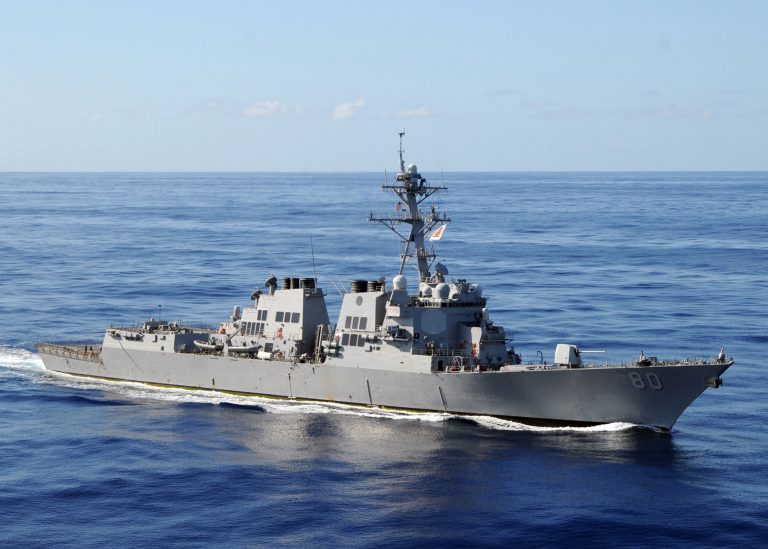
For Japan, the crisis has created an unexpected opening. Since World War II, constitutional limits and U.S. constraints kept Japan’s military posture restrained. China’s behavior, however, has created both the political space and strategic necessity for change. Washington is now urging Japan to lift defense spending to 3.5 to 5 percent of GDP, with internal discussions even touching 10 percent. Japan’s 2027 defense budget is projected to reach $70 billion, with further increases under review.
Once-taboo topics are returning to the mainstream. Nuclear sharing, long dismissed as “unthinkable,” and an assured way of mutual destruction, is again being openly discussed. Takaichi, building on proposals championed by Abe, supports allowing U.S. nuclear weapons to be deployed in Japan. Germany’s similar openness underscores a broader shift in global deterrence thinking.
Washington’s growing acceptance of Japanese constitutional revision signals something deeper: Japan’s normalization is no longer a question of if, but when. Ironically, this transformation has been accelerated by Beijing’s own misjudgment.
China isolated, Japan steps forward
China’s evolution from “wolf-warrior diplomacy” to what critics now deride as “giant-baby diplomacy” has damaged its international credibility. More governments increasingly view Japan as a stabilizing force, and China as an unpredictable coercive actor.
Former Japanese ambassador to China Uichiro Niwa has argued that Xi Jinping’s centralized decision-making eliminated internal checks, leading to repeated strategic errors. The world, he said, has now “learned a lesson” about the true nature of Beijing’s diplomacy.
For Taiwan, the implications are cautiously encouraging. As long as the U.S., Japan, and Taiwan remain aligned, China’s already narrow window for military success continues to shrink. Japan, meanwhile, has signaled that silence will no longer be mistaken for peace. When Beijing demanded Tokyo retract Takaichi’s remarks or acknowledge Taiwan as “China’s internal affair,” Japan refused. Officials replied simply: “Our understanding differs from Beijing’s.”
With no face-saving exit, China now finds itself boxed in. What began as intimidation has instead accelerated Japan’s strategic awakening. The U.S.–Japan alliance has strengthened. Takaichi’s political standing has risen. And China’s global image has suffered.
As tensions persist, East Asia’s strategic landscape is being reshaped. A more assertive Japan is emerging, and it may soon become one of the most consequential counterweights to Beijing’s ambitions in the Taiwan Strait.