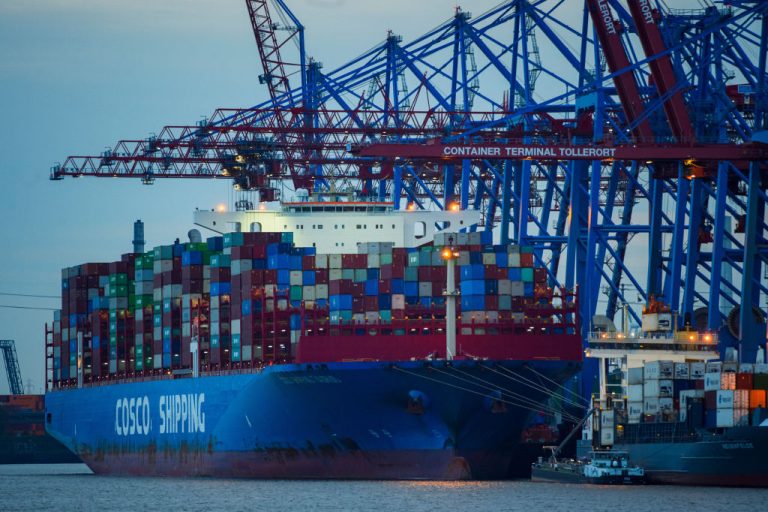
According to The Telegraph, a U.S. special operations team recently intercepted and boarded a vessel traveling from China to Iran in the Indian Ocean, seizing a shipment of military‑related equipment. U.S. officials said the core objective of the operation was to prevent Iran from rebuilding its ballistic missile stockpile following recent conflicts.
Citing U.S. officials, The Wall Street Journal reported that the ship was boarded by U.S. forces in waters near Sri Lanka. The vessel’s name and owner were not disclosed. Officials said the cargo was identified as key components usable in conventional weapons; the materials were subsequently confiscated and destroyed, while the ship was allowed to continue its voyage.
Background of the interception
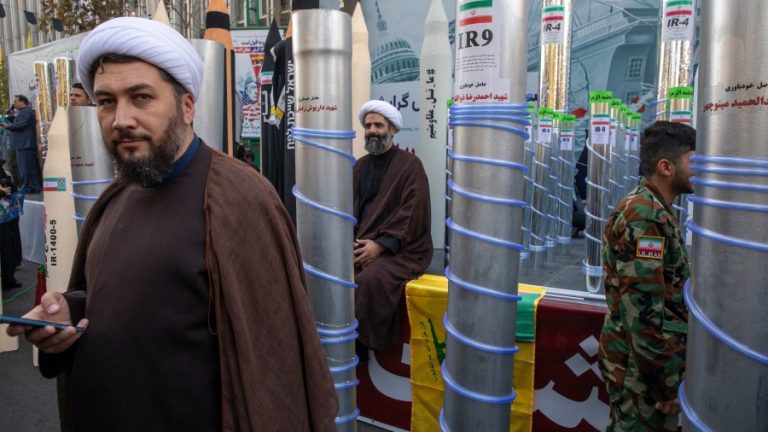
Intelligence indicated that the materials were destined for several companies specializing in procuring components for Iran’s missile program. During a 12‑day conflict with Israel in June, Iran fired roughly 500 ballistic missiles at Israel, severely depleting its missile inventory; an additional 1,000 missiles were destroyed in Israeli airstrikes.
Against this backdrop, Iran is believed to be accelerating efforts to restore its damaged ballistic missile capabilities. The United Nations has previously imposed an international arms embargo on Iran and explicitly banned the export of any products that could be used for nuclear enrichment or ballistic missile programs.
US concerns over Chinese technical support
One focus of U.S. concern surrounding the interception is potential technical support from Chinese companies. Behnam Ben Taleblu, Director of Iran Programs at the Foundation for Defense of Democracies, noted that Chinese firms have long supplied Iran with measurement equipment that can improve missile accuracy, such as spectrometers and gyroscopes.
Success
You are now signed up for our newsletter
Success
Check your email to complete sign up
He said such equipment is “more dangerous than chemical precursors,” warning that if China continues to serve as a permissive jurisdiction for illicit technology exports, it is “effectively becoming a booster for Iran’s ballistic missile program.”
Trump administration steps up maritime enforcement and sanctions
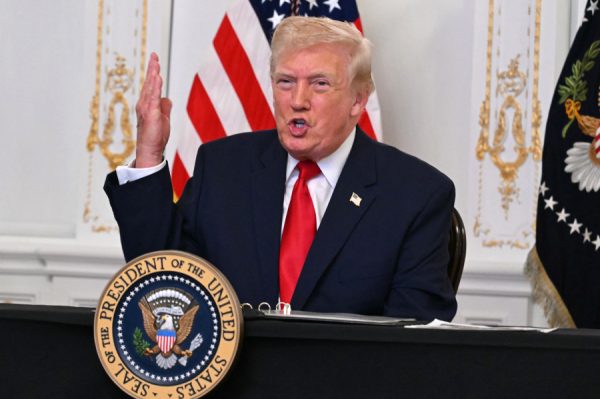
The operation is seen as part of the Trump administration’s intensified maritime enforcement and sanctions strategy. Just weeks later, the United States seized a sanctioned large oil tanker off Venezuela’s coast, alleging it had been used to transport oil to Iran.
Trump publicly stated, “We just seized a tanker off the coast of Venezuela—very large, actually the largest ever.” Footage showed U.S. military helicopters hovering above the tanker as soldiers fast‑roped onto the deck and searched the crew.
Looking back at prior actions, U.S. forces seized Iranian‑made missile components bound for Yemen’s Houthi forces near Somalia in January 2024. In 2020 and 2023, the United States also repeatedly seized Iranian oil tankers, saying the proceeds were used to fund Iran’s Islamic Revolutionary Guard Corps (IRGC).
Additionally, last month Democratic Representatives Raja Krishnamoorthi and Joe Courtney wrote to Secretary of State Marco Rubio and CIA Director John Ratcliffe, calling for investigations into multiple shipments of sodium perchlorate from China to Iran. They argued the chemicals could be used in missile propellants and accused Beijing of “effectively assisting Iran’s rearmament.”
Last month, the U.S. Treasury Department, citing its “maximum pressure” policy, also sanctioned dozens of entities worldwide, saying they were involved in procuring materials needed for Iran’s ballistic missile and drone production.
The broader context of China–Iran relations
On Oct. 29, CNN reported that despite ongoing UN sanctions, Iran has continued rebuilding its missile capabilities with China’s assistance.
European intelligence agencies told CNN that Iran had received multiple shipments, including more than 2,000 tons of sodium perchlorate. The chemical has civilian uses but is also a key precursor for producing ammonium perchlorate.
Ammonium perchlorate is an oxidizer used in solid rocket propellants and is considered a critical component in Iran’s ballistic missiles. In late September, the United Nations reactivated the “snapback” sanctions mechanism against Iran, aiming to curb and prevent any activities related to the development of nuclear‑capable weapons.