By Vision Times TV
China’s economy continues to slide, even as Chinese Communist Party (CCP) authorities insist on pushing a slogan of “stable growth.” Behind the official rhetoric, however, a growing number of foreign companies are accelerating their exit from China, including many Japanese firms that had operated in the country for decades.
One case that has drawn particular attention is Sony Precision Devices (Huizhou) Co., Ltd., Sony’s first wholly-owned enterprise in South China.
“It’s shocking. Sony’s first wholly-owned company in South China — Sony Precision Devices (Huizhou) — has also withdrawn from China. It had been rooted in Huizhou’s Zhongkai area for 29 years. Surrounding restaurants, small businesses, and logistics companies all relied heavily on it for survival,” said China analyst Mei Ling.
RELATED: Is China’s Northeast Disappearing? Ghost Cities Spread as Housing Prices Collapse
Success
You are now signed up for our newsletter
Success
Check your email to complete sign up
Ling also noted that when Sony exited, it offered Chinese employees an “N+3” severance package, with many longtime workers receiving hundreds of thousands of yuan in compensation. “At least they left with dignity. You have to say it — foreign companies really do have a conscience.”
Sony’s Huizhou exit marks the end of an era
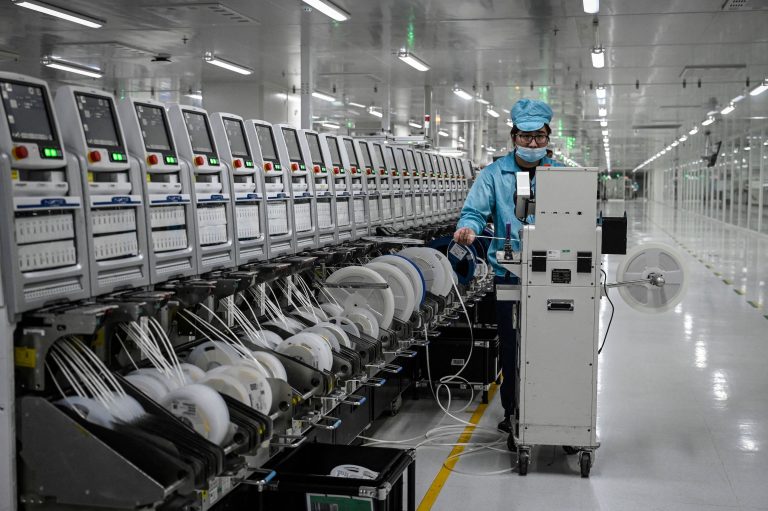
Founded in 1995 in Huizhou’s Zhongkai High-Tech Zone, Sony Precision Devices (Huizhou) was Sony Corporation’s first wholly owned investment in South China. The factory produced precision electronic components for mobile phones, digital cameras, optical quartz heads, and LCD displays. At its peak, it employed up to 30,000 workers. The facility was later acquired by Japanese firm RS Technologies.
As part of the shutdown, Sony offered N+3 compensation, with many veteran employees receiving RMB 100,000 to over RMB 200,000. To put this into perspective: If a skilled worker earned RMB 10,000 per month and had 20 years of service, their severance would total nearly RMB 230,000.
RELATED: Shanghai’s Population Crisis Deepens Amid Migrant Exodus, Dwindling Birth Rates
“Sony has shut down another factory — and this time it’s not overseas. It’s the Huizhou Sony plant that carried the youth of countless workers. Sony’s core production capacity has basically shifted to Thailand. Going forward, its domestic factories will only serve the local market, while 90 percent of global orders will be handled by Southeast Asian bases,” said Ling.
She added: “Many people are feeling nostalgic. Back then, everyone was desperate to get a job at a Japanese company. In the end, it still left.”
A broader corporate exodus
Sony’s withdrawal was not sudden. Ling noted that Canon and Nikon had already closed factories in China in recent years, with Sony merely following suit. Sony itself has said that diversifying production is meant to reduce the risks of relying on a single manufacturing base.
Meanwhile, Sony smartphones have quietly exited the Chinese market. Observers noticed that Sony’s smartphone WeChat account was shut down, its website removed phone categories, its Weibo account has been inactive for eight months, and national carrier listings have not been updated for nearly two years, effectively ending Sony’s 11-year China smartphone chapter.
But Sony is far from alone. “Foreign capital is accelerating its departure from China,” said Ling. “Recent news is dizzying.” Some notable examples include:
- Toyota closing plants in Guangzhou and Wuhan
- Mitsubishi Motors halting vehicle production last year and plans to fully exit China
- Volkswagen closing its Changsha plant
- Samsung’s Huizhou factory shutting down last year
- Canon’s Zhuhai and Zhongshan plants closing in succession
- IBM withdrawing its China investment arm in March and closing its R&D center in April
- Microsoft halting China operations in April, dissolving its Shanghai AI lab
- Starbucks selling 60 percent of its China business to private equity
- SAS fully exiting China in October
- Victoria’s Secret announcing liquidation, with a full China exit planned for early 2026
Though nearly 60,000 new foreign-funded enterprises were registered in China in 2024 — a year-on-year increase of nearly 10 percent — actual foreign capital utilization fell by more than 25 percent.
Why manufacturing giants are leaving
Analysts point to three main reasons behind the exodus. First, China is no longer the optimal manufacturing base. 10 years ago, China’s labor, land, and supply-chain advantages were unrivaled. Today, Vietnamese workers earn less than RMB 2,000 per month, Thailand and Mexico enjoy tariff advantages for exports to the U.S., while factory wages in China’s Yangtze River Delta exceed RMB 6,000 — squeezing margins in low-profit industries like consumer electronics.
Second, product life cycles are ending. Panasonic’s global TV market share has fallen below 2 percent , with traditional home-appliance businesses running losses for years. Rather than maintain high-cost production in China, firms are cutting non-core businesses to focus on batteries, hydrogen energy, and other emerging sectors.
Third, global supply chains are being rebuilt. Tech giants like Apple and Samsung have already shifted assembly to India and Vietnam, while even leading Chinese brands such as Xiaomi and TCL are pursuing automation and overseas factories. Foreign manufacturers that fail to adapt risk being pushed out entirely.
Others cite additional pressures, including: Trade wars raising costs, new CCP regulations increasing compliance burdens, rising land rents, and shrinking profit margins — making labor-intensive manufacturing increasingly unviable.
Compensation packages
Many foreign companies were widely praised online for generous severance packages when leaving China, offering N+1, N+7, or even N+11 compensation. Canon’s Zhongshan plant reportedly provided 2.5N+1.
“People think big companies just leave, but they supported thousands of small factories and workshops,” said one netizen, while another added, “I once took a ride-hailing car. The driver used to work for a foreign company. After it exited, he took severance but couldn’t find another job because of his age, so now he drives full-time. He’s anxious and lost.”
As foreign companies publicly demonstrated care for employees — even as the CCP again stirred anti-Japanese sentiment — Canon’s compensation packages were seen as a direct embarrassment to the regime.
One widely circulated incident showed a Canon Zhongshan employee’s Douyin post about receiving RMB 630,000 being removed for “violations,” reportedly for “showing off wealth.”
Economic fallout across China
On X, blogger “Yang Caiying” wrote: “The CCP keeps stirring hatred toward Japan, but public sentiment is the opposite. Canon’s exit and compensation earned widespread praise: ‘May Canon rise again. Thank you to foreign companies for treating Chinese workers with dignity. Civilization once existed here. Whoever treats me like a human being — I will love.’”
RELATED: China Now Counts 50 Ghost Cities — and Xiong’an’s Empty Streets Tell a Troubling Story
Some see opportunity for domestic firms; others fear mass unemployment. One observer wrote: “At 8:30 p.m., Lujiazui is still lit up, but the people are gone. Consumption is down, companies are leaving, layoffs are rising, control is tightening. Confidence is drained. Prosperity is now just a backdrop.”
Commercial real-estate data underscores the shift. According to Colliers International’s Q3 2025 report, Shanghai Grade-A office vacancy rates rose to 21.4 percent, with rents falling 3.3 percent quarter-on-quarter. Savills data showed continued rent declines and rising vacancy in early 2025.
A Shanghai-based businessman surnamed Li Qiang said: “German friends moved headquarters to Singapore. French and Korean companies left too. Even the government didn’t expect foreign firms to leave faster after lockdowns ended.”
Across the Yangtze River Delta, production relocation has accelerated. In Suzhou, Kunshan, and Wuxi, industrial growth has slowed, with foreign electronics firms moving entire assembly lines to Cambodia, Vietnam, and Thailand, retaining only R&D and administration locally. Similar trends are unfolding in Guangzhou, Shenzhen, and across Guangdong, where Japanese automakers, appliance makers, and parts suppliers are downsizing or exiting.
A former Dongguan factory manager surnamed Gong said: “After the lockdowns ended, people finally realized how fast the economy was collapsing. In the past two years, more factories have shut down than in the previous ten combined.”