By Yang Tianzi
The Russia–Ukraine peace process has once again reached an impasse. Ukrainian President Volodymyr Zelenskyy said on Dec. 18, citing WhatsApp chat records, that the parties have yet to reach a coordinated agreement on a final peace framework.
Ukrainian negotiators are scheduled to travel to the United States on Dec. 19 and 20 for talks with U.S. counterparts, with European officials also expected to take part. Politico, citing White House officials, reported that U.S. and Russian officials plan to meet in Miami this weekend, signaling that, under the Trump administration’s push, the peace process could enter a new phase.
Despite intensified diplomatic activity, prospects for a breakthrough remain uncertain. What appears on the surface to be a bilateral Russia–Ukraine negotiation has increasingly evolved into a three-way contest among the United States, Europe, and Russia over the future European security order, with fundamental differences in strategic objectives, negotiating red lines, and approaches toward Moscow.
Russia takes a hard line
Russian President Vladimir Putin delivered a forceful address on Dec. 17 at an expanded meeting of the Russian Defense Ministry’s board, setting a tough tone for the current stage of negotiations. Putin said Russia’s “special military operation” in Ukraine, launched in February 2022, would achieve its objectives, dispelling expectations that Moscow might seek compromise due to the costs of the war.
Success
You are now signed up for our newsletter
Success
Check your email to complete sign up
Putin said that nearly four years into the conflict, Russian forces continue to hold a strategic advantage along the entire front line. He warned that if Ukraine and its foreign backers are unwilling to engage in substantive negotiations, Russia would use military means to “liberate” what he described as lands that have “historically belonged to Russia.”
The Financial Times said this reference to “historical lands” underscores Putin’s determination to seize eastern Ukrainian regions such as Donetsk and other eastern provinces, and potentially pursue broader territorial control.
Putin also sharply criticized Europe, referring to European forces backing Ukraine and seeking to weaken Russia as “pawns,” and predicting that these forces would ultimately lose influence. He said Europe would eventually be forced to negotiate with Moscow. Putin expressed openness to U.S. President Donald Trump’s role as an intermediary in a Russia–Ukraine peace agreement, while accusing former U.S. President Joe Biden of steering the situation toward armed conflict.
Miami talks draw attention
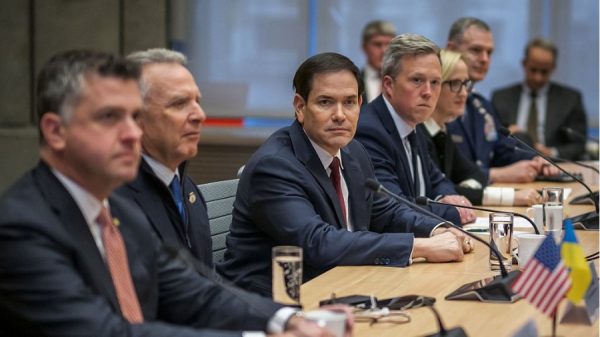
Kremlin spokesman Dmitry Peskov said on Dec. 18 that he could not confirm details of the reported Miami talks, but acknowledged that contacts between Washington and Moscow are proceeding as planned. Peskov said Russia is prepared to engage with U.S. counterparts to learn about progress made so far on peace plans discussed among the United States, Europe, and Ukraine.
According to Politico, the composition of the negotiating teams is symbolically significant. The United States is sending Middle East envoy Steve Witkoff and Trump’s son-in-law Jared Kushner. Russia is represented by Putin’s investment envoy Kirill Dmitriev. Ukraine has sent Rustem Umerov, secretary of Ukraine’s National Security and Defense Council.
The lineup suggests that Washington is inclined toward a transactional approach, focusing not only on a ceasefire but also on issues such as sanctions relief and investment arrangements. Russia’s decision to send an investment envoy rather than a traditional diplomat indicates Moscow’s emphasis on postwar economic interests. Ukraine’s delegation reflects Kyiv’s priority on security guarantees and territorial red lines.
EU aid plan and frozen-asset debate
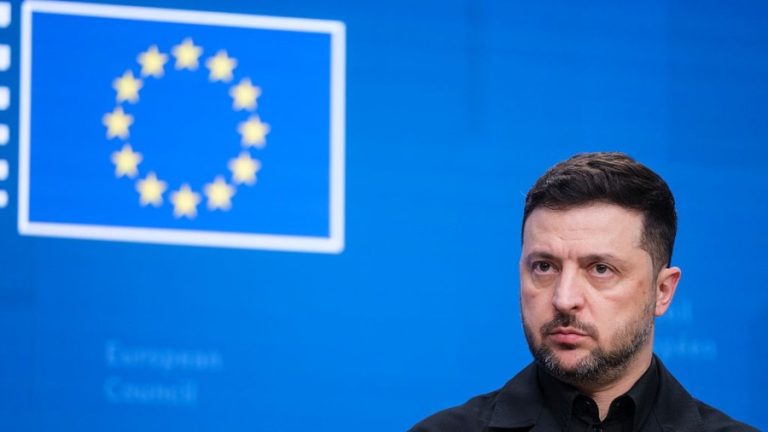
As diplomatic efforts intensified, Zelenskyy arrived in Brussels on Dec. 18 to attend a European Union summit. After more than a day of negotiations, EU leaders agreed to provide Ukraine with €90 billion in loans over the 2026–2027 period.
European Council President António Costa announced on social media platform X: “We have an agreement. The decision to approve €90 billion in assistance to Ukraine for 2026–2027 has been adopted. We deliver on our word.”
The funding is critical for Kyiv. The EU estimates Ukraine will need an additional €135 billion over the next two years to maintain operations, with a funding shortfall expected to emerge as early as April next year. While the €90 billion package will not fully close the gap, it provides Ukraine with significant financial support.
The agreement was not reached smoothly. EU member states failed to reach consensus on using frozen Russian assets to raise funds. An initial proposal to tap roughly €200 billion in frozen Russian central bank assets was shelved after Belgium, where most of the assets are held, requested that other countries share potential legal liability. Other member states viewed that requirement as overly burdensome.
Zelenskyy expressed disappointment over the outcome. Speaking at the opening of the summit, he said Russian assets “must be used to defend against Russian aggression and to rebuild homes destroyed by Russia,” calling such use moral, fair, and legal. However, concerns within Europe over potential violations of international financial rules and sovereign immunity led leaders to adopt a more cautious financing approach.
Transatlantic strategic divide
At the core of the current stalemate is a fundamental divergence between the Trump administration and European allies over strategy toward Russia, reflecting a broader strain in transatlantic relations.
The Trump administration has pushed for a rapid peace agreement, arguing that normalizing relations between the United States, Europe, and Russia would reduce the risk of a wider war and enable commercial cooperation. This deal-oriented approach reflects Washington’s desire to shift strategic focus to other regions, particularly in response to challenges posed by China.
Europe and Ukraine take a contrasting view, seeing Russia as a long-term strategic threat and warning against trusting Moscow’s commitments. French President Emmanuel Macron articulated this position last month, saying, “We want peace, but not a peace that amounts to surrender.” He warned that such an agreement would embolden Russia and endanger European security.
The Wall Street Journal reported that European leaders fear a Moscow-favorable settlement could trigger broader conflict across the continent. They argue that such an outcome would reinforce Russia’s belief that borders can be redrawn by force and signal weakness within NATO. European officials are also concerned that Russia’s expanded military production capacity could force already fiscally strained European states to sharply increase defense spending to maintain deterrence.
As a result, European leaders and Ukraine share the view that accepting a peace deal tantamount to capitulation could be worse than no deal at all—a position that directly clashes with Washington’s push for a swift end to the war.

A complex, multi-layered contest
The current negotiations reflect a highly complex, multi-layered contest. On territorial and legitimacy issues, Putin is seeking Western recognition of Russia’s control over eastern Ukrainian regions, effectively legitimizing battlefield gains. Ukraine and European governments reject this, arguing that it would violate fundamental principles of international law.
On the nature of peace, the United States prioritizes avoiding escalation and limiting its own costs, showing willingness to accept an agreement favorable to Russia if it halts the fighting. Europe and Ukraine argue that a “bad peace” would encourage further aggression.
On financing and legal questions, the EU’s €90 billion commitment underscores continued support for Ukraine. However, divisions over the use of frozen Russian assets highlight Europe’s internal tension between principle and risk, raising questions about the sustainability of future assistance.
The coming weeks of talks in Miami and consultations in Washington are expected to be pivotal. If the United States and Russia reach a framework agreement, Washington may pressure Kyiv to accept it. European governments will then weigh whether to seek revisions or align with the U.S. position. If Ukraine rejects such a deal, the war is likely to continue, further testing the strategic endurance of all parties.