“Hello everyone, good morning. Today is Dec. 11. I want to let you know that Japan’s single-entry visas and three-year multiple-entry visas have already been suspended. Five-year multiple-entry visas are still being processed, but the financial requirements are much higher. For Japan, you may want to consider traveling to other countries for now.”
This message, shared by a Chinese travel blogger in a widely circulated video, reflects growing concern among Chinese applicants after reports emerged that Japan has effectively suspended the issuance of most short-term visas to Chinese nationals.
According to information from multiple sources, Japanese authorities have cited “visa system maintenance” as the official explanation. However, the practical impact has been a sharp disruption to people-to-people exchanges between China and Japan.
Suspension of key visa categories
Several Chinese visa agencies reported receiving notices stating that, beginning December 9, the visa application systems at Japanese embassies and consulates in China entered maintenance mode. As a result, services were either suspended or severely restricted.
The categories most affected are single-entry visas and three-year multiple-entry visas—the two most commonly used options by Chinese travelers.
Success
You are now signed up for our newsletter
Success
Check your email to complete sign up
Visa agents said applications for these categories cannot currently be submitted, and there is no clear timeline for when processing will resume. Applicants have been advised not to book flights or hotels in advance to avoid potential financial losses.
One agent explained in a follow-up video that Japanese consular offices will also be closed for the year-end holidays from December 27 through January 4, further complicating the situation. Whether visa processing will resume after the holiday period, and whether fees will increase, remains uncertain.
For now, five-year multiple-entry visas are reportedly still being accepted. However, these visas have significantly higher eligibility requirements.
Applicants typically must demonstrate an annual income exceeding 500,000 yuan (approximately USD 70,000), or provide proof of comparable financial assets. As a result, only a limited segment of Chinese applicants qualify.
In practical terms, observers note that the suspension of single-entry and three-year multiple-entry visas has effectively closed the door to Japan for the vast majority of Chinese travelers.
‘System maintenance’ and skepticism
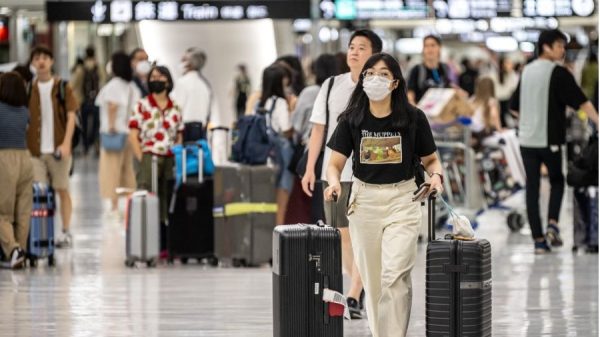
Japanese authorities have stated that the suspension is linked to maintenance of the module that processes “guarantor documentation,” known as the mimoto hoshonin system. This document is required to assure that applicants will not overstay and will return to China as scheduled.
However, industry insiders expressed skepticism, noting that the disruptions appear to affect primarily Chinese applicants, while travelers from other countries have not experienced comparable suspensions.
Some analysts argue that Japan’s move may be connected to a recent resurgence of anti-Japanese sentiment within China—sentiment that critics say has been tolerated or encouraged by official messaging. This atmosphere has reportedly increased pressure on Japanese companies operating in China and eroded mutual trust at the grassroots level.
Against this backdrop, Japan’s decision to cool people-to-people exchanges through visa policy has been interpreted by some observers as both a risk-management measure and a diplomatic signal.
Several visa industry professionals privately assessed that the situation is unlikely to be resolved quickly. A common expectation is that adjustments may not come until at least March, after the Lunar New Year, depending on whether bilateral relations show signs of easing.
Short-term versus long-term visas
Another blogger clarified that not all visa categories are affected. Long-term visas—such as student visas, research visas, skilled labor visas, and family accompaniment visas—are reportedly still being processed.
According to the blogger, Japan continues to face labor shortages and has shown more flexibility toward long-term residency. In contrast, short-term visas, particularly tourist and business visas, have become the most difficult to obtain.
“Tourism doesn’t automatically mean they’ll relax requirements,” the blogger said, adding that Japanese authorities are prioritizing screening for high-spending travelers while also guarding against illegal overstays.
Reports of cancellations and internal restrictions
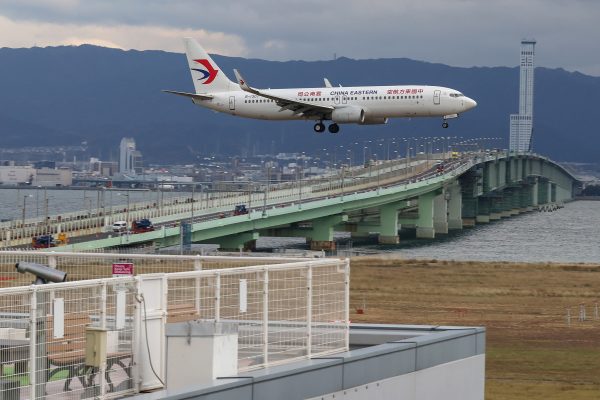
Several employees of Chinese state-owned enterprises told the South China Morning Post that they were instructed to cancel previously approved trips to Japan for business or leisure purposes.
On Chinese social media platforms such as Xiaohongshu, some users claimed that their government or Party-affiliated institutions had required them to abandon planned trips to Japan.
As discussion over visas continued, online attention also turned to corporate layoffs, with two high-profile cases drawing stark comparisons.
Japanese optical equipment manufacturer Canon announced the closure of its factory in Zhongshan, Guangdong Province. The company offered compensation packages that significantly exceeded China’s legal minimum, earning widespread praise from Chinese netizens, who described the firm as a “conscientious employer.”
Under Chinese law, layoffs typically require compensation calculated as “N+1,” with N representing years of service. Canon’s reported formula of “2.5N+1” far surpassed that standard.
Employees shared stories online, with some announcing early retirement and others posting screenshots of compensation payments. Many expressed gratitude toward the company.
By contrast, Chinese technology firm Lenovo was criticized for a new round of layoffs within its Infrastructure Solutions Group (ISG) China division. According to reports, affected employees were informed via a brief recorded message during an online meeting, with no opportunity for questions or discussion.
Online accounts claimed that hundreds of employees in Shanghai were affected, with additional impact in Beijing, Tianjin, and Shenzhen. Compensation terms were described as inconsistent, with limited time for negotiation and deductions applied to bonuses.
Some employees criticized the process as “cold” and lacking basic human consideration, particularly given reports that pregnant employees were also included in the layoffs.
Rising political tension
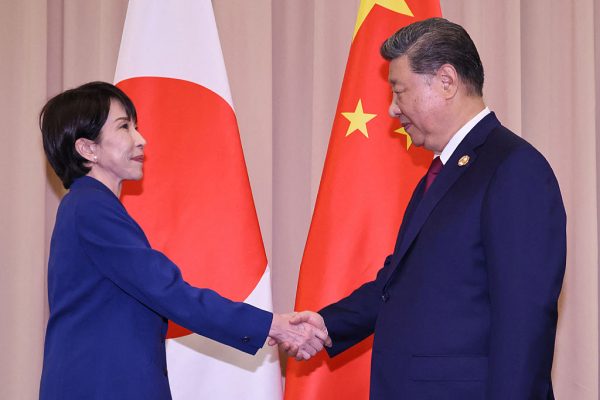
Tensions between China and Japan have also been heightened by remarks from Japan’s Prime Minister Sanae Takaichi, who said on Nov. 7 during a parliamentary budget committee session that a Taiwan contingency could be considered an existential crisis for Japan.
The comments were widely interpreted as suggesting possible Japanese military involvement in a Taiwan Strait conflict and triggered strong reactions from Beijing.
In the days that followed, Chinese state media intensified anti-Japanese messaging. Military outlets warned that Japan could become a battlefield, while official broadcasts highlighted confrontational imagery involving Japanese officials.
On Dec. 21, military media again warned that Japanese involvement in a Taiwan conflict would result in “head-on blows” and deeper defeat.
Some mainland Chinese users called for permission to hold anti-Japanese protests.
Veteran journalist Katsuji Nakazawa wrote that official encouragement of nationalist protests can be a double-edged sword that may ultimately backfire on Xi Jinping’s leadership.
Recalling the large-scale anti-Japanese demonstrations during the 2012 Diaoyu Islands dispute, Nakazawa noted that while authorities were able to maintain control at the time, conditions today are markedly different. He cited falling property values, rising unemployment, and accumulating public frustration as factors that could cause protests to spiral beyond official control.
He warned that if authorities were to tolerate demonstrations triggered by Japan-related issues, they could spread rapidly and potentially evolve into broader anti-government unrest.