By Chen Jing
What appears on the surface to be a border dispute between Thailand and Cambodia is, in reality, a proxy conflict driven by Washington’s effort to reshape the global order and cut off the financial lifelines of what it calls an “axis of evil.” Thailand has already chosen its side. Cambodia, by contrast, is undergoing a painful and belated process of severance.
The turning point came with a carefully worded statement by U.S. Secretary of State Marco Rubio.
As artillery fire erupted along the Thai–Cambodian border, Donald Trump publicly struck a conciliatory tone, suggesting mediation. Rubio’s words, however, carried a different message. “We are closely monitoring developments and are prepared to offer support,” he said.
Support for whom? The answer was clear: Thailand.
Success
You are now signed up for our newsletter
Success
Check your email to complete sign up
In subsequent diplomatic exchanges, Thailand’s dialogue with Washington produced tangible backing and tacit approval. Its dialogue with Beijing produced little more than ritual calls for restraint. Chinese Foreign Minister Wang Yi urged “close communication” and “joint efforts to maintain regional peace.” Thailand ignored him.
Even as Wang called for calm, Thai F-16s took off fully armed, launching intensified precision strikes against targets inside Cambodia. The signal was unmistakable. Thailand had received a green light from Washington. This was no routine border skirmish. It was a targeted cleanup operation.
Beijing’s awkward self-exposure
In an attempt to halt the fighting, China’s Foreign Ministry issued an appeal that inadvertently exposed its own hand. Beijing urged Cambodia to “ensure the safety of Chinese projects and Chinese citizens.”
The reaction was immediate. Take a closer look at the locations Thailand bombed. These were lawless border zones—overgrown, remote, and long beyond effective state control. There are no legitimate Belt and Road infrastructure projects there.
There is only one thing in abundance: casinos and large-scale telecom fraud compounds—the notorious scam parks.
By invoking “Chinese projects,” Beijing effectively acknowledged that these criminal hubs and underground casinos are, in practice, its interests on the ground.
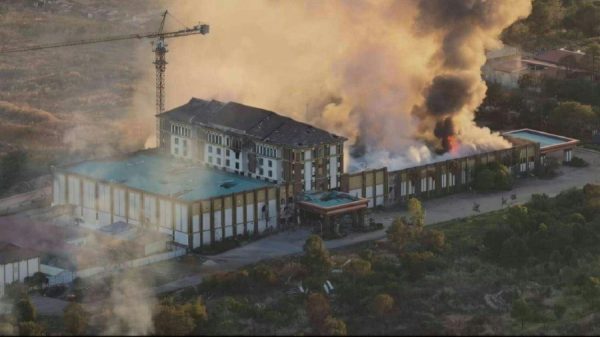
Thai military briefings added insult to injury. Officials stated that 51 targets had been destroyed, including casinos, telecom fraud centers, and even sites suspected of involvement in organ trafficking.
At that moment, the picture became clear. Thailand was not bombing Cambodian defense installations. It was physically dismantling Chinese-linked black-market industries embedded on Cambodian soil. Wang Yi’s call to “stop the bombing” was, in effect, a plea to protect the financial vaults of Chinese elites and criminal networks.
A decapitation strategy and the money trail
Territory was never the real objective. The real goals were arrests and financial strangulation.
In October, the U.S. Department of Justice indicted gambling tycoon and scam syndicate kingpin Chen Zhi, seizing cryptocurrency assets tied to his operations. Washington’s intent could not have been clearer: cut off the gray-market cash flows sustaining the “evil axis.”
Thailand’s military campaign functioned as an armed manhunt.
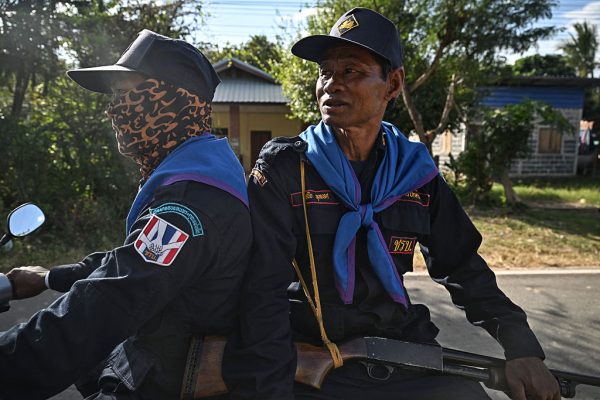
Troops entering residential areas were not there to occupy land, but to search for individuals linked to Chen Zhi’s network. The tactics were telling. Before bombing scam compounds, Thai forces fired flares and flash signals—a warning. Then they destroyed the structures themselves, eliminating the physical infrastructure needed to continue operations.
It was a coordinated two-front assault. The United States applied financial sanctions, freezing assets and cutting digital currency flows. Thailand applied kinetic force, destroying facilities and capturing operatives. Together, they formed a single strategy: choke the money, then dismantle the machinery.
Cambodia’s late awakening
Under Thai pressure and mounting U.S. scrutiny, Cambodia has finally begun to move.
For years, Cambodia was portrayed as Beijing’s most loyal partner, even derided as China’s “backyard.” In border cities like Poipet, Chinese signage dominated the streets, creating the impression of a semi-colonial outpost.
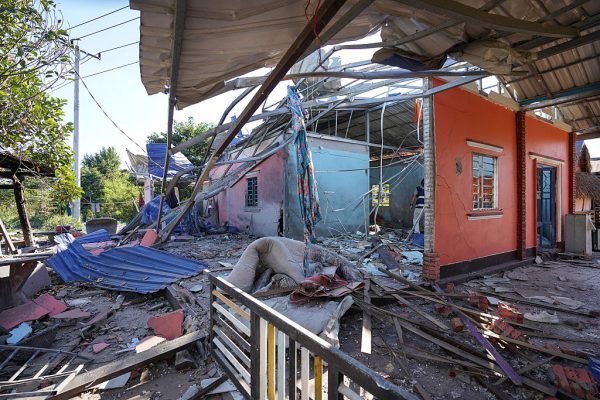
That changed abruptly. Cambodian authorities began tearing down—sometimes smashing—Chinese-language shop signs en masse.
Officially, the justification was enforcement of regulations requiring Khmer script. In reality, the speed and brutality of the campaign made its political meaning unmistakable.
Phnom Penh had read the winds. China could not protect it. Chinese-made weapons were underperforming in combat. Diplomatic mediation from Beijing carried no weight.
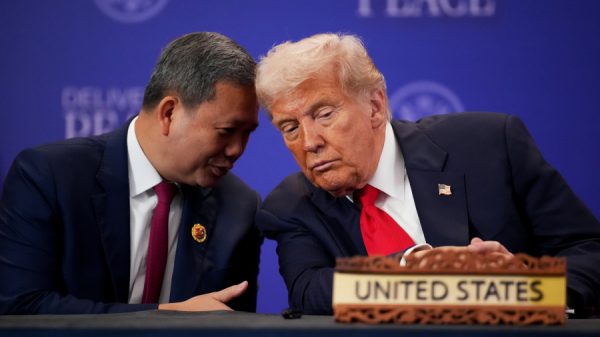
Washington, by contrast, was serious. Trump’s feigned nonchalance—his “drunken boxing”—masked indiscriminate blows against any country seen as sheltering the financial arteries of hostile regimes. Cambodia realized it could be next.
The result was an almost surreal spectacle. Chinese diplomats continued smiling and shaking hands with the Hun family, while Cambodian authorities on the streets smashed Chinese shop signs in a frantic attempt to erase the image of a regional scam hub.
The battlefield verdict on Chinese weapons
The conflict produced an unintended but devastating side effect: a live-fire assessment of Chinese weapons exports.
Cambodia’s forces are almost entirely equipped with Chinese systems—tanks, rocket artillery, and air defense platforms. Thailand, by contrast, operates a mixed inventory, but relies on Western systems for air power.
The outcome was stark. Thai F-16s operated with near impunity, striking Cambodian bases and supply lines at will. Chinese air defense systems proved largely ineffective.
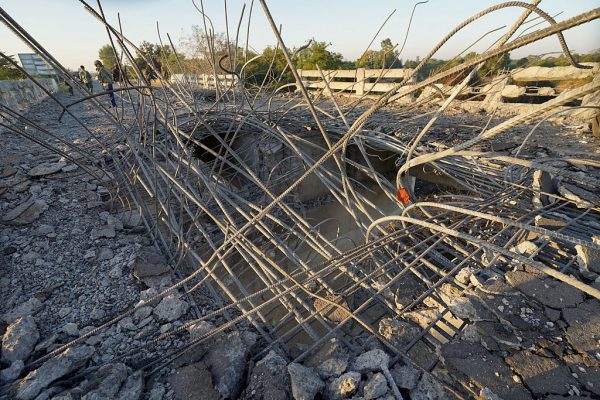
Thai forces demonstrated superior precision and coordination. Cambodian units struggled to respond, losing key infrastructure, including bridges and logistics nodes. Reports from the field pointed to high failure rates and limited deterrent capability in Chinese equipment.
Even Chinese state-linked commentators appeared rattled. The blogger “Niutanqin” posted a series of “unexpected” reflections—unexpected intensity, unexpected diplomatic impotence, unexpected consequences. What went unsaid was the most jarring surprise of all: Chinese weapons had been exposed far more quickly than anyone in Beijing anticipated.
Trump’s ‘drunken boxing’ and the global sweep
Viewed in isolation, the Thailand–Cambodia clash might seem regional. In context, it is part of a broader pattern unfolding since early December.
In the Black Sea, Ukraine struck Russian oil tankers. In the Caribbean, the United States seized Venezuelan vessels, tightening sanctions on Nicolás Maduro and his inner circle. In Southeast Asia, Thai jets destroyed scam compounds—the offshore cash engines linked to China.
This is not a coincidence. It is a coordinated campaign to sever oil revenues and gray-market income—telecom fraud, money laundering, and illicit finance—that sustain Russia, Venezuela, Iran, and, ultimately, their principal backer: the Chinese Communist Party.
Thailand understood the strategy and acted decisively, presenting itself as Washington’s executioner in Southeast Asia under the banner of anti-fraud operations. Cambodia, caught off guard, could only scramble to distance itself and hope to avoid becoming the next target.
A major reckoning is underway. States and elites that once thrived on gray-zone profits are now paying the price for their choices.