By Xiao Ran
In November 2025, only days after the U.S. Congress passed the Epstein Files Transparency Act, a quiet panic spread through Harvard University and the small, overlapping world of elite Western academia.
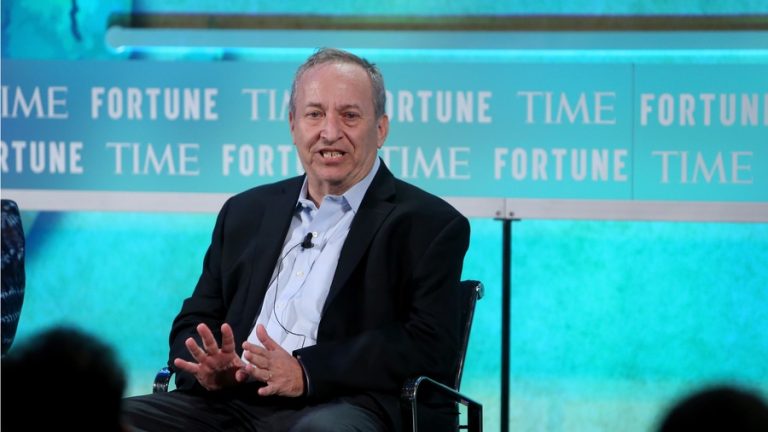
Lawrence Summers—former president of Harvard and former U.S. Treasury secretary under the Clinton and Obama administrations—abruptly suspended all public activities. In a brief statement, he spoke of “deep shame.” The reason soon became clear. A newly declassified cache of emails and text messages revealed a pattern of conduct that was not merely embarrassing, but corrosive.
Between 2018 and 2019, Summers had aggressively pursued a Chinese-born female economist. For advice on how to proceed—how to interpret her messages, how to manage timing, how to increase his chances—he repeatedly turned to Jeffrey Epstein, the financier who would later be exposed as a serial sexual predator.
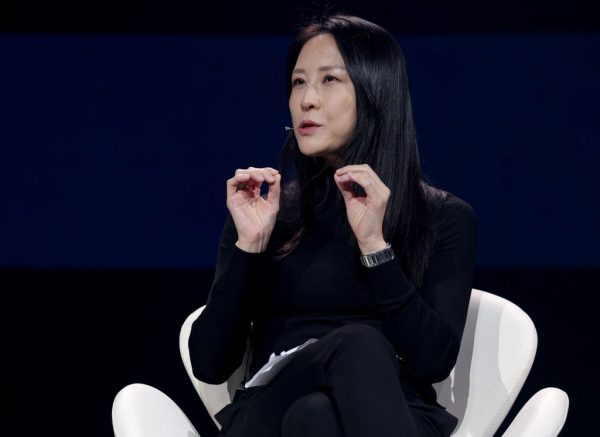
The woman at the center of these exchanges was Keyu Jin.
Success
You are now signed up for our newsletter
Success
Check your email to complete sign up
At the time, Jin was thirty-six years old and already a star. She held a Ph.D. in economics from Harvard, had become the youngest tenured professor in the history of the London School of Economics, appeared regularly at the World Economic Forum in Davos, and wrote for The New York Times. . To Western audiences, she seemed to embody a reassuring image: a cosmopolitan, fluent, and charismatic interpreter of China’s economy.
She spoke impeccable American English, moved easily among elites, and presented a résumé that appeared almost too perfect to question.
What remained largely unexamined was how that résumé had been formed.
An unusual upbringing
Keyu Jin is the daughter of Jin Liqun, a former vice minister of finance in China and the founding president of the Asian Infrastructure Investment Bank. During the Zhu Rongji era—a period often remembered for technocratic reform—her father was among the regime’s most trusted economic officials.
At fourteen, Jin was sent to the United States and placed with a politically connected host family in New York. This was no ordinary student exchange. As a teenager, she canvassed neighborhoods, distributed campaign materials, and followed her hosts into local political circles. Years later, she would describe this experience as formative, explaining that it allowed her to understand how American politics worked long before most of her peers.
For ordinary Chinese families, such an upbringing would have been unimaginable. It was not simply overseas education; it was early, sustained exposure to Western political life, carefully supervised and unusually well connected. By the time Jin entered adulthood, she had already been trained—socially and politically—for the environments she would later inhabit.
From ‘peril’ to ‘again’
In the private correspondence between Summers and Epstein, Jin’s real name never appeared. Instead, she was referred to by a codename: “Peril.”
In November 2018, after meeting her for the first time, Summers wrote to Epstein in a state of infatuation. He described Jin as intelligent, confident, clear-minded, and strikingly attractive, before ending the message with a blunt confession: “I’m fucked.”
Months later, in June 2019, Summers posed a crude question. Which was more likely, he asked—Donald Trump winning reelection, or his chances of sleeping with “Peril” again?
Epstein’s response was dismissive. The odds were essentially zero, he replied, adding that Jin would never find another Lawrence Summers.
The word “again” did not go unnoticed. It suggested that an intimate encounter may already have occurred, followed by Jin’s decision to pull back and limit the relationship to professional contact.
Summers did not take the hint. He forwarded Jin’s academic emails to Epstein, asking him to parse her language, evaluate her level of interest, and advise whether delayed replies might heighten her anticipation.
That a former U.S. Treasury secretary and Harvard president would share a Chinese scholar’s private correspondence with a convicted sex offender—seeking tactical guidance on seduction—was disturbing enough. That this behavior unfolded within the most prestigious institutions of Western academia made it worse.
Jin said nothing. She has never commented publicly on the episode.
A mission formed at 14
Jin has, however, spoken openly about something else: her sense of mission.
On Lex Fridman’s podcast, she explained that when she arrived in the United States at 14, she already knew what she wanted to do with her life. Her goal, she said, was to eliminate Western misunderstandings about China.
The phrasing is revealing. She did not speak of dialogue, exchange, or mutual learning. She spoke of eliminating misunderstandings—language that closely mirrors the vocabulary of official Chinese external messaging.
After completing postdoctoral work at Harvard, Jin had options. She could have remained in the United States, embedded in American academia. Instead, she chose a permanent position at the London School of Economics.
The choice was not accidental. The LSE was founded by members of the Fabian Society, an intellectual movement dedicated to shaping society through elite education, research, and institutional influence rather than mass politics or revolution. From its inception, the school was designed to train those who would later govern.
Jin placed herself squarely within that tradition.
A carefully calibrated public message
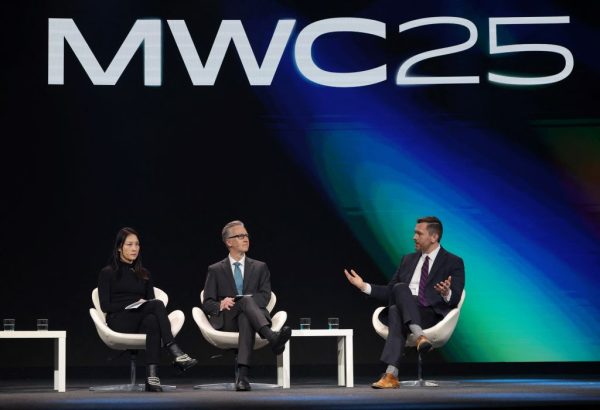
During her decade at the LSE, Jin’s profile only grew. She published The New China Playbook: Beyond Socialism and Capitalism, gave long-form interviews to The New York Times, and became a familiar presence at Davos, where political leaders, financiers, and corporate executives gather each year to exchange ideas and assurances.
Across these platforms, her message remained remarkably consistent.
China, she argued, did not censor speech in the way Western critics claimed; it merely restricted a limited set of politically sensitive topics. The re-education camps in Xinjiang were unfortunate, she acknowledged, but they were closed, and foreigners were welcome to visit. Most Chinese citizens, she said, were willing to trade certain freedoms for stability and security. China was still a developing country, not a would-be global hegemon. American hostility toward Beijing stemmed primarily from misunderstanding. And China’s state-led economic model, particularly in areas such as electric vehicles, renewable energy, and 5G infrastructure, deserved admiration rather than suspicion.
None of these arguments were new. They had appeared, in near-identical form, for years in statements from China’s Ministry of Foreign Affairs and in state media outlets such as People’s Daily and Global Times. What was new was the delivery: official positions repackaged in the language of Western economics, spoken with Ivy League authority, and reinforced by the institutional prestige of London academia.
A five-step pattern of influence
Keyu Jin was not an isolated phenomenon. She was simply the most visible and refined example of a broader pattern.
That pattern is associated with the Chinese Communist Party’s United Front Work, coordinated by the United Front Work Department. Inside the party, the United Front is often described as a “magic weapon”—a system designed to shape outcomes not through coercion, but through relationships, access, and the quiet alignment of interests.
In practice, the pattern often unfolds in five stages.
First, children of senior officials are sent abroad at an early age and placed in politically connected households. Second, they enter elite universities and policy-oriented programs, frequently supported by organizations such as the Chinese Students and Scholars Association, which maintains close ties to Chinese diplomatic missions. Third, after graduation, they avoid both mainland China and U.S. academia, instead choosing elite third-country institutions such as the LSE or Sciences Po. Fourth, they cultivate constant visibility in mainstream Western media while carefully avoiding direct engagement with sensitive human rights issues. Finally, at key moments, they intersect with the ambitions, vanities, or weaknesses of Western elites.
Lawrence Summers was one such intersection.
Other cases display similar dynamics. Christine Fang cultivated relationships with rising U.S. politicians in the Bay Area before leaving the country amid FBI scrutiny. Wendi Deng Murdoch rose within Rupert Murdoch’s media empire, helping to soften coverage of China in exchange for access and influence.
Over the past decade, Western universities have seen a growing number of Chinese female scholars with comparable profiles: exceptional credentials, polished presentation, elite family backgrounds, and a conspicuous refusal to criticize the Chinese Communist Party.
Together, they form an informal but effective network—soft-spoken, elegant, and persistent—nudging economic and policy discourse, inch by inch, toward Beijing.

When ‘Peril’ became a description
By November 2025, Lawrence Summers had retreated from public life in disgrace.
Keyu Jin remained exactly where she was: securely tenured at the London School of Economics, invited to major media platforms, welcomed at Davos, and publishing new books. The mission she had articulated at 14—to eliminate misunderstandings—continued without interruption.
She did not need to respond to the scandal. No major Western outlet demanded that she do so.
“Peril” was no longer merely a private codename exchanged between two men. It had become a description.
Jin was not a danger to one aging academic. The risk she represented extended far beyond a personal scandal. When a former Harvard president sought romantic guidance from Jeffrey Epstein; when influential newspapers elevated a scholar who never criticized the Chinese Communist Party; and when elite institutions placed their trust in someone shaped from adolescence for narrative management, the process had already passed the point of infiltration.
This was no longer a foreign presence slipping inside Western institutions. It was the systematic extraction of their credibility, legitimacy, and voice.
Keyu Jin was not the machine itself. She was one of its sharpest, most carefully honed components.