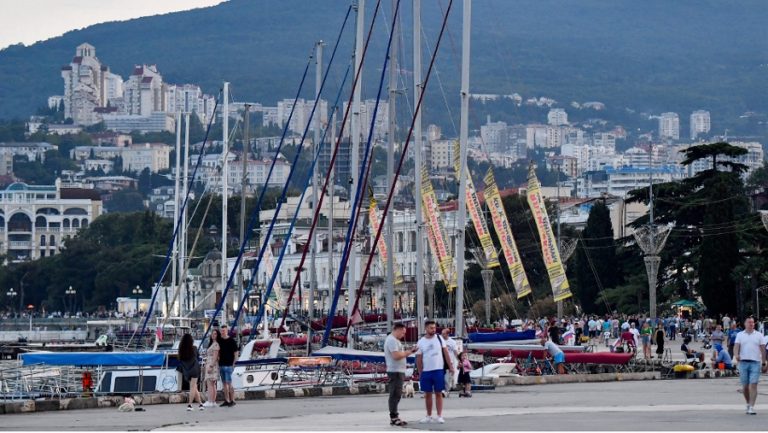
According to a June 21 report by Politico, Russian-occupied Crimea is facing growing supply pressures as Ukraine continues to intensify long-range strikes against logistics and supply lines in Crimea and surrounding regions. On Saturday, the peninsula’s pro-Russian authorities announced a suspension of fuel sales to the public and businesses, signaling that the effects of the war are increasingly spreading from the front lines into occupied territories.
Crimea’s Moscow-backed leader, Sergey Aksyonov, announced on Telegram on June 21 that, effective 9:00 a.m. local time, all gas stations across the peninsula would cease selling fuel to private individuals and commercial organizations. Payments by cash, bank card, or fuel vouchers would no longer be accepted.
Under the new regulations, existing fuel supplies will be reserved primarily for government agencies and key institutions responsible for maintaining essential public services and security operations.
Aksyonov urged residents to remain calm and said further arrangements would be communicated through official channels.
Politico reported that the measure follows a series of recent Ukrainian attacks on energy and transportation infrastructure in Crimea and nearby regions.
Success
You are now signed up for our newsletter
Success
Check your email to complete sign up
Particular attention has been focused on the city of Kerch in eastern Crimea and surrounding areas. Kerch is home to a major port and serves as the gateway to the Kerch Strait Bridge, a critical route for transporting personnel and supplies from Russia into Crimea and southern Ukraine.
At the same time, multiple energy facilities in Russia’s Krasnodar Krai have also come under attack in recent weeks. Analysts believe Ukraine is attempting to weaken Russia’s logistical capabilities by targeting transportation corridors, ports, and fuel storage facilities.
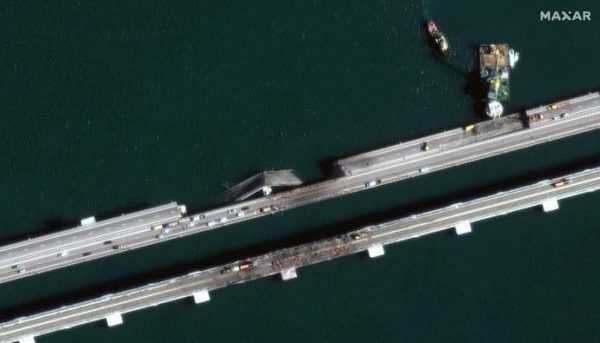
Fuel supply crisis on the peninsula worsens
The Associated Press previously reported that continued Ukrainian strikes on fuel depots, pipeline infrastructure, and transportation networks have created Crimea’s most severe fuel shortage since Russia annexed the peninsula in 2014. Some areas had already introduced fuel rationing measures, while long lines formed at certain gas stations.
According to Sky News, repeated drone attacks on refineries, fuel storage sites, and pipelines have significantly disrupted Crimea’s fuel supply chain. The report suggested that Ukraine is seeking to extend wartime pressure beyond the front lines and into Russian-controlled rear areas, increasing the cost of maintaining the occupation.
Politico noted that the complete suspension of civilian fuel sales indicates that Russian occupation authorities in Crimea have begun prioritizing limited resources for government institutions and security services, while placing the needs of ordinary residents secondary.
Over the past several months, Ukrainian forces have repeatedly launched long-range strikes against fuel depots, refineries, ports, railway hubs, and supply warehouses. Although Russian officials rarely disclose the extent of the damage, the unprecedented decision to impose a peninsula-wide ban on civilian fuel sales is widely viewed as the latest sign that logistical strains are beginning to directly affect daily life and public services in Crimea.
Analysts say that if Ukraine continues its high-intensity attacks on transportation routes through the Kerch Strait and nearby energy infrastructure, Crimea could face even greater transportation and supply challenges in the future, while the cost for Russia to maintain normal operations in the occupied territory is likely to rise further.