By Yang Tianzi
Iran is entering what analysts describe as its most severe multidimensional crisis since the 1979 Islamic Revolution. With protests erupting simultaneously in 88 cities, the national currency nearing collapse, and external military pressure mounting, international observers are increasingly comparing Iran’s trajectory to the collapse of Venezuela.
That sense of unease intensified after Venezuelan President Nicolás Maduro was reportedly captured by U.S. forces. The episode has deepened anxiety among Iran’s ruling elite, who see uncomfortable parallels between Caracas’s downfall and Tehran’s own growing instability.
Economic collapse triggers nationwide unrest
The scale of Iran’s current protest movement is striking. According to figures compiled by the Human Rights Activists News Agency (HRANA), demonstrations have spread across 27 of Iran’s 31 provinces, encompassing 88 cities. The geographic breadth suggests a nationwide crisis rather than isolated unrest.
Despite a harsh security response, including at least 35 reported deaths and nearly 1,200 arrests, protests have continued and, in some areas, expanded.
Success
You are now signed up for our newsletter
Success
Check your email to complete sign up
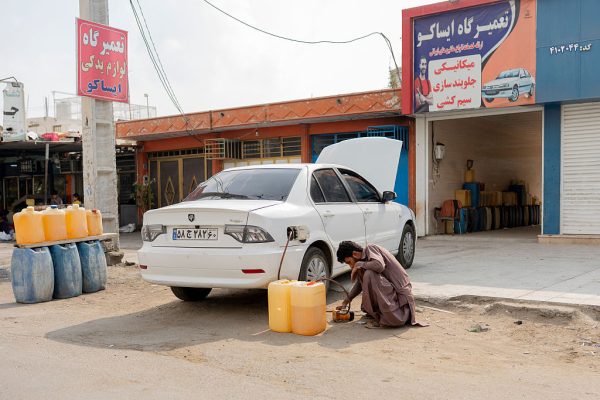
The immediate trigger has been the rapid depreciation of Iran’s currency. The collapse of the rial has had a direct and tangible impact on daily life. As the currency weakens, the cost of imported goods rises sharply, inflation accelerates, and household purchasing power erodes.
For an economy heavily dependent on imports, currency instability translates into soaring prices for food, medicine, and other essentials. As living conditions deteriorate, economic pressure has increasingly transformed into political anger directed at the government.
Iran’s economic problems, however, did not emerge overnight. Years of international sanctions, systemic corruption, mismanagement, and inefficient allocation of resources have steadily weakened the economy. Although Iran possesses vast oil reserves, sanctions have sharply constrained exports. Combined with an overreliance on oil revenues and limited economic diversification, the system has proven fragile under sustained external pressure.

A lethal combination of three crises
Vakker, director of the Middle East and North Africa program at the Royal Institute of International Affairs in London, describes Iran’s predicament as a dangerous convergence of three crises: economic collapse, erosion of political legitimacy, and escalating military threats from the United States and Israel.
The first is economic. Currency depreciation, high inflation, and rising unemployment have severely undermined living standards. Economic distress has weakened state finances while eroding the government’s social support base.
The second is a crisis of political legitimacy. The Islamic Republic’s authority rests on religious leadership and revolutionary ideology. After more than four decades, widespread corruption, disregard for public grievances, and violent repression of dissent have significantly damaged that legitimacy.
Younger Iranians, in particular, show little attachment to religious ideology and place greater emphasis on personal freedom and economic opportunity. When the state fails to deliver either, its governing foundation weakens.
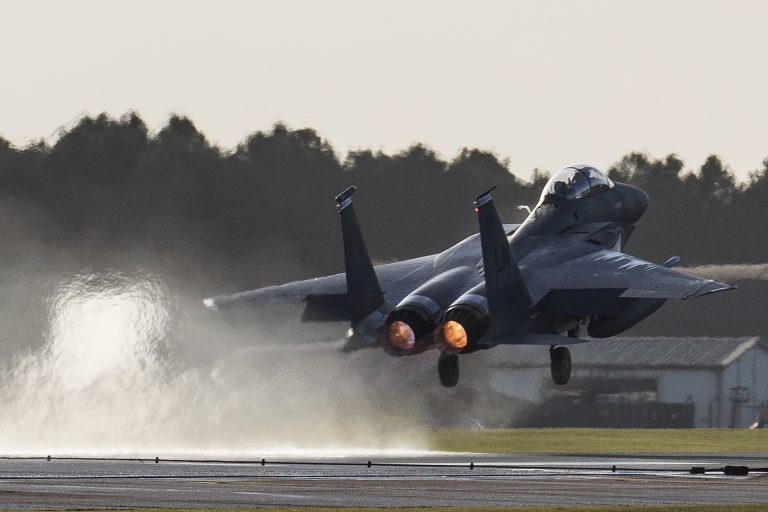
The third crisis comes from external military pressure. Washington and Tel Aviv have long viewed Iran as a central threat in the Middle East, particularly over its nuclear program. The Trump administration withdrew from the Iran nuclear deal and pursued a policy of “maximum pressure.”
Trump has warned that if Iranian authorities kill protesters, the United States would respond forcefully. The reported capture of Venezuela’s Maduro has reinforced perceptions that such threats may translate into direct action, adding psychological pressure on Iran’s leadership.
These three crises reinforce one another. Economic collapse fuels protests and undermines legitimacy, which in turn weakens the state’s ability to manage the economy. External military threats heighten internal instability by increasing uncertainty around the regime’s survival. Domestic unrest, in turn, creates openings for foreign intervention.
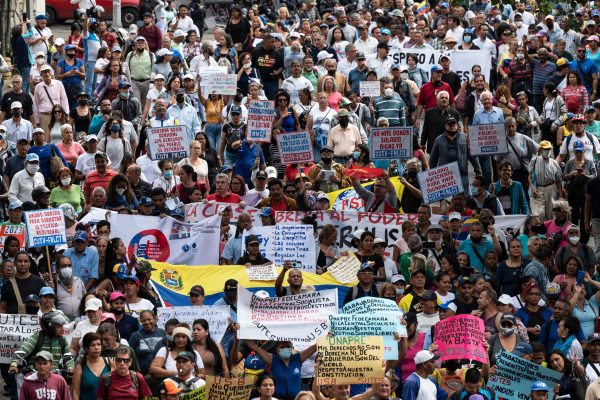
Venezuela as mirror and warning
Venezuela’s collapse offers a troubling reference point for Iran. The two countries share striking similarities: both are oil-rich, have faced prolonged U.S. sanctions, suffer from severe economic mismanagement, and operate under authoritarian systems. They were also close political allies, supporting one another internationally while opposing U.S. pressure.
Venezuela’s crisis began with falling oil prices and poor governance. Corruption and incompetence under the Maduro government worsened conditions, leading to hyperinflation, food shortages, and mass emigration. Efforts to maintain power through repression ultimately failed under combined internal and external pressure.
For Iran, the fall of an allied regime carries heavy psychological weight. It signals not only the loss of a partner, but also demonstrates Washington’s willingness and capacity to pursue regime change. Johns Hopkins University professor Nasr has argued that U.S. objectives toward Iran have expanded beyond containment toward outright regime replacement.
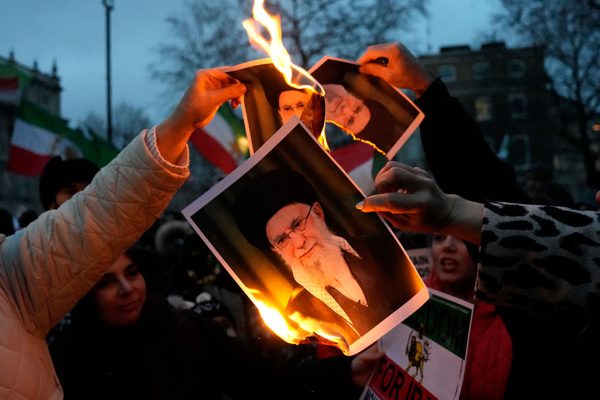
Iran’s distinct and complex realities
A CNN analysis highlights a critical distinction: Iran is a theocratic republic with state capacity, military power, and regional networks far exceeding those of Venezuela.
Iran maintains a robust state apparatus. The Islamic Revolutionary Guard Corps functions not only as a military force but also as a major political and economic actor, controlling key sectors of the economy. The Basij militia provides grassroots enforcement. This layered control structure allows the regime to maintain order even under severe strain.
Iran has also built an extensive network of regional proxies, including Hezbollah in Lebanon, Shiite militias in Iraq, the Assad government in Syria, and the Houthis in Yemen. This so-called “axis of resistance” provides strategic depth and leverage against external pressure. Any direct threat to Tehran could trigger regional retaliation and broader conflict.
Iranian society is also more complex than Venezuela’s. The country has a long civilizational history and a strong sense of national identity. Public dissatisfaction with the government does not automatically translate into support for foreign intervention. Historical experience has left Iranians deeply wary of outside interference, and nationalism could serve as a stabilizing buffer in moments of crisis.
Geography further complicates matters. Iran controls the Strait of Hormuz, through which roughly one-fifth of the world’s oil shipments pass. Any military confrontation involving Iran risks severe disruption to global energy markets.
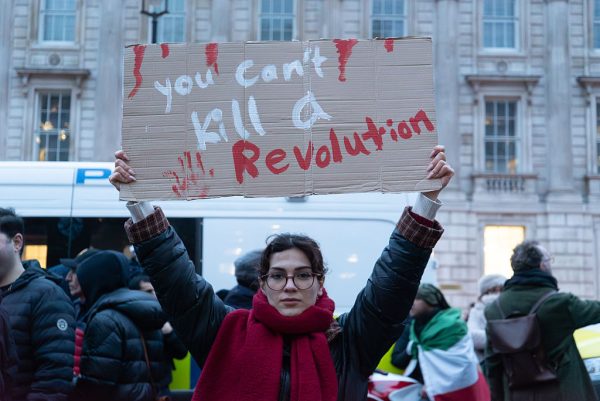
Khamenei’s hard line and internal divisions
Facing mounting internal and external pressure, Supreme Leader Ali Khamenei has adopted a confrontational stance. He has denounced negotiations with the United States as a trap and vowed resistance. The rhetoric reflects deep distrust of Washington and an effort to consolidate internal unity and prevent elite fractures.
Yet internal disagreements persist. Reformists argue that negotiation and compromise are necessary to ease external pressure and stabilize the economy. Hardliners insist on revolutionary principles and reject concessions. Such divisions could weaken the regime’s ability to respond effectively during a crisis.
More fundamentally, the protests point to a deeper question: whether the Islamic Republic’s governing model can still meet the demands of contemporary Iranian society. Younger generations seek greater personal freedom, economic opportunity, and political participation. These demands stand in tension with the existing theocratic system.
Even if protests are temporarily suppressed, unresolved structural tensions suggest the crisis will resurface.
Iran now stands at a historic crossroads. The unrest in 88 cities reflects not only economic distress but a broader challenge to the political system itself. Venezuela’s experience looms as a warning, but Iran’s path forward remains uncertain.