By Katherine Hu, FinalWar
To watch the full episode, please click on the FinalWar’s official YouTube channel here.
At the very start of 2026, a series of events unfolded that sent tremors through the global authoritarian order — and straight into the political heart of Beijing. Venezuela’s President and longtime dictator Nicolás Maduro was captured alive by U.S. forces in the early hours of Jan. 3. Meanwhile, in Iran, the rule of Supreme Leader Ali Khamenei has visibly began to unravel as nationwide protests surge.
Across Venezuela, crowds poured into the streets to celebrate. Across Iran, demonstrations spread with unprecedented urgency. Together, these scenes pointed to a sobering reality for authoritarian regimes worldwide: 2026 was shaping up to be a decisive turning point.
For observers inside and outside China, the implications were unmistakable. If Washington dared to seize Maduro alive, a question echoed through overseas Chinese communities and mainland social circles alike: Could Chinese leader Xi Jinping be next?
Success
You are now signed up for our newsletter
Success
Check your email to complete sign up
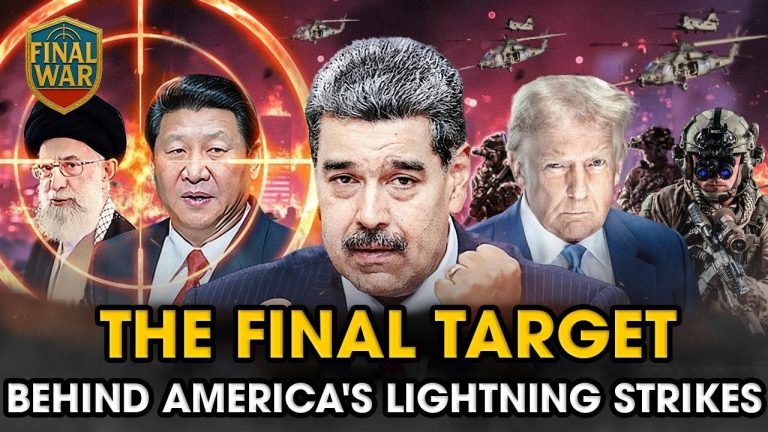
Behind the cascade of headlines lay a far more consequential development. The U.S. military’s sustained operations across Latin America and the Middle East were not isolated actions. They formed a coordinated geopolitical strike with a clear strategic focus — one aimed squarely at the Chinese Communist Party (CCP). Its effects were subtle on the surface, but devastating in substance.
Final target comes into focus
On Dec. 28, 2025, just days before Maduro’s capture, veteran U.S. national security journalist Bill Gertz published a post that immediately set off alarms in political and military circles. “Suleimani drone strike would be repeated in Beijing for each member of the Politburo standing committee including Central Military Commission Chairman Xi if a military assault is launched against Taiwan,” said Gertz. “A force in the world that can stop the PLA. CCP would go into the ash heap of history like its Soviet progenitor”
Gertz is not a fringe commentator. He is widely regarded as a trusted national security reporter with deep access to Pentagon thinking, often serving as an indirect channel for messages that cannot be delivered officially. When reports surfaced on January 3, 2026, that Maduro and his wife had been captured alive, the timing was impossible to ignore.
One distinction stood out. Iranian commander Qasem Soleimani had been assassinated. Maduro was taken alive. That difference was not technical; it was strategic.
RELATED: Protests Erupt in 88 Iranian Cities as Tehran Faces Venezuela-Style Crisis Scenario
Former U.S. Department of Defense official and retired Air Force lieutenant colonel Tony Hu described the moment as Xi’s worst nightmare. “What the U.S. military has demonstrated is not merely firepower, but the intelligence capability to penetrate deep into the core of enemy territory. What Xi should fear is not missiles, but the possibility that the people around him could turn into ‘internal collaborators’ at any moment… This sends a powerful signal to the CCP: under high-pressure rule and the lure of overwhelming external forces, anyone could become the next person to betray Xi Jinping.”
Was Venezuela the real target?
Maduro’s regime had long survived only through external backing, chief among them, the CCP. In 2023, Xi Jinping personally elevated China–Venezuela relations to an “all-weather strategic partnership,” calling Maduro a “true ironclad friend” and extending more than $100 billion in loans alongside over 600 bilateral agreements.
Venezuela’s strategic importance went far beyond ideology. Though not the world’s largest drug producer, it became a critical logistics hub within transnational trafficking networks, providing transport corridors, laundering systems, and security protection. These capabilities did not emerge organically. They were built through long-term cooperation in which the CCP was not a bystander, but an active participant.
Seen in this light, Maduro’s capture was never about Venezuela alone. Its deeper purpose was to leverage his testimony to establish judicial findings on the CCP’s infiltration across the Americas and beyond. If that process advances, Beijing’s long-standing strategic footprint in the Western Hemisphere could be dismantled wholesale.
Beijing received the message immediately. On Jan. 4, Chinese entrepreneur Hu Liren revealed that Xi Jinping had ordered emergency security upgrades, unusual troop movements around the capital, and the quiet activation of underground shelter systems. Soon after, Chinese netizens discovered that Zhongnanhai, the CCP’s political nerve center, had vanished from digital maps. Searches on Baidu Maps returned a stark result: “No related location found.”
The symbolism was chilling. China’s political heart had effectively disappeared from public view.
A direct strike to China’s energy lifelines
The most immediate consequence of Maduro’s capture was not psychological, it was material. Shortly afterward, Washington announced substantive control over Venezuela’s oil fields and exports. Caracas was instructed to prioritize U.S. buyers, deliver 30–50 million barrels of oil to the United States, and sharply scale back ties with China, Russia, Iran, and Cuba.
While Venezuelan oil accounted for only about 4 percent of China’s seaborne crude imports, its strategic value lay elsewhere. Venezuela is one of the world’s most important sources of heavy crude—an irreplaceable input for military fuel.
China’s People’s Liberation Army Navy has long relied on heavy fuel oil for large vessels due to its safety and energy density. Once Venezuela’s export routes were cut off, uncertainty around the PLA Navy’s long-term operational capacity rose sharply. This would not halt operations overnight, but it would constrain sustained, large-scale deployments.
At the same time, pressure mounted on other fronts. Iran’s discounted oil supplies to China collapsed under intensified sanctions, fueling Tehran’s economic freefall. Russia, now China’s largest oil supplier, faced the prospect of 500 percent tariffs on buyers if new U.S. sanctions were enacted. Washington also barred oil sales from the U.S. Strategic Petroleum Reserve to the CCP.
Viewed together, these were not isolated energy moves. They formed a deliberate campaign to weaken Beijing’s overseas military and economic support systems.
The myth of CCP military power shattered
Maduro’s capture also delivered an unfiltered demonstration of modern military reality. The operation showcased not just weapons, but overwhelming intelligence integration and coordination. Within minutes, Venezuela’s defenses collapsed.
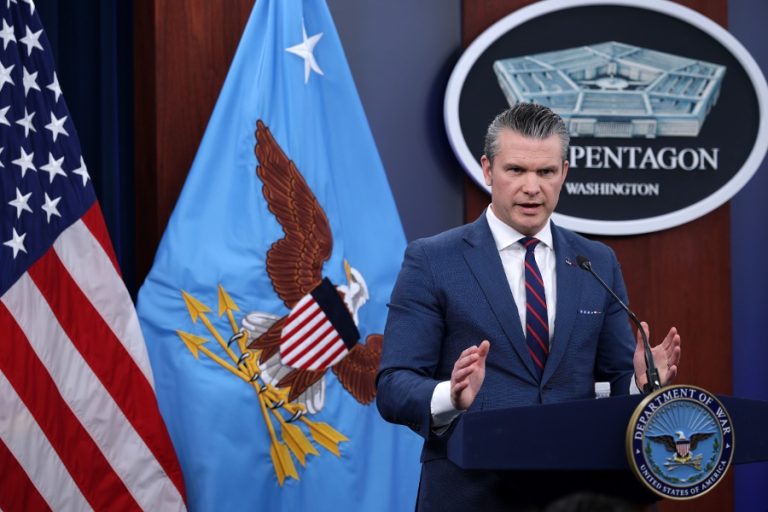
Cuban authorities later confirmed that 32 members of Maduro’s Cuban security detail were killed. According to U.S. officials, the real number was higher. Defense Secretary Pete Hegseth revealed that from the moment Maduro realized U.S. forces were coming to the instant he saw American troops wearing night-vision goggles before him, only three minutes had passed. Maduro’s wife reportedly said moments before capture: “I think I hear aircraft outside…”
This was devastating for Beijing. Venezuela had long served as a showcase for Chinese military hardware. In real combat, those systems proved alarmingly fragile. Chinese-made radar platforms, once touted as “stealth killers,” were blinded within hours by U.S. electronic warfare. Air defenses collapsed. Armored vehicles were abandoned. Naval assets became irrelevant.
This was not the failure of individual weapons. It was the collapse of an entire command-and-control philosophy — one inflated by corruption, falsified testing data, and laboratory conditions divorced from real warfare.
Taiwan slipping out of reach
For years, Beijing’s confidence rested on the assumption that Washington would not act decisively. That illusion has now collapsed. Following U.S. operations in Iran and Venezuela, Gertz’s warning took on new weight. If Beijing were to move against Taiwan, the consequences would be personal, and immediate, for CCP leadership.
Even China’s most hawkish voices faltered. Military blogger Li Yi, once adamant that the U.S. would never dare strike, publicly broke down on livestream. “Now people are saying cross-strait operations are difficult — the distance from the mainland to Taiwan is 180 kilometers. But from Caracas, Venezuela’s capital, to Washington, D.C., the straight-line distance is 3,300 kilometers, and they still took him alive.…Honestly, I feel completely humiliated. Living like this… it’s unbearable. It’s shameful. Damn.”
Authoritarian regimes ultimately survive on economic performance. When that collapses, repression alone cannot save them. Venezuela’s implosion and Iran’s accelerating unrest now serve as warnings. In Iran, the collapse of the rial triggered mass protests led not by dissidents, but by the regime’s traditional merchant class, its historic backbone. Britain’s “The Times” reported that Khamenei has already prepared an exile plan, known as “Plan B,” reportedly centered on flight to Moscow.
Falling dominoes
For regimes like Iran, Russia, North Korea, and the Taliban, one reality is now unavoidable: If the CCP can no longer bankroll them, they will fall one by one. China itself faces a worsening crisis. Unlike Iran’s inflation, Beijing is trapped in a deflationary spiral compounded by debt. With shrinking incomes, weak social protections, and collapsing confidence, the system is being pushed toward a breaking point.
Venezuela and Iran have offered the CCP a clear mirror, and a stark warning. Economic collapse leads to regime failure. International isolation accelerates internal decay. Beijing’s retreat from Latin America and the Middle East is no longer theoretical. As the CCP’s “great power dream” unravels, the distance between silence and the streets may be shorter than many expect.
By 2026, the dawn of freedom for China’s people no longer appears distant. It is coming into view.
To watch the full episode, please click on the FinalWar’s official YouTube channel here.