By Xiao Ran, Vision Times
At the start of 2026, Iran’s nationwide anti-government protests entered their third consecutive week, marking the most sweeping unrest since the 1979 Islamic Revolution. According to the human-rights group HRANA, at least 544 people have been killed and more than 10,721 detained; the BBC has reported deaths reaching five figures.
The Iranian authorities have since responded with total internet and power shutdowns, paralyzing communications, while the U.S. Department of State urged American citizens to leave Iran immediately.
Vision Times interviewed Jiang Jiawei and political commentator Li Hengqing, who analyzed the uprising’s deeper meaning, from public awakening and revolutionary sacrifice to international intervention and lessons for China. Both stressed that the Iranian people’s resolve and willingness to sacrifice have become a warning bell for all authoritarian regimes.
RELATED: Iran Protests Escalate Nationwide Amid Crackdown and Strikes
Protests spread to hundreds of cities
Success
You are now signed up for our newsletter
Success
Check your email to complete sign up
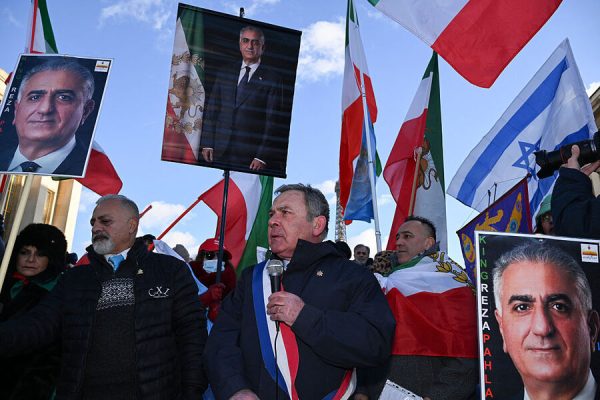
Demonstrations have engulfed more than 190 cities, with protesters chanting “Down with Khamenei!” Truck drivers have gone on strike, shops have shuttered, and street confrontations have intensified. Exiled crown prince Reza Pahlavi has repeatedly urged citizens to occupy city centers and raise the Lion and Sun flag. On Jan. 11, the flag was hoisted at former Iranian embassy sites in Washington and Australia, becoming a powerful symbol of resistance.
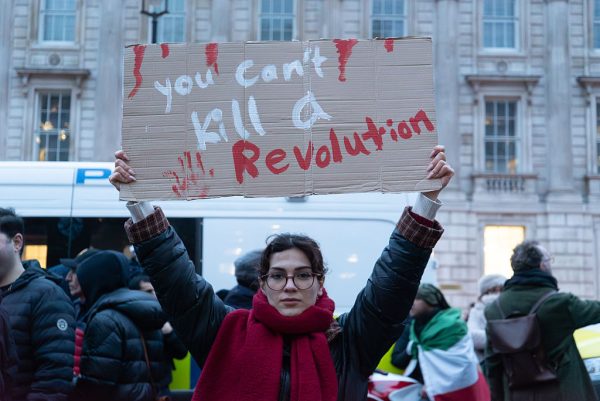
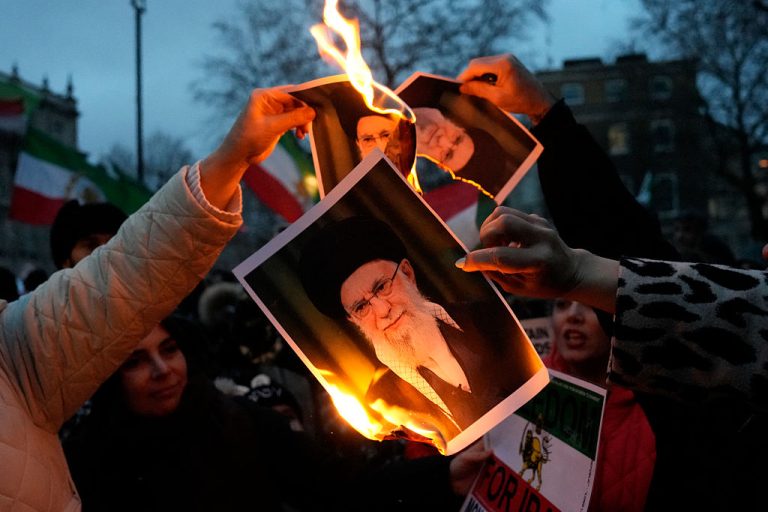
The crackdown has been brutal. The Islamic Revolutionary Guard Corps opened fire indiscriminately; authorities began public executions of detainees. Tehran morgues overflowed with bodies, including young people and children. The most heartbreaking case was the death of three-year-old Melina Asadi, killed by a stray bullet during a march. Mourners carried her coffin through tear gas, chanting slogans. Protesters burned portraits of Ali Khamenei to vent their fury.
RELATED: Iran Cuts Internet and Phone Services Nationwide as Starlink Reportedly Comes Online
Danger signs escalated as regular army units joined the repression. The regime interfered with Starlink, while protesters destroyed China-made surveillance cameras. Cracks appeared within the elite: Colonel Azad led defections, and about 50,000 officers reportedly answered Pahlavi’s call. Citizens adopted a “Bangladesh model,” to retaliate against enforcers and marking officials’ residences.
External pressure mounted. U.S. B-2 bombers moved into the region; Israel raised its alert level; Hamas reportedly prepared to surrender. U.S. President Donald Trump announced 25 percent tariffs on countries trading with Iran; the White House posted “God bless the U.S. military.” Iran’s foreign minister said Tehran was open to talks, but only on “fair” terms, otherwise prepared for war.
‘The people have awakened’
Jiang Jiawei said dictators often rely on violence and terror, but repression only fuels greater anger: “We saw the Chinese Communist Party’s crackdown on Hong Kong’s anti-extradition movement. Every suicide, every floating body, every disappearance only made Hongkongers braver. Today, the Iranian people are no longer enduring in silence.”
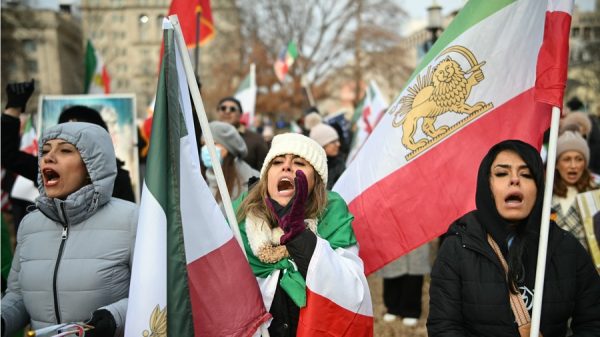
He cited shocking images of civilians using their bodies to face gun barrels, couples walking forward side by side: “The Iranian people have awakened to the point of being willing to sacrifice. They possess a fearless, martyr-like spirit—not to survive, but to give themselves for the greater good of society. That is the determination of a revolution.”
While mourning every casualty, Jiang emphasized: “Revolution requires sacrifice. We must be prepared to become martyrs, not survivors.” Drawing a parallel with Hong Kong, he said educated and repressed populations eventually stop staying silent.
Economic collapse lit the fuse
Li Hengqing described the scale of the protests as “shocking the world.” Since 1979, he said, Iran fell under corrupt authoritarian rule and public anger accumulated for decades. He pointed to images of a young man walking toward guns while his girlfriend embraced him from behind: “This kind of ‘better to die than live without freedom’ resolve resembles the American War of Independence, and echoes the slogans of Chinese students in 1989.”
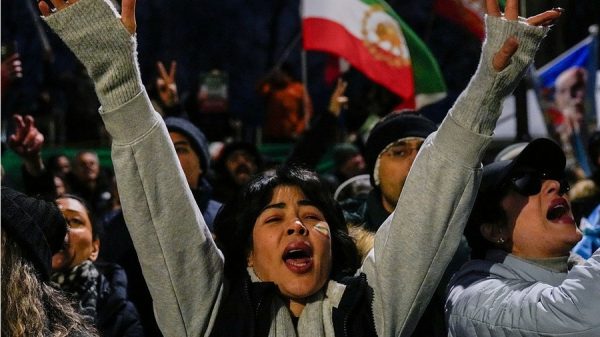
Li noted protests spanning 110+ cities across all 31 provinces, with decades of rage finally erupting. Despite blackouts, Starlink allowed some footage to reach the world. He identified economics as the trigger: Sanction-strangled oil exports, inflation exceeding 50 percent, and a currency collapse of over 90 percent.
“Before 1979, Iran was a modern country where people enjoyed freedom,” he said. “After the revolution, religious shackles punished dissent and elites monopolized wealth; very similar to China.”
When repression backfires
Both interviewees agreed that killing cannot kill ideals. Jiang said: “The more people die, the stronger the people’s resolve becomes. Do not try to kill the spirit by killing the body. Our spirit cannot be killed. The people will only grow angrier.”
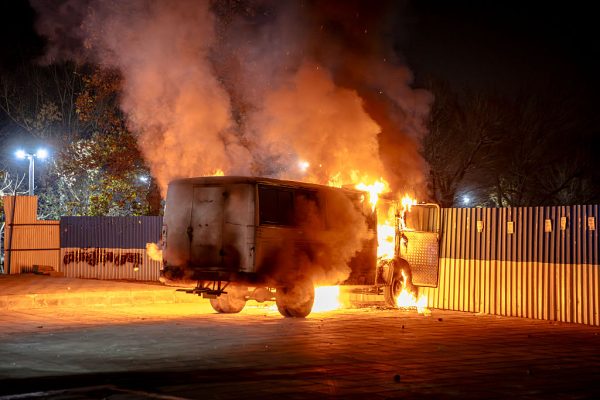
He also addressed authoritarian rulers directly: “We do not expect you to awaken. But the minimum demand is this — give up. Only a free and democratic society benefits humanity. We will give everything, for the next generation, for the future.”
RELATED: Trump Warns Iran Over Protest Killings, Says US May Order Military Action
Li added that blackouts, indiscriminate shooting, and public executions deepen hatred: “Rows of young corpses, a three-year-old girl shot dead, hospitals overflowing with the wounded. Once these images spread, international attention will only intensify.”
He warned that if repression escalates to a Tiananmen-style tank crackdown, the likelihood of coordinated international intervention would rise. The U.S., he said, has the capability to topple a theocracy, but must weigh post-conflict reconstruction and Iran’s long anti-U.S. history.
US stands at the ready
Jiang argued that if Iranians can complete the change themselves, Trump would avoid unnecessary intervention. But continued massacres could force action. He cited Trump aboard Air Force One: “They want to negotiate, but we may have to take action before talks.”
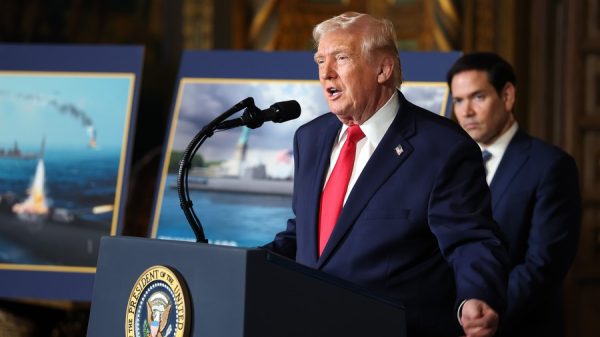
Li analyzed Washington’s signals: repeated warnings against bloodshed, a preference for moral support, economic pressure, and military posture rather than immediate invasion. White House Press Secretary Karoline Leavitt said Iran’s public rhetoric contradicted private messages; diplomacy remained the first choice, but Trump was “not afraid” to use lethal force. She reiterated that airstrikes remain an option and that “many options are on the table,” including military measures, coordination with Israel, cyber operations, and new sanctions.
Li noted the absence of U.S. carriers but emphasized bombers and naval assets could be deployed. Iran’s long-range missile capability has been weakened, though short-range threats remain. He outlined three paths Washington could take: immediate strikes, delayed negotiations exploiting Tehran’s weaknesses, or sustained pressure to force concessions—each with risks to credibility and outcomes.
Li predicted that 2026 could see a cascade of authoritarian collapses, potentially including China.
A warning for China and Hong Kong
Both Jiang and Li issued a call to action for China and Hong Kong. Jiang said: “The Chinese people and the people of Hong Kong must equip their hearts and their courage. Overseas Chinese should prepare to seize parliamentary power. We must dismantle the Communist system itself; not just arrest individual dictators.”
Li warned that Chinese media distort Iran’s crisis, framing it as U.S. interference while ignoring reality: “Most people inside China cannot see the truth. Overseas Chinese must spread it.”
He cautioned against overreliance on external help: “Iranians hope for the U.S. military; Chinese hope for Trump. But your own problems must be solved by yourselves. Without a readiness to face death, how can success be achieved? As the Chinese saying goes: Heaven helps those who help themselves.”
They argued that the fall of regimes in Iran and Venezuela would cut China’s oil supply, worsen unemployment and consumption slumps, and accelerate economic decline. With stability-maintenance spending exceeding military budgets and anti-riot drills spreading nationwide, Li said, Beijing itself understands its vulnerability.
Blood and cries on Iran’s streets remind the world that fragile tyrannies fear an awakened people. For China, the question remains: wait for rescue that may never come, or stand up and resist? Iran’s “people’s revolution” may already be sounding the opening notes of the final movement for global authoritarian rule.