By Li Ming, Vision Times
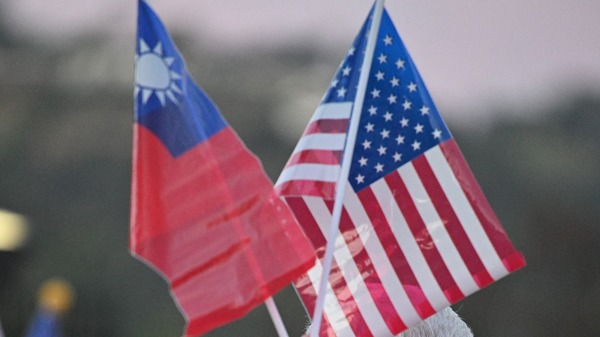
On Jan. 13, the U.S. and Taiwan signed a major trade agreement aimed at deepening cooperation in the semiconductor sector as the Trump administration hopes to wean America off reliance on Taiwan’s industry.
Analysts say that the new agreement does little to weaken Taiwan’s central role in the global chip supply chain, a strength known as the “Silicon Shield.” The concept rests on the idea that Taiwan’s indispensable role in advanced technology acts as a geopolitical deterrent against Communist Chinese military action.
Industry estimates suggest that nearly 30 percent of newly added global computing capacity originates in Taiwan, reinforcing the island’s importance to U.S. and allied strategic defense planning in the Indo-Pacific.
According to various media reports and market analysis, the agreement allows the Taiwanese government to provide up to US$250 billion in credit guarantees to domestic semiconductor and technology firms to support capacity expansion in the U.S. Taiwanese chip exports to the U.S. will also benefit from expanded tariff-free quotas.
Success
You are now signed up for our newsletter
Success
Check your email to complete sign up
RELATED: TSMC Plans at Least Five New Semiconductor Plants in US
Advanced nodes stay put
In return, Washington agreed to lower reciprocal tariffs on most Taiwanese exports from 20 percent to 15 percent, while exempting generic pharmaceutical ingredients, aircraft components, and certain strategic materials from tariffs.
Despite these concessions, U.S. Commerce Secretary Howard Lutnick told CNBC on Jan. 15 that the agreement aims to relocate 40 percent of Taiwan’s entire semiconductor supply chain to the U.S. Industry experts, however, remain skeptical that such a goal can be achieved in the short term, emphasizing that Taiwan’s dominance in cutting-edge chip manufacturing remains irreplaceable.
Sravan Kundojjala, an analyst at research firm SemiAnalysis, noted that as the world’s most advanced semiconductor capacity continues to be concentrated in Taiwan, the island’s “silicon shield” will retain its strategic value at least through the end of the 2020s.
Trade incentives and tariff cuts
RELATED: Patriotism No Longer Sells: Why Chinese Consumers Are Turning Away From Huawei
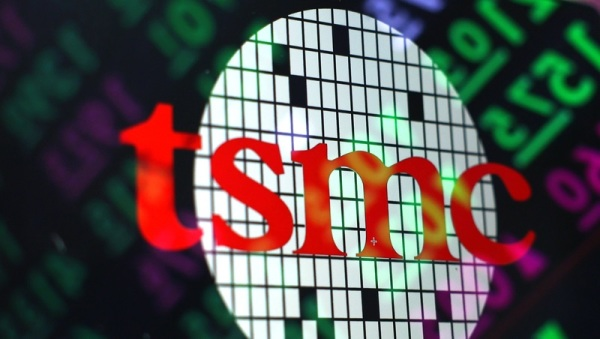
Under Taiwan’s long-standing “N-2 principle,” overseas fabrication plants operated by Taiwan Semiconductor Manufacturing Company (TSMC) are required to remain at least two generations behind the company’s most advanced domestic facilities.
Though TSMC has begun producing 4-nanometer chips at its Arizona facility and plans to upgrade to 2-nanometer and more advanced processes, analysts estimate that the U.S. operations still trail Taiwan’s leading-edge manufacturing by four to five years.
‘High-intensity collaboration’
TSMC Chief Financial Officer Huang Jen-chao emphasized this point in an interview with CNBC on Jan. 15, stressing that advanced manufacturing requires “high-intensity collaboration” between domestic R&D and production teams. He stated: “We must continuously deploy hundreds of engineers across different sites in Taiwan. When we advance the most cutting-edge technologies, those technologies will remain in Taiwan.”
At the same time, TSMC has committed to investing US$165 billion in U.S. semiconductor manufacturing and processing facilities, as well as a research laboratory, to supply major clients such as NVIDIA and Apple.
RELATED: China’s ‘Semiconductor Manhattan Project’ Tests the Limits of a State-Driven Model
William Reinsch, a senior adviser at the Washington-based think tank Center for Strategic and International Studies, observed that Taiwan’s deep pool of engineering talent and advanced fabrication capacity “cannot be replicated at scale elsewhere.” Reinsch noted that the U.S. faces shortages of trained personnel and significantly higher production costs, factors that have delayed the ramp-up of TSMC’s U.S. fabs. He added that the new trade agreement offers limited help in resolving these structural challenges.
Even with expanded Taiwanese investment in the U.S. under the new framework, Reinsch said Taiwan’s core position in terms of technological autonomy and production strength remains “fundamentally unchanged.”
Alina Wang and Leo Timm contributed to this report.