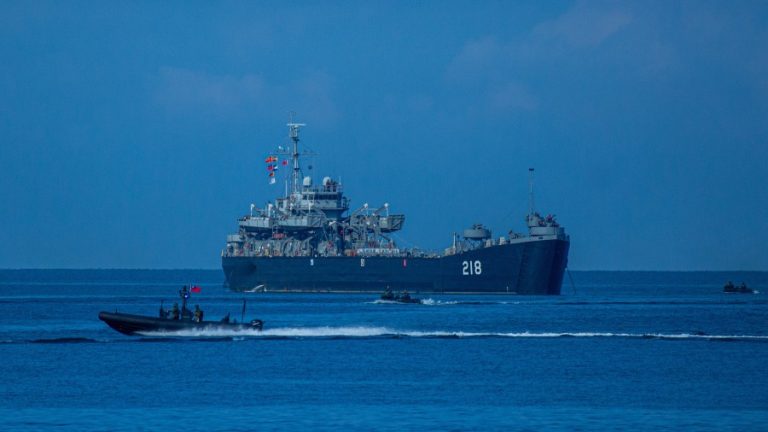
According to The Hill, after the collapse of the regime of former Venezuelan President Nicolás Maduro, China has become one of the most obvious losers in this geopolitical shift. In both political influence and military presence, Beijing has suffered clear setbacks. However, the report notes that this does not mean China is withdrawing from Latin America. Instead, Beijing is consolidating its presence in the region through more low‑profile and institutionalized approaches. This month, China sent a naval hospital ship and a research vessel to Latin America — moves that have attracted heightened attention in U.S. strategic circles.
Hospital ship and research vessel: seen as ‘low‑visibility’ strategic tools
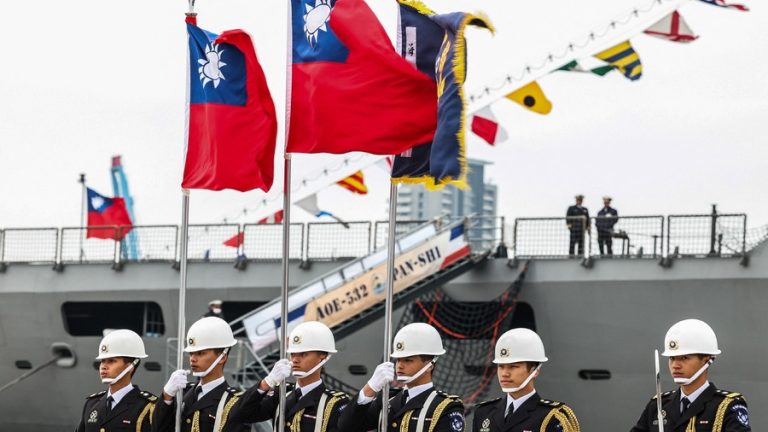
According to The Hill, the People’s Liberation Army Navy hospital ship Silk Road Ark is carrying out the “Harmony Mission 2025–2026” and plans to visit 14 countries including Jamaica, Barbados, Peru, Mexico, Brazil, and Chile.
Although nominally on a medical and humanitarian mission, the ship’s itinerary also includes joint activities with local militaries. Last week in Uruguay, the officials who welcomed the vessel were not health authorities but the defense minister Sandra Lazo, deputy defense minister Joel Rodríguez, navy commander José Elizondo, and Chinese Ambassador to Uruguay Huang Yazhong.
The U.S. Center for Strategic and International Studies (CSIS) has pointed out in its Surveying the Seas research that China’s maritime research and hospital ship fleets have long had “dual civilian‑military” characteristics, and that about 80 percent of Chinese research ships operating in the Indian Ocean are believed to carry out geopolitically or militarily relevant tasks.

Latin America as strategic focus — US cautions against China’s moves
Reuters has reported that as Washington reemphasizes “Western Hemisphere security,” China’s actions in Latin America are increasingly seen by the U.S. as a strategic challenge. Multiple former U.S. officials are quoted saying China is testing America’s strategic bottom line in the region, in ways similar to how Beijing expanded influence in Africa and the Indian Ocean.
Success
You are now signed up for our newsletter
Success
Check your email to complete sign up
Recent developments have heightened this concern even further. Besides the hospital ship, China’s research vessel Tan Suo Yi Hao recently arrived in the Chilean port of Valparaíso. Australian researchers have previously identified this ship as having intelligence‑gathering capabilities, although China describes it as conducting “scientific research.”
In Brazil, the hospital ship also conducted joint sea exercises with the Brazilian Navy. Local medical institutions later said that China did not fully cooperate with inspections of the ship’s medical facilities, leading to further questions about its real purpose.

Washington: This is strategic competition, not humanitarian action
The Hill notes that this series of actions shows China is not merely advancing medical diplomacy but is building a comprehensive network covering ports, communications, research, and military cooperation.
The article argues that with the Trump administration’s renewed emphasis on national security strategy and prioritizing Latin America, Beijing’s accelerated actions are not accidental. China’s recently released new version of its China‑Latin America and Caribbean policy document — and multilateral military exercises organized in South Africa — are seen as responses to U.S. strategic adjustments.
The Financial Times is also cited as saying China’s goal is not short‑term military confrontation but gradually weakening U.S. traditional influence in the Western Hemisphere through long‑term presence.
In summary, the report concludes that the U.S. can no longer view these actions as “ordinary diplomatic visits.” As China’s military and quasi‑military platforms continue entering Latin America, Washington must reevaluate its regional strategy to prevent a potential rival from establishing lasting influence in the Western Hemisphere.