As the “foundation of vitality,” the kidney is an organ of utmost importance in Chinese medicine. Traditional remedies meant to enhance energy, resilience and longevity usually include herbs that focus on toning and nourishing the kidneys. Shan zhu yu (cornus fruit, or Japanese cornellian cherry) serves precisely this purpose.
What is cornus fruit?
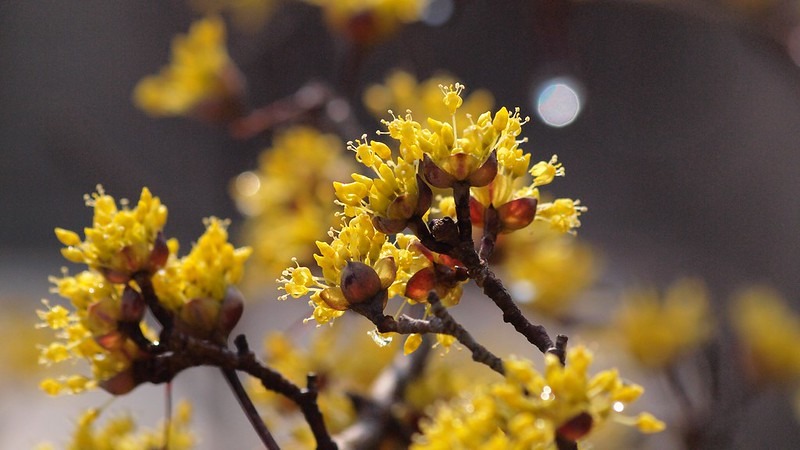
Despite its delicious sounding name, the cornellian cherry is not really a cherry. It is the olive-shaped fruit of Cornus officinalis, a member of the dogwood family native to Eastern Asia. Unlike the ornamental, pink- or white-flowering Japanese dogwood you are probably familiar with, this species blooms very early, with clusters of tiny, yellow flowers. It produces fruit in the fall, which is very similar to those of Cornus mas — another dogwood native to Europe and southwest Asia.
The species name “officinalis” gives us a clue that it has long been recognized for its medicinal value. Although the fruit is red like a cherry, it is much more tart than sweet, and is not consumed raw. Instead, the mature fruits are pitted and dried for use in herbal remedies and warming recipes.
Shan zhu yu in traditional Chinese Medicine (TCM)
The first medicinal use of Shan zhu yu coincides with the inception of traditional Chinese medicine itself, way back in the Han Dynasty (202 BC – 220 AD). This fruit is documented in the Third Century Shen Nong Ben Cao Jing (The Divine Farmer’s Herbal Classic Text), where it was prescribed to treat deficiencies in the liver and kidneys.
TCM classifies cornus fruit as sour, slightly warm, and astringent. With these balanced properties, it is able to stabilize, nourish and tonify. It is especially favored for addressing reproductive and urinary issues.
Success
You are now signed up for our newsletter
Success
Check your email to complete sign up
It is believed to preserve jing (vital essence) by reducing the loss of important fluids. By promoting internal balance, it enhances energy, resilience, health and vitality.
Shan zhu yu is not only recognized for treating incontinence, frequent urination, excessive sweating and nocturnal emissions; it is also recommended for conditions like fatigue, weak knees, lower back pain and tinnitus.
This herb is considered safe for use as a general tonic, and is often taken to slow the degenerative effects of aging, promote quick recovery from illness, and treat chronic conditions like diabetes and hypertension.
How does it work?
Modern research regarding cornus fruit pinpoints bioactive compounds that account for its effectiveness.
- Iridoid glycosides loganin and morroniside protect the kidney with anti-inflammatory and antioxidant properties.
- Astringent properties help stabilize bodily fluids.
- Cornus fruit extract, in particular, is gaining recognition among health enthusiasts. High in vitamin C, the extract boosts collagen synthesis and immune function.
- It is also rich in anthocyanins, which give the fruit its vibrant color. Anthocyanins have been linked to cardiovascular health and protection of nerve cells from damage and degeneration, among other health benefits.
- Essential minerals like potassium and magnesium, both found in cornus fruit, are required to maintain proper bodily functions.
Combined, these properties constitute a powerful, but balanced herb with promise for many situations.
Traditional recipes
Incorporating shan zhu yu into your diet is a simple way to take advantage of its kidney-, liver-, and essence-nourishing effects:
Shan zhu yu tea
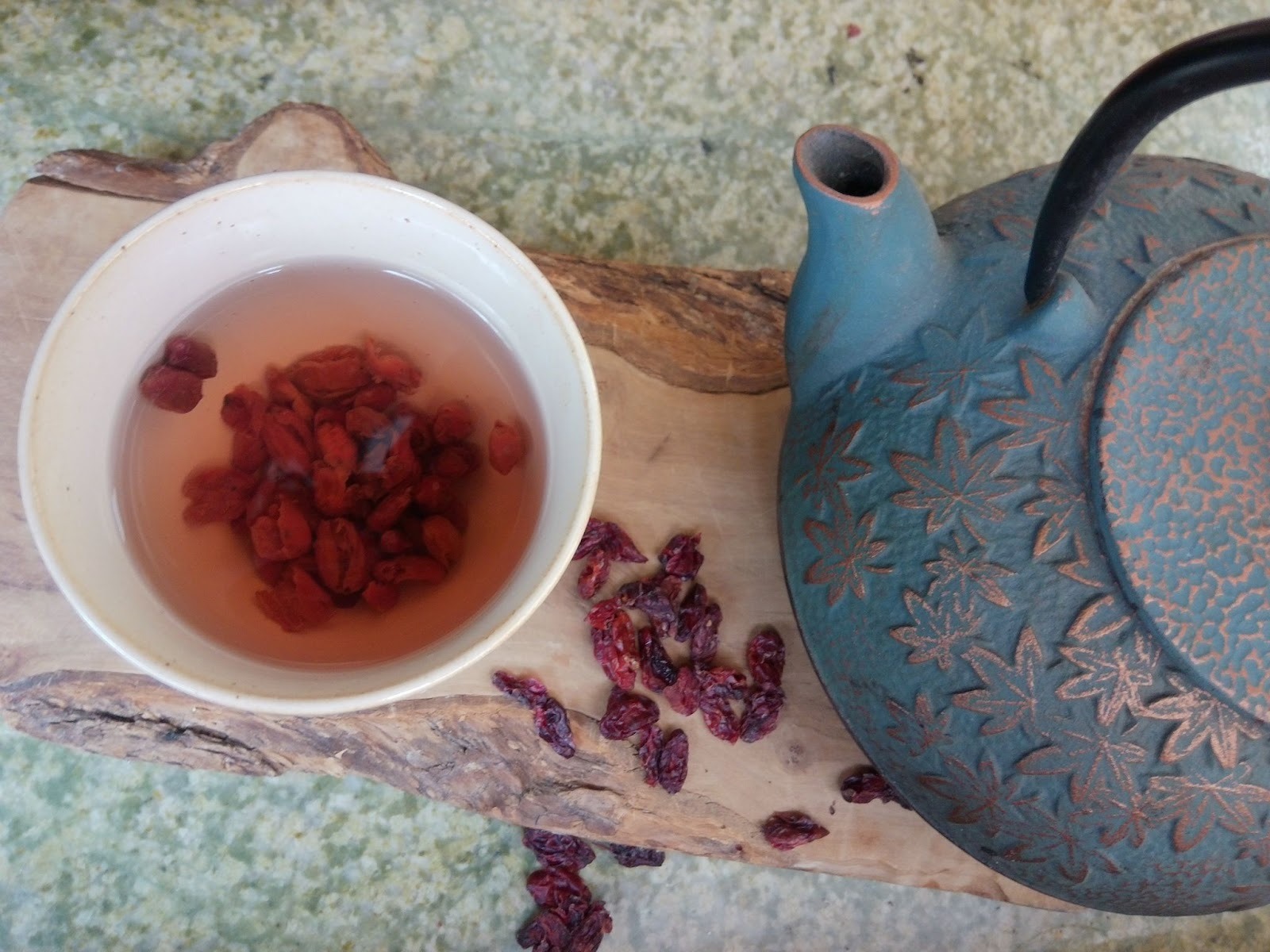
Simple and flavorful, cornus fruit tea secures essence and supports kidney health.
Ingredients:
- 5g (2 ½ tsp) dried shan zhu yu.
- 12 ounces filtered water
Method:
- Steep in boiled, filtered water for 5-10 minutes.
- Drink warm.
Shan zhu yu porridge
This light breakfast porridge nourishes the kidneys and supports vitality.
Ingredients:
- 1 Tbsp dried shan zhu yu
- ½ cup washed rice
- 4-5 cups filtered water
Method:
- Simmer shan zhu yu in water for 10 minutes.
- Remove the fruit with a sieve.
- Add rice to the liquid and cook until soft.
- Serve warm.
Cornus fruit and goji berry soup
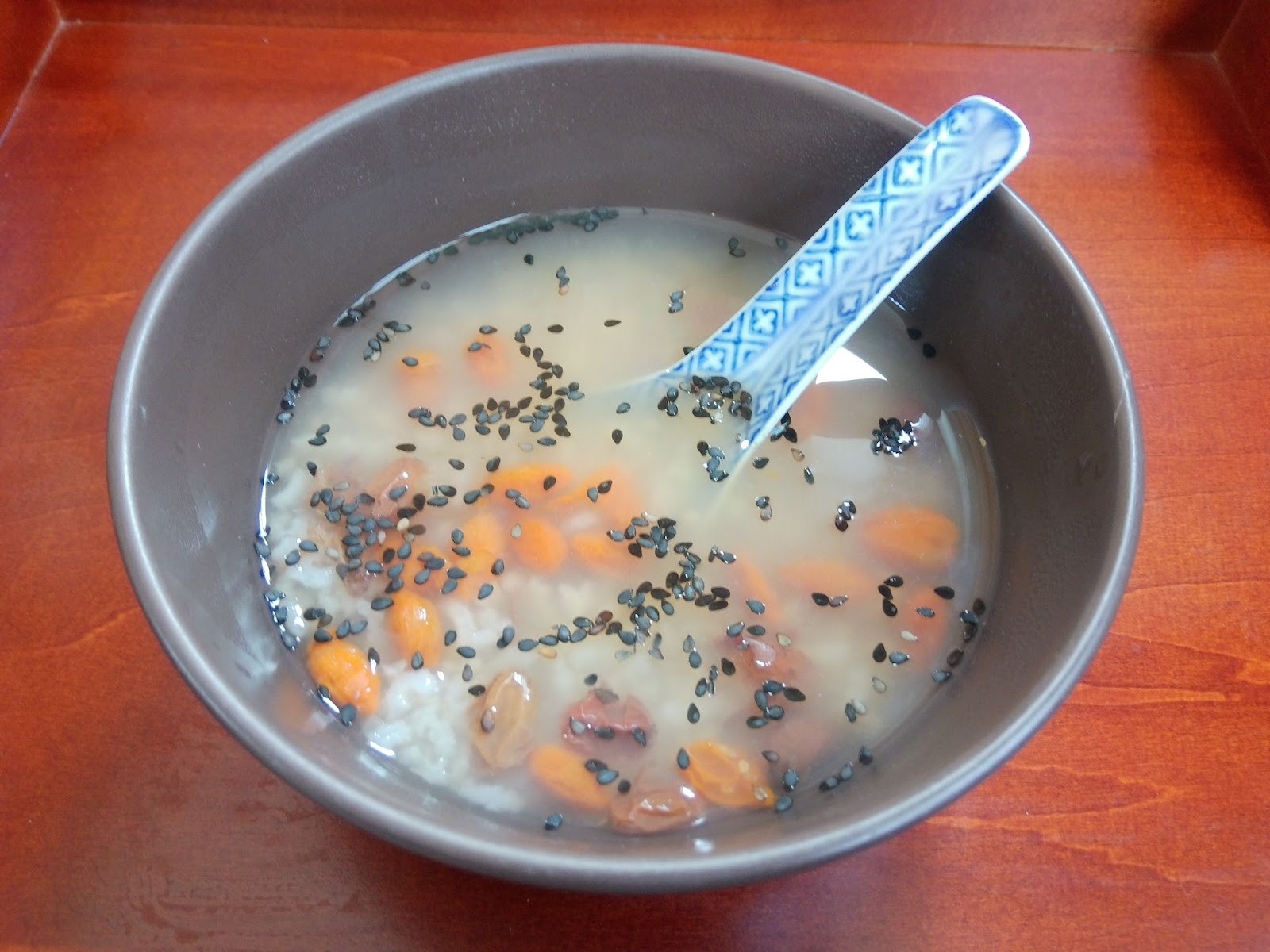
Tonifies the kidney and liver yin, boosts energy.
Ingredients:
- 1 Tbsp shan zhu yu,
- 1 Tbsp gojiberries,
- ¼ cup washed rice
- 6 cups filtered water
Method:
- Simmer shan zhu yu, wolfberries, and rice in water until tender.
- Lightly season, and serve warm.
Shan zhu yu and red date broth
Nourishes the liver and stabilizes fluids.
Ingredients:
- 1 Tbsp shan zhu yu
- 5 Chinese red dates (jujubes)
Method:
- Simmer shan zhu yu and red dates in water until soft.
- Serve warm.
Cornus fruit is available as a dried fruit, powder or extract. You can also grow Cornus officinalis in USDA zones 5-8. It prefers full sun to partial shade, and tolerates a variety of soil types, as long as they are well-drained.
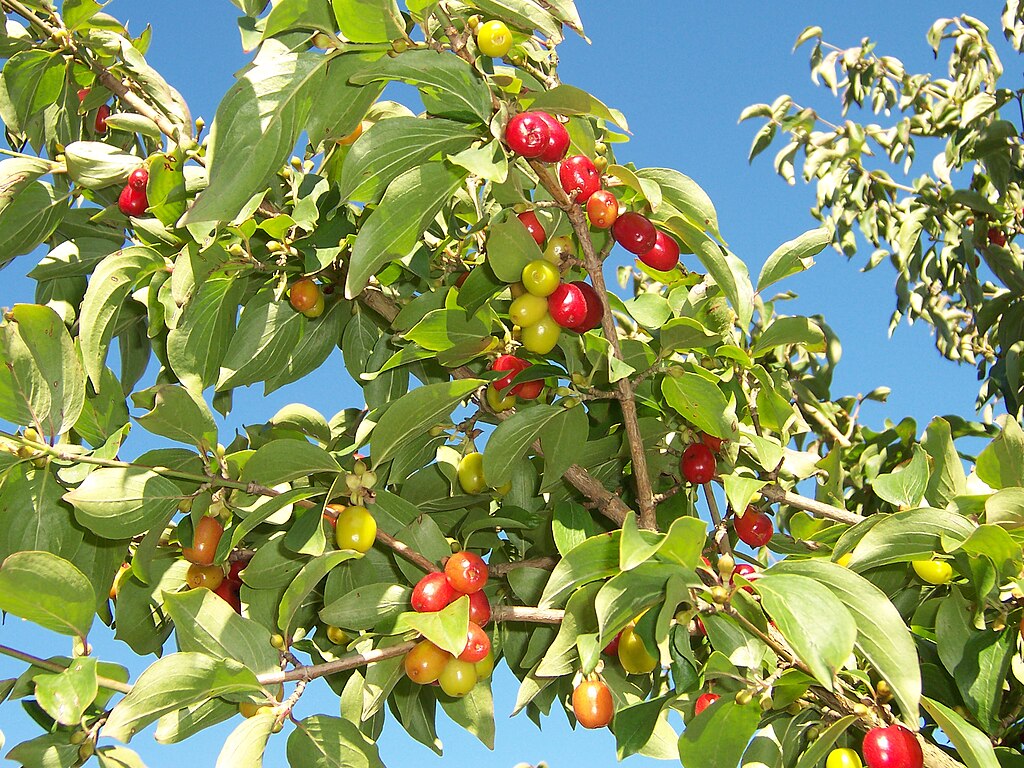
It will take several years for the tree to begin fruiting, however, and you’ll probably forget why you planted it in the first place. Cornus mas has a very similar fruit and is commonly found in western landscapes, so you might try sourcing some berries from an acquaintance, instead.