Britain’s housing secretary approved the embassy after two council rejections
On Jan. 20, 2026, UK Housing Secretary Steve Reed signed off on a 240-page planning decision allowing the redevelopment of the 5.5-acre Royal Mint complex into a 20,000-square-meter diplomatic compound for the People’s Republic of China (PRC). The site sits roughly 200 meters from the Tower of London, in the historic center of the capital.
The project has drawn controversy from those warning that the new embassy, around 10 times larger than China’s current presence in the UK, is likely to serve as an upgraded center of espionage for the Chinese Communist Party (CCP). Others have cited the CCP’s human righst abuses and growing transnational repression as reason to oppose the expansion.
Beijing purchased the property in May 2018 for £255 million (roughly US$344 million) in cash, shortly after the Brexit referendum. British media quickly labeled the proposed complex a “China Mega Embassy,” and the name stuck through years of public controversy. The compound would consolidate all of China’s London diplomatic operations, currently scattered across six locations, into a single site.
The Chinese government first filed a planning application in 2020 with Tower Hamlets Council. The proposal included restoration of historic buildings alongside construction of secure basements and internal passageways. During public consultation, around 300 local households organized themselves into the Royal Mint Residents Association and submitted formal objections.
In December 2022, the council unanimously rejected the application, citing concerns over traffic congestion, heritage protection, and public safety. PRC officials responded by accusing the council of politicizing what they described as a routine construction project.
Labour took power and shifted the decision to central government
Success
You are now signed up for our newsletter
Success
Check your email to complete sign up
After the Labour Party won the July 2024 general election, Chinese authorities submitted a revised proposal. The review process was restructured so that Tower Hamlets Council would conduct the planning assessment, but the central government, through the Housing Secretary, would make the final determination. That shift moved the decision out of the hands of local councillors who had twice voted against the project.
In December 2024, the council rejected the plan for a second time. Then, in January 2025, the Metropolitan Police withdrew its earlier objections, stating that security risks associated with the embassy could be managed. That reversal drew sharp criticism from residents who had counted on the police assessment to block the project.
Large demonstrations followed in February and March 2025, with more than 4,000 participants at peak turnout. Hong Kong pro-democracy activists, Tibetan exile groups, and Uyghur community organizations protested outside the Royal Mint site. One demonstrator, using the pseudonym Ah Ming, told reporters: “The Chinese embassy is a machine of repression. We cannot let it expand in London.”
Opponents repeatedly cited the 2022 incident at the Chinese Consulate in Manchester, where protesters were dragged inside consulate grounds during a demonstration against the CCP. That episode became a rallying point throughout the planning debate.
Fiber-optic cables and surveillance fears put intelligence agencies on the spot
Security concerns sat at the center of the seven-year dispute. Fiber-optic cables run beneath the Royal Mint site, linking the City of London’s financial district to the Canary Wharf banking hub. Nearby British Telecom exchanges serve major financial institutions in the capital. Planning documents filed by Chinese authorities included basement structures and secure rooms, with some technical details redacted, a practice standard for sensitive government buildings but one that fueled suspicion about the compound’s intended capabilities.
Critics argued that the location, positioned directly above critical communications infrastructure, could create surveillance risks.
In January 2026, Ken McCallum, the director of MI5 (Britain’s domestic intelligence service), and Anne Keast-Butler, the director of GCHQ (Britain’s signals intelligence agency), wrote that risks associated with foreign diplomatic premises can never be entirely eliminated but can be managed. They said MI5 has extensive experience overseeing such risks. That assessment gave the government political cover to approve the project, though opponents dismissed it as insufficiently specific.
US officials warned Britain the embassy could serve as a listening post
The dispute also drew intervention from the United States. In June 2025, The Times of London reported that U.S. officials had warned Britain the embassy could function as a listening post for Chinese intelligence. Donald Trump, then serving his second term as president, reportedly urged Prime Minister Keir Starmer to reject the proposal and suggested that intelligence-sharing arrangements between the two countries could be reconsidered if the project went ahead.
The warnings came ahead of China-U.S. trade talks being held in London. In a Fox News interview, Trump said: “The world is that dirty. We’ve done similar things.” The Independent newspaper observed that Washington was accusing Beijing of surveillance practices the United States has itself carried out.
The history of Chinese diplomatic presence in London
China’s diplomatic presence in London dates to 1877, when Guo Songtao, a Qing dynasty envoy, established a mission at 49 Portland Place following a diplomatic crisis between Britain and China, then governed under the Qing imperial dynasty. That site remained in use through the fall of the Qing, the Republican era, and the Communist takeover.
By the 2010s, however, China’s London operations had fragmented across six separate locations. A Chinese diplomat speaking anonymously described the arrangement to media as inefficient and costly, comparing it to “fighting a guerrilla war.” Chinese authorities considered sites in Manchester and a location near the U.S. embassy south of the Thames before settling on the Royal Mint.
Liu Xiaoming, China’s ambassador to Britain at the time of the 2018 purchase, claimed the new embassy would reflect China’s status as a major country, framing the acquisition as a prestige project for the regime. The Royal Mint site itself carries historical weight: it dates to the 14th century and was reformed in 1696 under Isaac Newton, who as Warden of the Mint oversaw a transformation of Britain’s coinage system.
From a ‘golden era’ of UK-China relations to managed friction
The embassy dispute unfolded against a backdrop of deteriorating and then partially stabilizing UK-China relations. Former Prime Minister David Cameron declared a “golden era” in bilateral ties in 2015. That era collapsed after the 2019 Hong Kong pro-democracy protests. Britain introduced a visa pathway for holders of British National (Overseas) passports in 2020, offering a route to residency for Hong Kong residents fleeing Beijing’s crackdown. In 2021, the government banned the Chinese telecom firm Huawei from Britain’s 5G networks on national security grounds. In 2022, then-Prime Minister Rishi Sunak declared the “golden era” officially over.
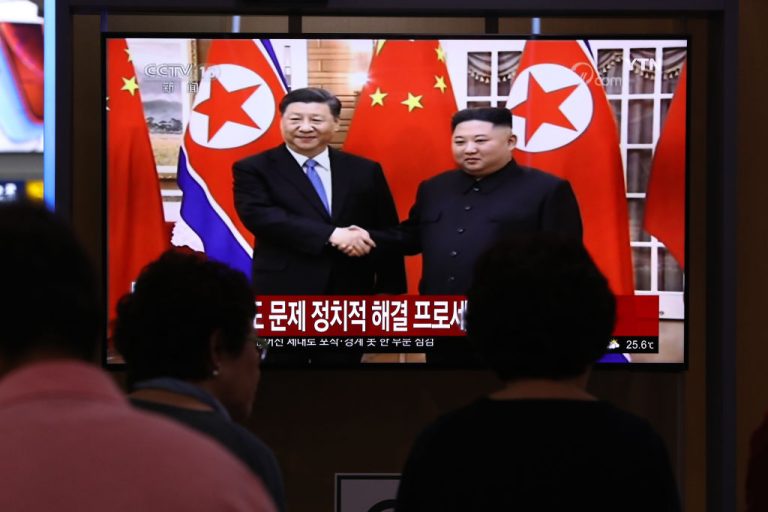
Under Prime Minister Keir Starmer, the Labour government has softened Britain’s posture toward Beijing under the banner of “pragmatism.” In January 2025, Chancellor Rachel Reeves visited China and returned with £600 million in investment commitments, a figure Beijing used to signal that economic incentives could buy diplomatic compliance. At the G20 summit in November 2025, Starmer met Xi Jinping, Chinese leader and CCP general secretary and pledged to pursue a “durable relationship,” language critics interpreted as a signal that Britain would avoid confrontation over human rights and security. Britain has also applied for a new embassy site in China, a reciprocal move that gave the government additional justification for approving China’s London project.
Supporters of the Royal Mint approval argue that consolidating China’s diplomatic facilities into a single compound would simplify security oversight compared to monitoring six separate locations. Opponents, including Conservative and Liberal Democrat politicians as well as independent security analysts, counter that concentrating the regime’s diplomatic operations at a site above critical infrastructure creates risks that dispersal currently mitigates. The consolidation argument assumes good faith from a government that has repeatedly demonstrated willingness to use diplomatic premises for purposes beyond standard consular work, as the Manchester consulate incident showed.
Residents plan a judicial review and estimate £145,000 in legal costs
Following Reed’s approval, members of the Royal Mint Residents Association gathered near Tower Bridge to discuss launching a judicial review of the decision. They estimate the legal challenge will cost £145,000 (about US$195,600). Mark Nygate, the association’s treasurer, told reporters: “We will not allow this spy fortress to stand at our doorstep.”
Residents argue the decision was predetermined from the moment the central government took control of the final determination. If a judicial review proceeds and succeeds, the project could face further delay, potentially adding years to an already protracted battle.
China’s Foreign Ministry insisted Britain has an “obligation” to approve the embassy under international diplomatic norms, a claim that treats the regime’s demand for a fortified compound as a routine entitlement.
Construction cannot begin until all legal challenges are resolved.
Mary Harris, a retired teacher who lives near the Royal Mint site, captured the local mood: “This is not politics. It is our home.”
By Xiao Ran