In 2020, an overseas research team released a report on instant messaging software. Its translated title contained five stark words: “We Chat, They Watch.”
The researchers concluded that overseas users believed they were communicating privately. In practice, images and files were subject to server-side screening, with no notification to users. What appeared to be a private conversation also moved through a monitoring system.
When the report was published, a group of Chinese food delivery riders in Sydney likely never saw it. Six years later, they encountered its implications directly.
In early February 2026, dozens of Chinese riders delivering for HungryPanda discussed a proposal in a group chat: declining orders during the Lunar New Year.
The issue was straightforward. Delivery fees had been reduced. The algorithm was opaque. Earnings depended on platform calculations. The Lunar New Year was a peak period. The riders proposed expressing dissatisfaction in the most basic way by taking several days off. In Australia, lawful strike action is protected.
Success
You are now signed up for our newsletter
Success
Check your email to complete sign up
The discussion remained at the group chat stage. No work stoppage had begun. No banners had been printed.
Police in their hometowns arrived first
Not officers in Sydney. Police from Henan and Zhejiang contacted their parents when they could not reach the riders abroad.
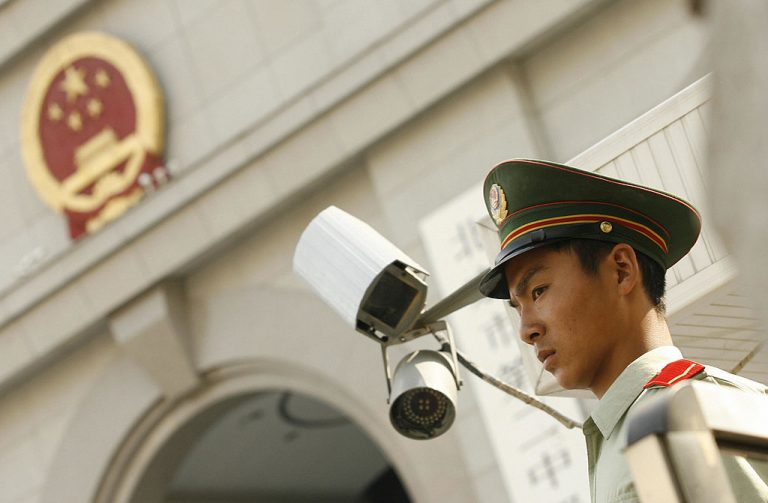
On Feb. 18, the Australian Broadcasting Corporation reported that one rider received a late-night call from his father. The elderly man had been summoned to the local police station for a “conversation,” with officers beside him. An officer took the phone and demanded details of the alleged overseas protest, including time and location. Another former rider said she received three calls in one day. The first sought information. The second warned of consequences if she returned to China. The third followed days later.
Multiple provinces. Multiple riders. Coordinated timing.
Richard McGregor, senior fellow for East Asia at the Lowy Institute, told ABC that synchronized actions across locations suggested a high level of organization. He noted that such tactics are typically reserved for sensitive groups.
When did delivery riders become sensitive?
The starting point was the group chat.
Mobile numbers in China require real-name registration. Messaging apps are linked to those numbers. Group chat content passes through servers. Platforms state in their privacy policies that they cooperate with lawful data requests.
Each step is standard. Together, they create a system.
A rider in Sydney using a Chinese mobile number types, “I don’t want to take orders during the Lunar New Year.” Identity, contacts, and message content become accessible within a connected infrastructure.
Researchers demonstrated the system through technical analysis. The riders demonstrated its operational speed. From the appearance of the word “strike” in a chat to police summoning family members in Henan and Zhejiang, the response was rapid and coordinated.
This was not the initiative of a single officer. It reflected institutional capacity.
HungryPanda represents another element of the structure
Founded in Nottingham in 2017, the company has expanded into a multinational platform serving Chinese communities abroad. According to Forbes, founder Liu Kelu launched the business after graduating from the University of Nottingham and was named to the Forbes Europe 30 Under 30 list in 2023. Public records indicate approximately $296 million in funding from investors including Sweden’s Kinnevik, the UK’s Felix Capital and Perwyn, and Israel’s 83North. The company operates in ten countries with more than six million registered users.
Most HungryPanda riders in Australia hold temporary visas and remain Chinese citizens. They are classified as independent contractors, without guaranteed minimum wage, paid leave, or standard labor protections.
In September 2020, a 43-year-old rider was killed by a bus while delivering food in Zetland, Sydney. He left behind a wife, two children, and a 75-year-old father. Australian media and the Transport Workers’ Union reported that HungryPanda did not notify SafeWork NSW at the time.
Two years later, the New South Wales Personal Injury Commission ruled that the rider had been an employee and awarded 834,000 Australian dollars in compensation. The Transport Workers’ Union described it as the first gig economy case in Australia recognizing a platform rider as an employee.
In August 2024, Australia enacted the Fair Work Legislation Amendment (Closing Loopholes No. 2) Act, granting the Fair Work Commission authority to set minimum standards for gig platform workers under an “employee-like” framework.
Yet in early 2026, riders were again protesting reduced fees and opaque algorithmic management. ABC reported that one rider who had helped organize prior protests saw her order volume drop from dozens per shift to zero. She filed a complaint with the Fair Work Commission.
Now she faces legal proceedings in Australia and calls from her hometown
A HungryPanda spokesperson told ABC that the company was not aware of the situation and suggested the riders’ own remarks in the group chat may have drawn attention.
Even accepting that statement, the sequence remains: a labor discussion in Australia was followed by coordinated police contact with families in China.
Legal responsibility may be difficult to establish, but the structural alignment is evident.
Global capital depends on labor that is flexible and compliant. Administrative pressure applied through family ties can reinforce that compliance without operating within Australian jurisdiction.
David Shoebridge, foreign affairs spokesperson for the Greens, told ABC that HungryPanda is often labeled a Chinese app, yet its investors are global. International capital benefits from the labor of Chinese riders. The question is who maintains stability when disputes arise.
Since 2022, an international human rights organization has documented more than 100 overseas police service stations across dozens of countries. While presented as administrative offices, reports state they have been used in “persuasion to return” operations. The organization estimated that between April 2021 and July 2022, approximately 230,000 individuals were persuaded to return.
Transnational repression
In April 2023, the U.S. Department of Justice charged several individuals in cases described as transnational repression, and the FBI arrested two people in New York. At least 14 countries, including the Netherlands, Canada, Ireland, and Germany, have closed or investigated similar stations.
In this case, the individuals were delivery riders who wanted several days off during a holiday.
Within a certain governance logic, organized collective action is itself sensitive. The content of the demand is secondary. Coordination is sufficient.
Australian officials responded with formal statements. A spokesperson for the Department of Home Affairs said the government does not tolerate surveillance, harassment, or intimidation of any Australian citizen or lawful resident. The Counter Foreign Interference Taskforce acknowledged awareness but declined to comment on specifics. Labor Senator Tony Sheldon stated that everyone working in Australia has the right to organize and seek fair pay without fear.
Australian law defines rights within Australian territory. It does not extend to a police station in rural Henan.
When one rider’s father left the station before dawn, he may not have understood gig work, labor reforms, or cross-border pressure. He understood that officials had come to his door because his son in Sydney discussed not delivering food during the Lunar New Year.
“We Chat, They Watch” once appeared as a research title. It now reads as a sequence: a message typed in Sydney, visibility within a hometown system, a midnight summons delivered to a parent.
The digital system operates alongside an offline administrative apparatus. Words in a group chat become a police inquiry. A labor complaint becomes a visit to family members.
Distance does not dissolve vulnerability when family ties remain within reach of authority.
The views expressed are solely those of the author.
By Li Yuchen