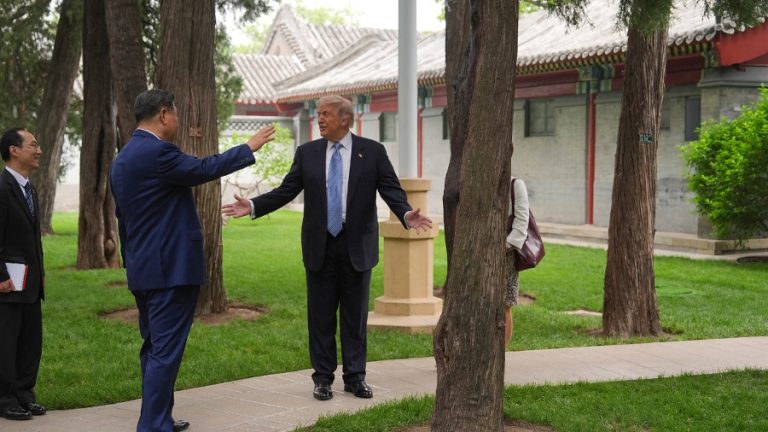
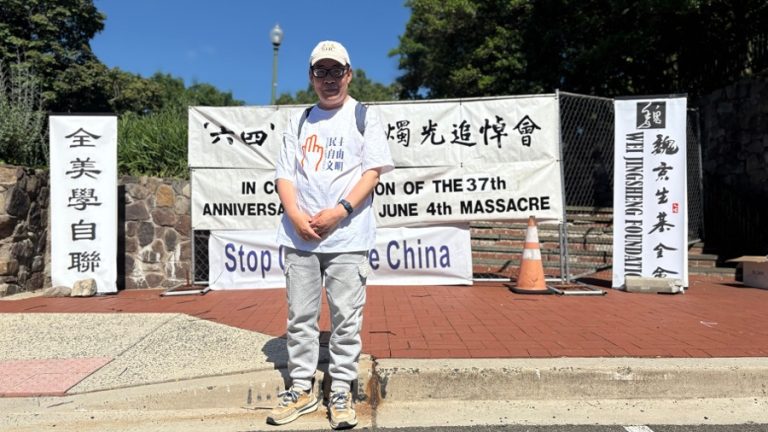
As U.S. President Donald Trump prepares to visit China, the U.S.–China summit has become a focal point for global media attention. An online petition is calling on Trump to pressure the Chinese Communist Party to release Jimmy Lai, founder of Hong Kong’s Apple Daily.
In February this year, the 78-year-old Lai was sentenced by Chinese authorities to 20 years in prison. Once a media magnate in Hong Kong, he is now imprisoned due to his political stance, a situation that has drawn widespread reflection.
This raises a question: can true journalism survive only under a democratic system?
Speaking of Hong Kong, I have only visited three times in my life, but each visit left a deep impression.
The first time was on the last day of 1989. I flew from Shanghai to Sydney and transited in Hong Kong. Although I only stayed in the airport for six hours, it was the first time I felt an atmosphere and sense of order different from mainland cities.
Success
You are now signed up for our newsletter
Success
Check your email to complete sign up
At that time, Hong Kong was still under British administration. Walking into the terminal, I noticed that both police officers and staff had composed manners, friendly smiles, and provided polite, civilized service—forming a sharp contrast with Shanghai at that time.
The Cathay Pacific flight I took departed late at night. Looking out from the window at this brightly lit “city that never sleeps,” I developed a very positive impression of Hong Kong, one that I often recalled afterward.
My second visit to Hong Kong was in July 2014, after the handover. At that time, I accompanied my mother and two aunts on a trip to Hong Kong. They were all over 80 years old. Although my cousin was there as a guide, I was still worried, so I flew to Hong Kong specifically to meet them.
We first met in Macau and then took a speedboat into Hong Kong.
At the immigration pier, because the elderly had difficulty moving, we were at the end of the line. My cousin accompanied them to the restroom first, while I waited outside.
A customs officer suddenly raised his voice, urging us impatiently and asking why we were delayed. I explained that the elderly were in the restroom and asked him to wait a moment. The officer clearly showed a sense of disdain toward mainland Chinese people, then demanded to see our passports and continued urging us to leave.
His tone and attitude at the time were uncomfortable; this would absolutely not happen in Australia. After I showed my Australian passport, his attitude noticeably softened, but I still felt uneasy. Before leaving, I said in English: “Please be a bit more respectful—they’re all older people.”
The other party responded with an unhappy look and gestures.
That year, Hong Kong was at the height of its tourism boom. A large number of mainland tourists flooded in, shopping malls and attractions were packed with crowds, and the streets were noisy and congested. Everyone carried huge shopping bags, and the shopping frenzy felt almost like looting.
In particular, certain uncivilized behaviors associated with some mainland visitors were, in the eyes of some Hong Kong residents, almost a disruptive presence that did not fit in at all. This rapid influx of change clearly brought significant pressure and emotional strain to local residents.
Although I was accompanying my family on sightseeing trips, I found it difficult to immerse myself in that atmosphere, and my feelings were mostly mixed and complicated. Could a “free Hong Kong” really withstand such upheaval?
Third trip to Hong Kong
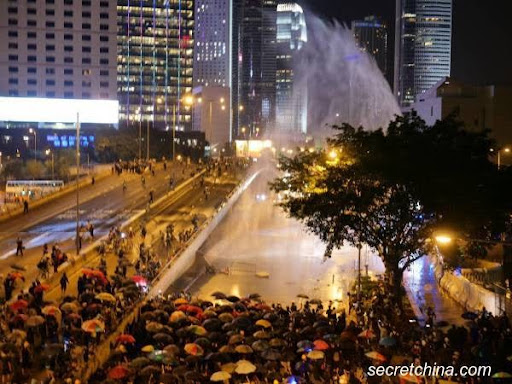
My third visit to Hong Kong was in October 2019, when the Anti–Extradition Bill Movement had entered its most intense phase. Hong Kong citizens’ protest courage remained unyielding, while police crackdowns were escalating. A high level of confrontation had developed between police and protesters, and international media continued to closely follow the situation.
Seeing that Hong Kong was on the brink of crisis, I decided to go to the front lines of the protests to personally experience the “battlefield.”
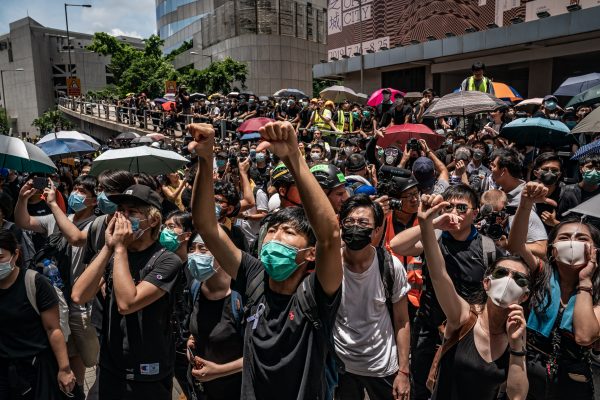
When I arrived, young people wearing black masks were visible everywhere on the streets, along with heavy police patrols. Some major districts were filled with banners and political slogans, creating a tense and surreal atmosphere.
On my first day in Hong Kong, a friend added me to a large messaging group, allowing me to observe real-time developments across different areas. The situation was alarming and extremely complex.
Although the Oct. 1 march was not approved, a large number of people still took to the streets to hold a “No National Day, Only National Grief” march. Massive crowds moved from Causeway Bay to Charter Garden, chanting slogans such as “Liberate Hong Kong, revolution of our times.” At the same time, many people actively distributed water and masks, and despite the chaos, a certain level of restraint was still maintained.
I walked with the procession, feeling emotionally conflicted. On one hand, I was shocked by the scale and organization of the collective action; on the other hand, I sensed the uncontrollability of the situation and the rising crisis.
Interview with pro-democracy figure
At Charter Garden, I met Hong Kong pro-democracy figure Leung Kwok-hung and conducted a brief interview with him. When he spoke about his demands and situation, his tone was solemn but his stance remained firm.
He said: “The demands of the Hong Kong people are reasonable. They are not afraid of repression, so I must come to support them.” He also said, “Hong Kong must not lose its hard-won space for free speech.”
In the evening, the situation escalated rapidly in multiple areas. Police and protesters formed standoffs on several streets, and tear gas filled the air.
Standing on a pedestrian bridge, I observed at close range. Beneath the bridge, a large group of black-armored riot police, resembling beetles, advanced in formation with rifles and batons toward young people sitting peacefully on the road.
The young people did not move, while the police used tear gas and batons to forcibly disperse the crowd. Some young men and women were beaten until bloodied, yet they did not resist.
The air was filled with highly irritating gas, making it difficult to stay for long. However, such scenes of conflict and chaos were rare to witness, so I continuously recorded the bravery of Hong Kong people and the brutality of the police on my phone.
When people standing on the pedestrian bridge shouted in unison, “Police, stop!”, several riot police turned around, aimed their weapons, and issued warnings. A young man pushed me away and said, “Are you a tourist? Leave quickly—they’re about to open fire.”
When I reached the pier area, I saw police escorting more than a dozen young people with their hands bound behind their backs into a warehouse. Most were women, their faces covered in blood. I immediately raised my phone to film, but a riot police officer pointed his gun at me and ordered me to put it down.
When I left Hong Kong, a friend gave me a tear gas canister shell as a keepsake.
Three visits and a massive transition
Three visits to Hong Kong brought three completely different experiences: from the initial order and brightness, to the complex tensions after the handover, and finally to the intense confrontation of 2019.
Hong Kong’s transformation from brilliance to total collapse is deeply thought-provoking. The handover of Hong Kong ultimately became a disaster.
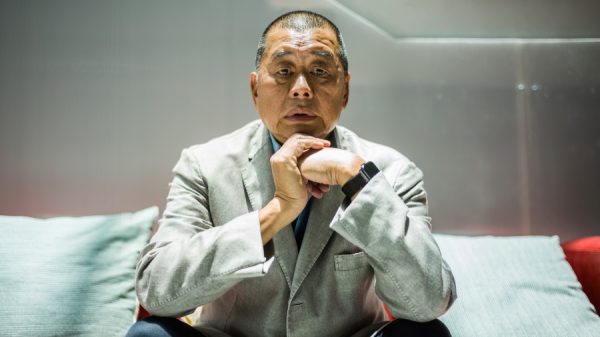
Today, the Apple Daily, which defended freedom of expression for 30 years, has ceased publication, and Jimmy Lai, who refused to submit to the Chinese Communist Party, has been sentenced to heavy imprisonment.
As Donald Trump visits China, he is unlikely to ignore public concern and calls for the rescue of Jimmy Lai. According to the typical practices of the Chinese Communist Party, Lai will inevitably become one of the bargaining chips in U.S.–China negotiations. I believe that before or after the Trump–Xi meeting, Lai may be released on medical parole and sent to the United Kingdom.
Hong Kong’s freedom is gone, but Jimmy Lai’s spirit will live on.
(This article represents only the author’s personal stance and views.)
By Xia Yan, Vision Times