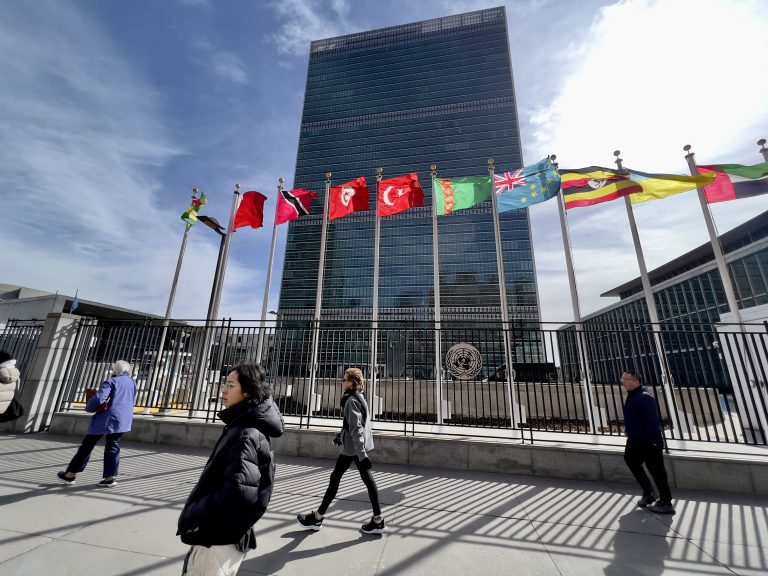
The U.S. and United Nations are locked in a diplomatic dispute over Washington’s unpaid dues, after the Trump administration tied future payments to institutional reforms and curbing Chinese influence at the global body.
A former U.N. official said the pressure is already driving change, but warned that deeper reforms are still needed to address longstanding issues in U.N. governance and effectiveness.
“The UN may not have explicitly acknowledged it, but the UN Secretary General launched the UN 80 initiative under US pressure that aims to reduce personnel, duplication and also the budget of the UN Secretariat,” said Rahul Sur, who previously served in senior oversight and peacekeeping roles at the United Nations.
Sur said the impact of the reform effort, known as the U.N. 80 initiative, remains uncertain, particularly as the organization faces mounting financial pressure and geopolitical tensions.
U.N. Secretary-General António Guterres launched the initiative in March 2025 to modernize the institution, reduce duplication, and improve efficiency. The push for reform comes amid a broader U.N. budget crisis, driven in part by delayed U.S. contributions — the largest share of U.N. funding — contributing to a reported 25 percent decline in resources between 2024 and 2026.
READ MORE
- Iran Conflict Accelerates Asia’s Shift to Electric Vehicles, Data Suggests
- China Builds Barricade at Scarborough Shoal, Raising South China Sea Tensions With Philippines
Success
You are now signed up for our newsletter
Success
Check your email to complete sign up
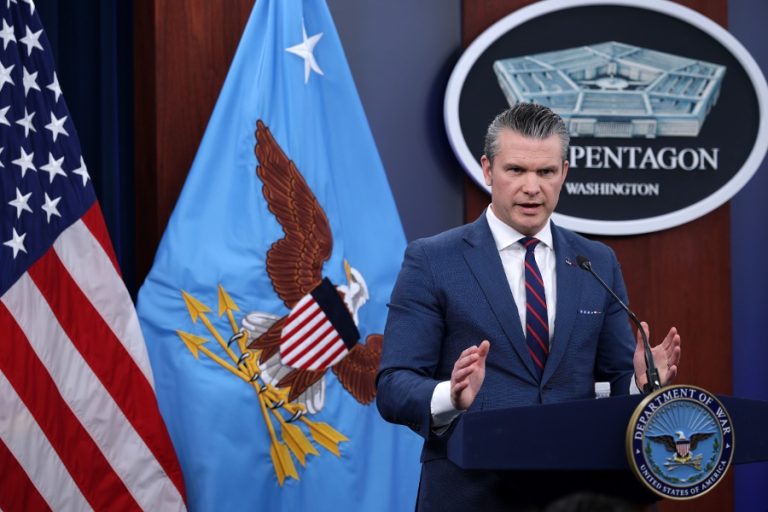
The Trump administration has sharpened its stance on U.N. reform, cutting funding and withdrawing from several U.N. bodies. It has also proposed measures including pension system changes, limits on business-class travel, and reductions in senior staff positions, according to Devex.
The United States currently owes roughly $4 billion in U.N. dues, including $2.2 billion for the regular budget and $1.8 billion for peacekeeping funding. Long-standing arrears tied to congressional caps on peacekeeping contributions exceed $1 billion. Washington paid more than $160 million in February, Reuters reported.
Analysts say the new conditions tied to payments may reflect broader U.S. diplomatic strategy, including influence over the selection of the next U.N. secretary-general.
Pressure to curb Chinese influence
A central U.S. demand is limiting China’s role in discretionary U.N. funding — voluntary contributions that fall outside the regular budget and are often directed through the secretary-general’s office.
Sur said the dispute reflects intensifying U.S.-China competition within international organizations.
“The two countries have various domains of contestation and the United Nations is certainly one of them,” he said.
In recent years, China has expanded its financial contributions and institutional presence across key U.N. agencies, including the Food and Agriculture Organization, International Civil Aviation Organization, U.N. Industrial Development Organization, and the Department of Economic and Social Affairs.
Sur said this growing Chinese influence at the U.N. is occurring alongside a partial U.S. retreat, creating broader geopolitical implications for global governance.
“So there is advance on one side and retreat on the other. This has massive implications for the governance of international bodies that needs to be examined closely for their intended and unintended effects as China is not a representative democracy and is a one-party dictatorial state,” he said.
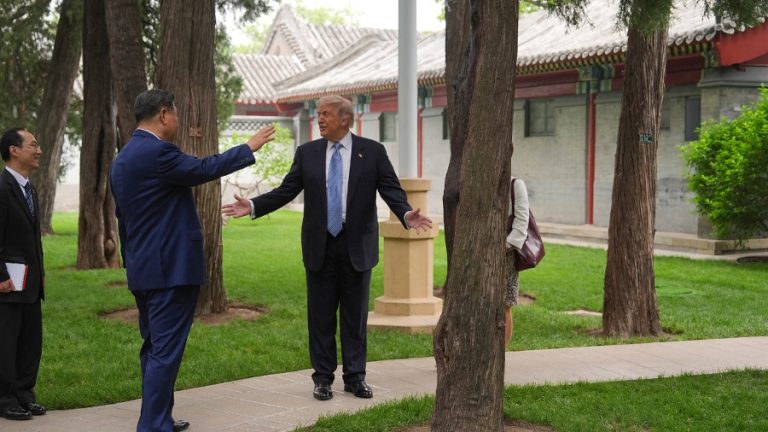
He added that the dispute should also be viewed in the context of the upcoming Trump-Xi summit expected in mid-May in Beijing.
UN pushes back on payment conditions
Guterres has rejected the idea of linking dues payments to reform demands, emphasizing that member contributions are “non-negotiable.”
“The money we are talking about is referred to as assessed contributions,” Guterres said. “Assessed contributions are an obligation of member states. They are non-negotiable.”
- China’s Deep-Sea Atlas Signals New Front in Global Resource and Military Competition
- US Treasury Sanctions Major Chinese Oil Refinery and 40 Shipping Firms Tied to Iran’s Shadow Fleet
Sur said the secretary-general’s response reflects the organization’s fragile financial position.
Guterres warned in January that delayed payments — particularly from the United States — had created an “imminent financial collapse” risk for the U.N. system, according to Reuters.
According to Sur, while the legal framework is clear, political realities are shaping the dispute.
“But the Trump administration has persisted in demanding changes because it does not see the United Nations as performing optimally and tends to minimize strict compliance with treaty obligations,” he said.
He described the situation as a “kind of diplomatic tug-of-war” reflecting broader U.S. dissatisfaction with the United Nations.
Deeper structural reform needed, analyst says
Sur said the current reform proposals do not go far enough to address systemic challenges within the organization, in particular the structure of the U.N. Security Council.
“I do not think these reforms are going to be sufficient. There is widespread admission that the United Nations has failed to fulfill its primary purpose, which is to prevent international conflict,” he said.
He cited ongoing global conflicts, including the Russo–Ukrainian war and the conflict involving the United States, Israel, and Iran, as demonstrating the U.N.’s limitations.
Sur also argued that the Security Council no longer reflects current global realities, such as that India, despite being the world’s most populous country with 1.4 billion, is not represented on the 15-nation body. He also cited the relative lack of representation for African countries, which are also growing rapidly in population.
This, he believes, “seriously weakens any claims that the UN can realistically deal with the growing complexity of challenges of the world.”