Editor Zi Meng
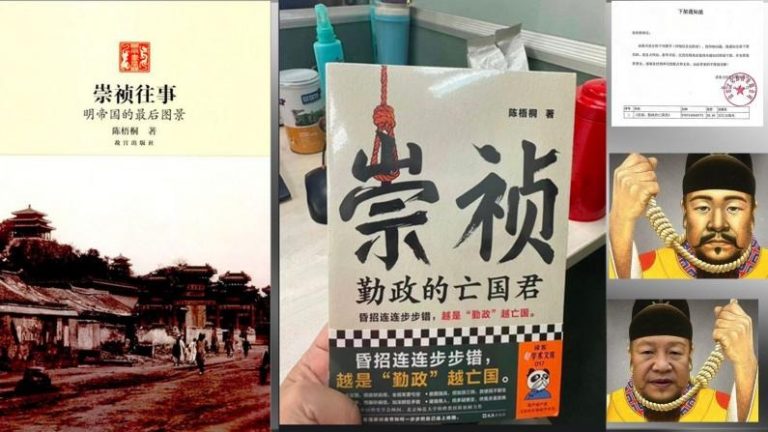
According to Reuters, the book Chongzhen: The Diligent Emperor Who Lost His Dynasty was pulled from sale in China in October 2023. The Party’s panic over a book title reveals something it cannot afford to admit about itself.
As Xi Jinping, the Chinese Communist Party’s general secretary and China’s top leader, moves deeper into 2026, his government’s major decisions, both domestic and foreign, have settled into a pattern that even sympathetic observers struggle to explain away. Misjudgments on Venezuela. A brutal clampdown on Hong Kong. A conspicuous inspection tour of Xiong’an, a half-built showcase city on Beijing’s outskirts that Xi has championed as a symbol of national renewal, as his first domestic trip outside the capital. An accelerating crackdown on information. Each move is announced with the usual fanfare of Party greatness. Each, on examination, points in the wrong direction. The more loudly the machinery of state applauds, the clearer it becomes that no one at the center is receiving honest feedback.
Wang Youqun, a former official at the Party’s Central Commission for Discipline Inspection who later became a prominent overseas dissident commentator, has published a detailed analysis asking why the CCP’s major decisions keep failing. He identifies three structural causes: Xi’s systematic suppression of dissenting voices, the Party’s ideological straitjacket, and the CCP’s deep-seated terror of freedom and democracy. All three reinforce each other, and together they describe a regime that has lost the capacity to course-correct.

Xi reversed his father’s late-career call to protect dissenting voices
The Mao era established the template. Mao Zedong launched dozens of bloody political campaigns across his decades in power, each with an identical logic: anyone who spoke a truthful word was destroyed. Dissenting opinions were labeled “anti-Party,” “anti-socialist,” and “anti-Mao Zedong Thought,” then crushed. A cascade of catastrophic decisions followed, culminating in the Cultural Revolution, a decade of deliberate devastation that pushed China to the edge of collapse.
Success
You are now signed up for our newsletter
Success
Check your email to complete sign up
Xi Jinping’s father, Xi Zhongxun, a veteran Party elder who survived three separate political purges across his career, spent his final years in public life arguing for institutional protections for dissent. Gao Kai, former director of the research office of the law committee of China’s rubber-stamp legislature, who worked under Xi Zhongxun and later documented his recollections in a commemorative essay, recalls Xi Zhongxun raising the same theme at meeting after meeting during his years as a vice-chairman of that body.
“I have been thinking for a long time about how to protect dissenting opinions,” Xi Zhongxun told one gathering. “Looking at Party history, the disasters caused by suppressing dissenting opinions are enormous. I have personally experienced dozens, perhaps hundreds of cases involving accusations of ‘anti-Party alliances’ and ‘counter-revolutionary cliques,’ but when these cases were finally investigated, the vast majority turned out to involve nothing more than someone offering a different view, and many of those views turned out to be correct. I have wondered whether we should draft a Law on the Protection of Dissenting Opinions, establishing the conditions under which different views may be raised, and stipulating that even incorrect opinions should not be punished.”
At his final appearance before the standing committee of the rubber-stamp legislature, on Oct. 30, 1990, Xi Zhongxun made the same appeal: do not treat those who hold different views as an “opposition,” still less persecute them as “reactionaries.” Protect dissenting opinions. Take them seriously and study them.
Xi Zhongxun was, by CCP standards, a relative moderate in his later years. His reputation for a degree of political openness was understood at the time to be one of the key reasons his son was selected to succeed to Party leadership. The expectation was that the son would carry forward those instincts.
He did not. From his second term onward, Xi Jinping has traveled in the opposite direction, persecuting those who dare express dissent and abandoning the specific cause his father pressed in his final years in office.
The most widely cited example is Ren Zhiqiang, a prominent real estate entrepreneur and a “red second generation,” the term for the privileged offspring of early Communist revolutionaries whose insider status made his arrest all the more politically significant. Ren was 69 and long retired when the COVID-19 pandemic broke out in Wuhan in early 2020. He wrote a critical essay about Xi’s handling of the epidemic. The essay circulated abroad on overseas websites, having been posted there by someone other than Ren himself. The piece was pointed in places, but it was reasoned and constructive. It did not matter. Ren was arrested, expelled from the Party, and sentenced to 18 years in prison on charges of “serious corruption,” a charge the Party now deploys as a standard instrument of political elimination against inconvenient voices.
Ren was far from alone. The documentary 76 Days of Wuhan Lockdown, produced by a team of exiled journalists and volunteers led by former 1989 student leader Wang Dan, documented 638 prosecutions for the act of speech inside Wuhan during the 76 days of the city’s lockdown between Jan. 23 and April 8, 2020 alone, every one of them targeting individuals who had said something the Party did not want said. Countless others across China have been sentenced under charges of “inciting subversion of state power” or “subversion of state power” for doing nothing more than expressing a view the Party disliked.
By 2026, mainland China has returned fully to the enforced silence that a famous Tang dynasty poet once described as ten thousand horses standing mute, an image of a society so thoroughly terrorized that no one, anywhere, dares to speak. Xi is operating entirely on the basis of false information and staged performances of loyalty, cut off from any honest account of what his policies are actually doing.

Marxist ideology forces the CCP to govern on the basis of demonstrable falsehoods
The second structural cause of the CCP’s serial failures is ideological. The Party governs by Marxism, and Marxism, Wang Youqun argues, is a doctrine built on falsehood, hatred, and conflict.
On May 4, 2018, Xi addressed a commemorative meeting marking the 200th anniversary of Karl Marx’s birth. Marx, Xi told the assembled Party cadres, was “the greatest thinker in human history.” Marxism, Xi continued, “creatively revealed the laws of development of human society.” He then called on Party members, nine times in succession, to “study Marx” and to arm their minds with “the scientific truth of Marxism.”
Wang’s assessment of Marxism is unsparing. He argues that Marx, whose grave at Highgate Cemetery in London has been associated in some accounts with Satanic worship, served as a vehicle for a philosophy of destruction that runs directly against common sense, common decency, and ordinary human experience. Whatever one makes of the theological dimension of that argument, Wang’s political case rests on harder ground. In the Communist Manifesto of 1848, Marx pronounced capitalism doomed. As of 2026, the capitalist United States remains the world’s most powerful nation. The death sentence Marx issued 178 years ago was a lie.
In the same Manifesto, Marx wrote without embarrassment: “The Communists disdain to conceal their views and aims. They openly declare that their ends can only be attained by the forcible overthrow of all existing social conditions.” Three parts of that sentence carry all the weight: “forcible,” “overthrow,” and “all existing social conditions.” Marx hated every social arrangement in every country on earth, calling on his followers to use violence and fire to tear all of it down. Wang calls this extreme international terrorism, and Marx its founding architect.
Xi’s ideological direction since his second term, shaped in large part by Wang Huning, the veteran Party theorist who has served as chief ideological architect under three consecutive general secretaries, has been a steady return toward Marxist fundamentalism. The more loudly Xi insists on Marxism as a guiding truth, the more firmly the Party ties itself to a doctrine that cannot process reality accurately, and the worse its decisions become.

The CCP refuses free elections because free elections would end CCP rule
The third structural cause is the most fundamental. The CCP is terrified of freedom and democracy, and that terror shapes every major decision it makes.
Wang Youqun anchors his argument in the Four Freedoms articulated by U.S. president Franklin D. Roosevelt in 1941: freedom of speech, freedom of worship, freedom from fear, and freedom from want. These four freedoms, Wang argues, are the foundation of sound governance. Freedom of worship rests on freedom of thought; freedom of thought enables independent reasoning; independent reasoning, when people can speak and act on it without fear of arrest, imprisonment, or execution, generates the conditions in which good policy becomes possible. Societies that protect the Four Freedoms draw on the widest possible range of views and perspectives, and they make better decisions because they have access to honest information.
Developed democracies today, along with many emerging nations, have largely secured these freedoms. Hong Kong before 1997, under British governance, had secured them. Taiwan has secured them.
The CCP has spent 76 years systematically stripping mainland Chinese society of all four. Chinese citizens across every class and profession live in an intellectual cage: this cannot be thought, that cannot be said, the threat of punishment for speaking truthfully hangs over every waking moment. People ground down by that pressure cannot generate sound policy. The conditions for honest thought have been destroyed.
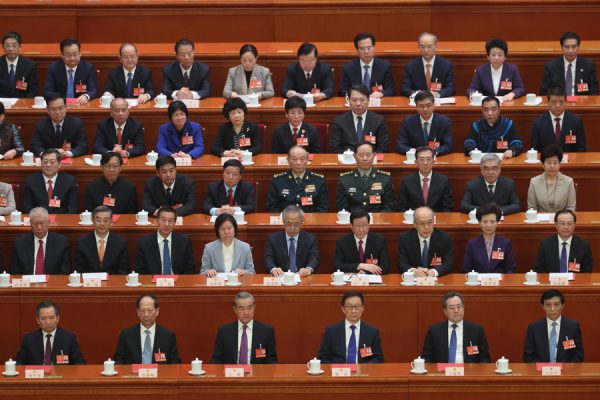
The democratic failure compounds the epistemic one. Genuine elections require at minimum three things: at least two candidates competing for the same office; candidates who present platforms to voters; and voters who exercise a genuine choice. None of these conditions has existed across the CCP’s 76 years in power. Every election for general secretary, state chairman, chairman of the Central Military Commission, chairman of the rubber-stamp legislature, and prime minister has been a single-candidate performance, in which one name appears on a ballot and Party delegates vote for it. Candidates present no platforms. Anyone who votes against the pre-selected name forfeits the right to vote again.
The CCP seized power through violence and lies, and it maintains power through violence and lies. Genuine freedom of speech would expose those lies. Genuine elections would remove the Party from office. The Party knows this. That terror is the deepest root of its systematic policy failures, and also the reason those failures cannot be corrected from within.
The regime’s ban on a history book about a failed emperor exposed its own insecurity
All three causes converge in a small but revealing episode from October 2023, when the CCP abruptly ordered a history book pulled from Chinese bookshops and online retail platforms. The book was titled Chongzhen: The Diligent Emperor Who Lost His Dynasty. Chongzhen was the last emperor of the Ming dynasty, which collapsed in 1644 after decades of institutional decay, factional paralysis, fiscal ruin, and peasant rebellion, despite the emperor’s personal reputation for diligence. The parallel to a hardworking leader presiding over accelerating systemic failure was unmistakable to any Chinese reader.
The official explanation for pulling the book was a “printing problem.” Nobody believed it. The real problem was the cover copy, specifically the advertising tagline: “Blunder after blunder, step after step wrong; the more diligently he governed, the faster the dynasty fell.” And the subtitle: “Watch how Chongzhen drove himself, step by step, to the end of the road.”
Chinese readers did not need to be told who those lines described. The Party pulled the book precisely because it could not afford for people to make that connection openly. A regime that cannot tolerate a history book has already told you everything about how much it fears the truth.