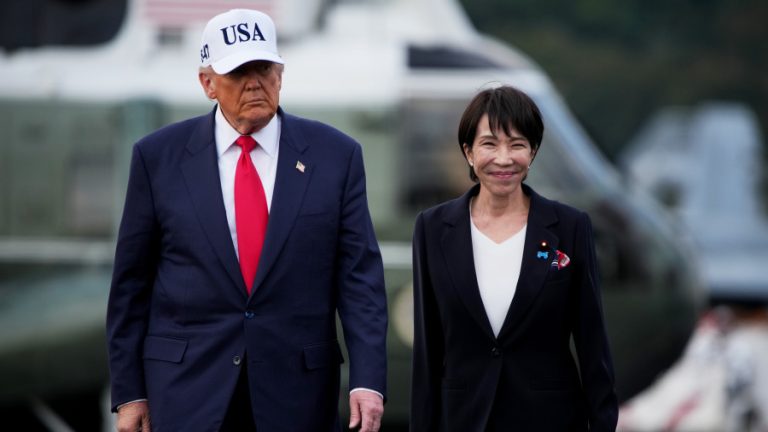
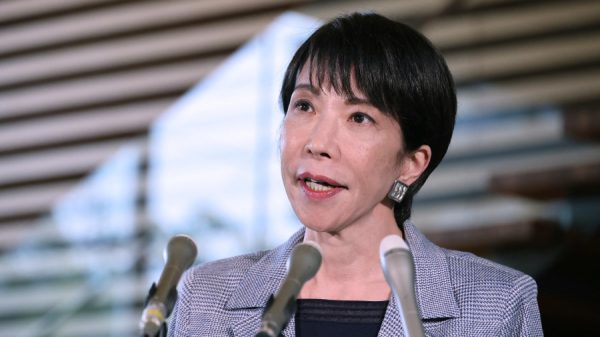
Japan’s recent parliamentary exchanges have reignited debate over a single diplomatic phrase—one that has shaped East Asian politics for more than half a century. Prime Minister Sanae Takaichi’s reaffirmation that Tokyo “understands and respects” China’s claim over Taiwan triggered excitement among pro-Beijing commentators, who rushed to interpret the remark as a retreat from her earlier, tougher statements.
But two prominent media figures—Akio Yaita in Japan and Huang Weihan in Taiwan—offered a very different reading. Their analyses, delivered through humor, analogy, and a sharp eye for diplomatic nuance, showed that “understanding and respect” is not a concession at all. It is a refined phrase perfected by Japanese diplomacy to avoid unnecessary conflict without giving up any substantive position.
From ‘Taiwan contingency’ to the Japan–China joint communiqué
The controversy traces back to Takaichi’s insistence that “a contingency in Taiwan is a contingency for Japan,” a statement that angered Beijing and triggered retaliatory measures.
When critics later claimed she had softened her stance, Takaichi simply repeated Japan’s long-standing position: in the 1972 Japan–China Joint Communiqué, Japan took note of Beijing’s assertion about Taiwan—but never endorsed it.
Taiwanese journalist Huang Weihan quickly pointed out that nothing in Takaichi’s position contradicted her earlier warnings. She never apologized, never withdrew her “Taiwan contingency” remarks, and never altered Japan’s defense posture. Her comments about the San Francisco Peace Treaty and Japan’s lack of sovereignty over Taiwan merely reiterated historical facts—not new policy.
Akio Yaita’s ‘magic phrase:’ the classroom crush and Kimura Takuya
Success
You are now signed up for our newsletter
Success
Check your email to complete sign up
Akio Yaita explained the meaning behind “understand and respect” with characteristic humor. In his view, Japanese diplomats have refined the phrase into a kind of “magic spell”—a polite acknowledgment that avoids confrontation while committing to nothing.
He compared it to a classmate who wrongly believes the most popular girl in school is his girlfriend. To avoid conflict, you might smile and say, “Ah, I understand and respect that.” You have neither agreed nor encouraged him. You have simply avoided a pointless quarrel.
Yaita extended the analogy to the Japanese household. Many wives idolize actor Kimura Takuya. Husbands usually respond with theatrical patience: “Sure, I understand and respect that.” They can afford such magnanimity because they know the celebrity crush poses no real threat.
Yaita argued that Japan’s wording toward Beijing functions the same way. It is courteous, not substantive. It preserves calm without granting legitimacy to Beijing’s claim.
Huang Weihan’s textual lens: ‘acknowledge’ is not ‘recognize’
While Yaita used humor, Huang Weihan dissected the diplomatic text itself. He emphasized the crucial difference between two English terms that appear in Sino–foreign communiqués: “acknowledge” and “recognize.”
In the 1979 U.S.–China Joint Communiqué, Washington used “recognize” when acknowledging the PRC as the sole legal government of China. But when addressing Beijing’s claim over Taiwan, the United States switched to “acknowledge.”
According to diplomatic scholars, “acknowledge” means to note that a claim exists—not to accept its truth.
Huang illustrated this with everyday exaggerations: someone boasting that they can eat an entire cow; someone insisting their boyfriend is Takeshi Kaneshiro; someone claiming their husband is Andy Lau. Confronted with tales like these, most people simply reply, “Okay, I know.” This is acknowledgment—polite, but not endorsement.
He argued that Japan’s “understanding and respect” performs the same role. It keeps diplomatic channels open while leaving Japan’s actual position untouched.
READ MORE: Japan Ends Its Cautious China Policy Under PM Takaichi
No concession—only courtesy
Both commentators arrived at the same conclusion. Takaichi’s remark was not a gesture of weakness. It was diplomacy—an elegant, cautious balancing act consistent with Japan’s decades-long policy.
The phrase “understand and respect” does not constrain Japan’s actions, nor does it validate Beijing’s territorial claims. It mirrors the United States’ long-standing practice of acknowledging—but not accepting—China’s position on Taiwan.
Huang summarised this with unmistakable clarity: the United States never recognized that Taiwan is part of the PRC. It merely acknowledged that Beijing claims so.
And the same remains true for Japan.
Viewed through this lens, Takaichi’s “understanding and respect” is not a retreat. It is a carefully crafted diplomatic gesture—one that maintains stability without surrendering principle, and one that leaves Japan’s core stance on Taiwan entirely intact.