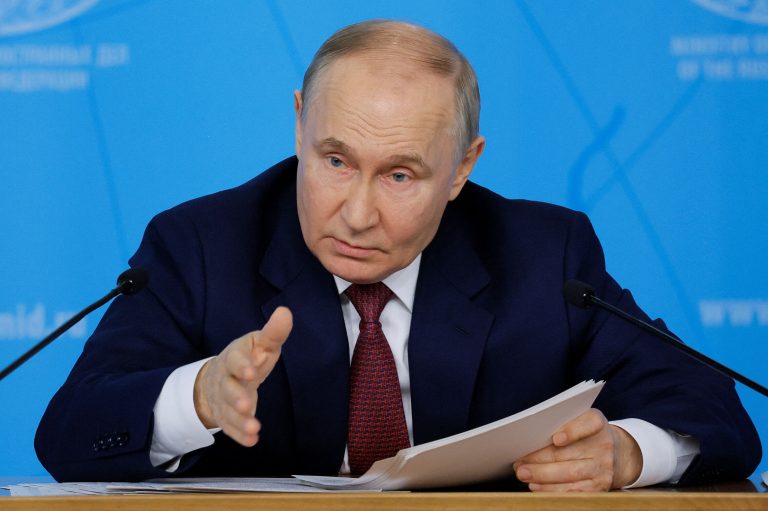
On Dec. 29, Russia’s Foreign Minister Sergei Lavrov claimed that Ukraine launched a drone attack on President Vladimir Putin’s residence in Novgorod. Kyiv has denied the allegations, as Moscow reportedly “revises” its negotiating position in the ongoing conflict between the two countries.
According to the Russian government, the presidential residence, known as Dolgiye Borody, was swarmed by 91 long-range drones from Ukraine; all of which were destroyed by Russian anti-air defences. No casualties were reported, Reuters wrote.
Lavrov also stated that the drones attacked as negotiations for a potential peace deal were in the works. Russia would not abandon the negotiations, but it will review its position.
As a response, Ukrainian President Volodymyr Zelensky countered, saying the accusation was “another round of lies” by Moscow to prolong the conflict with Ukraine.
“This alleged ‘residence strike’ story is a complete fabrication intended to justify additional attacks against Ukraine, including Kyiv, as well as Russia’s own refusal to take necessary steps to end the war. Typical Russian lies,” Zelensky said.
Success
You are now signed up for our newsletter
Success
Check your email to complete sign up
On Dec. 31, Russia’s defence ministry released video footage of what is supposed to be a drone destroyed during the attack, used as proof against Ukraine’s counterclaims.
In the video, Major-General Alexander Romanenkov detailed Moscow’s evidence of Ukraine’s involvement, calling the assault a “thoroughly planned” strike launched from the Sumy and Chernihiv regions. The presentation also featured footage of a Russian service member displaying the purported remains of a Ukrainian Chaklun-V drone, which reportedly carried an unactivated six-kilogram explosive device.
However, the location and date of the footage, as well as the model of the destroyed device, could not be confirmed.
Heorhii Tykhyi, spokesperson for Ukraine’s Foreign Ministry, told Reuters he finds the footage “laughable” and that Kyiv was “absolutely confident that no such attack took place.”
Despite Moscow’s claims, residents of the town of Valdai, located in Novgorod, said they did not hear or see any signs of a drone attack that day. Fourteen residents told the independent outlet Mozhem Obyasnit that they were neither alerted, nor heard any buzzing sounds or explosions.
“There was no noise that night, no explosions, nothing,” a resident was quoted as saying. “If something like that had happened, the whole town would have been talking about it.”
Residents even told Mozhem Obyasnit that they would know if Putin is visiting his residence by seeing heavy helicopter traffic for his arrival.
Moscow’s suspicions came after Zelensky visited President Donald Trump in Florida, with Zelensky saying the claim was meant to disrupt any potential peace talks by the U.S. and Ukraine.
Ukraine reported that it had agreed to 90 percent of a peace plan the U.S. had drafted, though Russia has yet to agree to anything, France24 wrote.
The lakeside residence was once the subject of investigations by late Russian opposition leader Alexei Navalny—who died in an Arctic prison last year. Additionally, Radio Free Europe/Radio Liberty (RFE/RL) also investigated how Putin had frequented the residence as a safer, more secluded spot since the war with Ukraine began.
READ MORE:
- US Forces Capture Maduro: China’s Influence in Venezuela Crippled
- Trump Says Russia-Ukraine Peace Deal Nearly Complete, Donbas Remains Key Issue
- Russia–Ukraine Peace Talks Stall as Putin Blasts Europe
Trump’s response
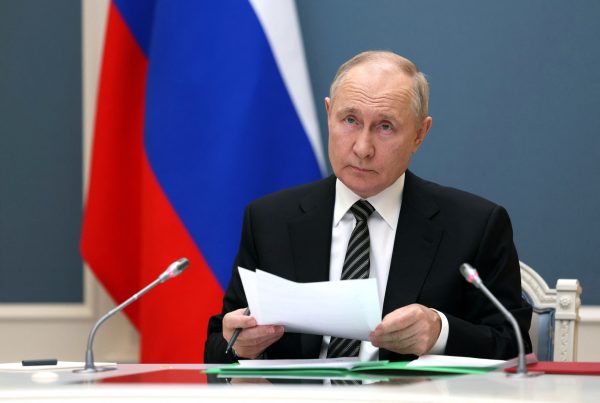
Initially, Trump announced his anger after being told by Putin of Ukraine’s supposed attack.
“I don’t like it. It’s not good,” he told reporters after being asked if it could affect peace efforts. “I learned about it from President Putin [on Dec. 30]. I was very angry about it.”
“It’s a delicate period of time,” he added. “This is not the right time. It’s one thing to be offensive, because they’re offensive. It’s another thing to attack his house. It’s not the right time to do any of that.”
However, the Central Intelligence Agency (CIA) stated on Dec. 31 that it could not prove that Ukraine targeted Putin’s residence, U.S. officials said.
On Jan. 4, Trump later affirmed that he did not believe that Ukraine was behind the alleged drone strike.
“I don’t believe that strike happened,” he told reporters aboard Air Force One. “There is something that happened fairly nearby, but had nothing to do with this.”