By Yang Tianzi
Iran’s nationwide protest movement has evolved into a humanitarian crisis that has drawn international concern. On Jan. 18, Iranian local officials confirmed for the first time that at least 5,000 people have been killed in the ongoing crackdown, with the heaviest casualties reported in Kurdish regions. Of particular concern to the international community are reports that Iranian security forces may have used lethal chemical agents during the suppression of nationwide demonstrations, with suspected toxic substances allegedly deployed against protesters. According to reports, some victims died days after exposure.
UK media report alleged use of lethal chemical agents
Large-scale protests that erupted across Iran in late December last year have rapidly escalated into one of the most severe political crises in years. The unrest did not arise suddenly but reflects the cumulative impact of prolonged economic hardship, political repression, and widespread social discontent. Economic decline driven by international sanctions, high inflation, unemployment, strict religious controls, and limited political freedoms provided fertile ground for mass protests.
The scale and intensity of the demonstrations and the subsequent violence have exceeded previous protest movements, spreading from Tehran to cities nationwide, particularly in remote regions populated by ethnic minorities. By Jan. 18, 2026, weeks of unrest had developed into a humanitarian disaster, prompting heightened international concern over Iran’s human rights situation.
Of particular concern to the international community are multiple indications suggesting that Iranian security forces may have used lethal chemical agents during the crackdown. The seriousness of such allegations is clear, as the use of chemical weapons against civilians constitutes a grave violation of international law and may amount to war crimes or crimes against humanity.
Success
You are now signed up for our newsletter
Success
Check your email to complete sign up
UK broadcaster GB News reported on the allegations in a special program. Former UK Minister of State for Foreign and Commonwealth Affairs Bill Rammell cited a report from the Labour Party’s foreign policy group indicating that observers believe Iranian authorities used a toxic chemical substance against demonstrators. According to the report, the substance does not cause immediate death but leads to severe physical damage, resulting in fatalities days after exposure.
Unverified footage circulating on social media appears to show Iranian security personnel wearing full protective gear while operating from specialized vehicles. Such equipment, typically used to guard against biological or chemical threats, appearing at protest suppression sites has intensified suspicions of chemical agent use.
This is not the first time allegations of chemical weapons use have surfaced in the region. During protests in Iran in 2022, footage reportedly showed streets filled with what was described as an “unknown green gas.” Rammell compared the current situation to past atrocities, specifically referencing Saddam Hussein’s 1988 chemical attack on the Kurdish city of Halabja that killed approximately 5,000 civilians, warning of the risk of a similar tragedy.
Despite the severity of these allegations, Western governments and major intelligence agencies have not formally confirmed the use of chemical weapons. Rammell acknowledged that the reports remain unverified but described them as “credible.” Iran’s tight control over information significantly complicates efforts to obtain conclusive evidence.
Historical precedents of chemical weapons use in the Middle East have heightened concern over the current allegations. From Iraq’s chemical attacks on Kurdish civilians in 1988 to repeated accusations during Syria’s civil war, past lessons have failed to prevent the re-emergence of such threats.

Concerns over Iran’s unconventional weapons capabilities
Additional intelligence has raised concerns that Iran may be expanding its unconventional weapons capabilities. In August last year, Yemeni forces intercepted a shipment allegedly intended by Tehran for the Houthi movement. Reports by Iran International Television further suggested that Iran’s Islamic Revolutionary Guard Corps (IRGC) may be engaged in research and development related to biological and chemical weapons. Taken together, these reports contribute to a concerning picture.
As Iran faces accusations of large-scale violence against civilians and possible chemical weapons use, the international community confronts complex challenges. On one hand, there is pressure to hold Iranian authorities accountable for human rights abuses and to demand an end to violence. On the other hand, the lack of verifiable evidence and Iran’s strict information controls limit the scope of effective direct intervention.
Potential next steps include the establishment of a special investigative mechanism by the United Nations Human Rights Council, expanded targeted sanctions against the IRGC and senior officials, continued evidence collection and reporting by international human rights organizations, and, should chemical weapons use be confirmed, the activation of international sanctions regimes specifically addressing weapons of mass destruction.
The long-term consequences of the crisis may prove far-reaching. Brutal repression of ethnic minorities, particularly Kurdish communities, risks further intensifying ethnic tensions and may increase support for separatist movements. While extreme violence may temporarily suppress unrest through intimidation, it is also likely to deepen public hostility toward the authorities and prolong social instability.

Death toll: sharp discrepancies between official and independent figures
Significant discrepancies exist among reported death tolls from the crackdown, reflecting both the severity of the violence and the lack of information transparency.
Official figures:
On Jan. 18, 2026, an Iranian local official, speaking anonymously, told Reuters that authorities had confirmed at least 5,000 deaths during the protests, including approximately 500 security personnel. This marked the first time Iranian officials publicly acknowledged such a high death toll. The official said the final number was not expected to rise significantly, suggesting that the situation was under control.
Human rights organizations:
The U.S.-based Human Rights Activists News Agency (HRANA) reported a confirmed death toll of 3,308, including 2,885 protesters. HRANA also stated that 4,382 additional cases were under review, indicating that the final death toll could rise substantially. The organization further documented more than 24,000 arrests.
Media and internal sources:
According to CBS News, citing sources inside Iran, the situation may be more severe. These sources estimated that the death toll could be as high as 12,000, and in the most pessimistic scenarios, up to 20,000.
The wide gaps between these figures illustrate the difficulty of obtaining accurate information amid strict media censorship and chaotic conflict conditions. Regardless of which figures are cited, the crackdown ranks among the most severe episodes of political repression in Iran’s modern history.

Kurdish regions: the epicenter of bloodshed
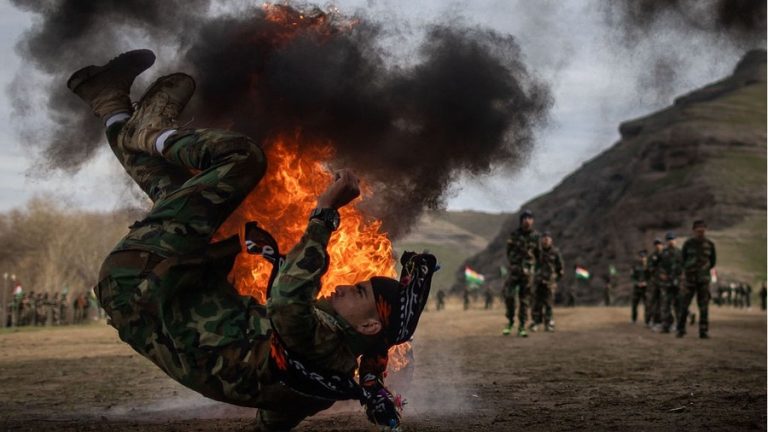
Among the nationwide protests, Iran’s northwestern Kurdish regions have emerged as the areas experiencing the most intense conflict and the highest casualties. Multiple sources have consistently confirmed that these regions have borne a disproportionate share of the violence.
Iranian local officials noted that some of the fiercest clashes and highest death tolls occurred in Kurdish areas. Hengaw, a Norway-based Iranian Kurdish human rights organization, also reported that Kurdish regions have suffered disproportionate levels of violence since the protests began.
The concentration of repression in Kurdish regions reflects deep-rooted historical and political factors. Kurdish separatist movements have long sought greater autonomy or independence, prompting the Iranian government to maintain a hardline security posture in these areas. Authorities have historically framed protests in Kurdish regions as threats to national territorial integrity, providing justification for the use of more lethal force.
Such disproportionate violence against ethnic minorities has resulted in significant loss of life and risks further inflaming ethnic tensions.
Official narrative: claims of foreign conspiracies
In response to domestic unrest and international criticism, Iranian authorities have followed a familiar strategy by attributing responsibility to foreign interference. This narrative has been used to portray domestic grievances as externally driven plots.
Local officials accused “terrorists and armed thugs” of killing “innocent Iranians,” naming Israel and overseas armed groups as external forces allegedly supporting some protesters. These claims are made against the backdrop of worsening Iran–Israel relations following Israeli military strikes against Iran in June 2025.
The 2026 crackdown represents a severe humanitarian disaster and a serious test for international human rights norms and legal standards. Thousands of deaths, tens of thousands of arrests, and allegations of chemical weapons use have placed the situation under sustained international scrutiny.