Under continued U.S. and Israeli airstrikes, Iran’s missile and drone capabilities are suffering severe degradation. At the same time, Tehran is adjusting its combat approach, employing dispersed attacks, decentralized command, and drone tactics in an effort to preserve remaining forces amid ongoing strikes.
Analysts note that this conflict is no longer just a new round of Israel-Iran fighting but has gradually evolved into a regional war involving the U.S. and multiple Middle Eastern countries.
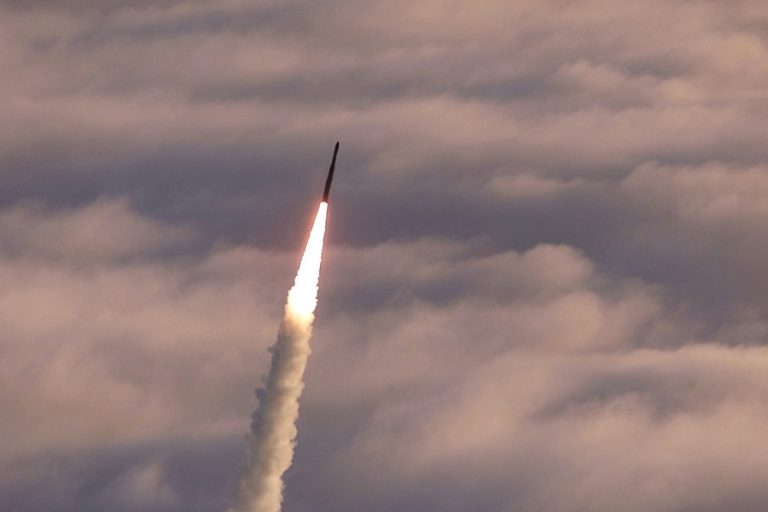
The U.S.-Israeli joint airstrikes that began on Feb. 28 have inflicted heavy damage on Iran’s missile infrastructure and military facilities.
Chairman of the U.S. Joint Chiefs of Staff Dan Caine said that within less than a week of the conflict, Iran’s missile launches had dropped by more than 80 percent. The Israeli military reported that approximately 75 percent of Iran’s missile launchers have been destroyed.
Military analysts cited by Business Insider say Iran is racing against time, trying to preserve its remaining missile and drone arsenal amid sustained attacks.
Success
You are now signed up for our newsletter
Success
Check your email to complete sign up
Meanwhile, U.S. B-2 stealth bombers have targeted Iran’s underground “missile city” facilities, originally built to hide and protect its missile stockpiles.
Ryan Bohl, a Middle East analyst at risk intelligence firm RANE, said that continuous U.S.-Israeli surveillance of these underground sites makes frequent launches much more difficult.

Iran changes tactics: dispersed attacks strain air defense systems
Analysts have noted that Iran’s missile use in this conflict differs significantly from the past.
James Devine, a political scientist at Mont Allison University in Canada, said that Iran no longer concentrates large numbers of missiles on a single target but instead launches steadily and disperses attacks across multiple targets.
He said this tactic may aim to deplete U.S. and allied interceptor missile stockpiles rather than simply maximize destruction.
At the same time, Iran has redirected some drone attacks toward Gulf countries, not only Israel.
During the first week of the conflict, Iran launched about 110 drones, compared with nearly 1,100 over 12 days in the June 2025 war, showing a more cautious use.
Despite this, Israel’s air defenses maintain a high interception rate. In the first week, Iran fired over 220 missiles at Israel, but fewer than 10 hit their targets.

‘Mosaic defense’ strategy emerges
Iranian Foreign Minister Abbas Araghchi said Iran has shifted to a “decentralized mosaic defense strategy,” allowing units to operate independently without centralized command.
Arash Azizi, a scholar at Boston University, believes this strategy allows operational capability to continue even if high-level command structures are struck.
He said that although Iran has expended significant military resources, it can maintain combat capability for a period through rationing and production, “especially since its drone capability remains highly significant.”
Some analysts describe Iran’s current combat approach as a form of “guerrilla warfare.”

Conflict escalates into regional war
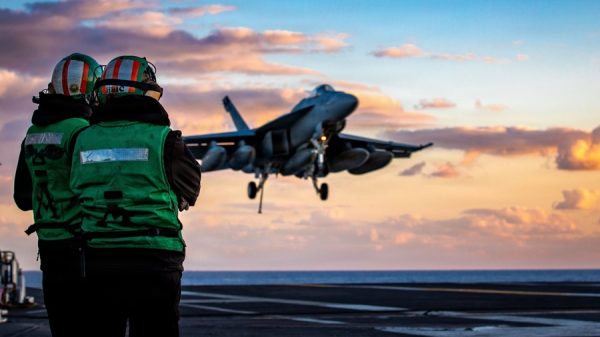
The Jerusalem Post notes that the major difference from the June 2025 Israel-Iran conflict is the U.S.’s deep involvement from day one.
This has turned what was originally a bilateral conflict into a broader regional war, with battle zones extending to Turkey, Cyprus, and Azerbaijan.
In the first week, the U.S. and Israel used over 6,500 munitions, compared to 3,700 during the 12-day war last year.
With multiple countries involved, Iran has had to disperse its firepower over a wider area, including Gulf states hosting U.S. forces.
Despite the heavy damage to its missile systems, analysts say Iran still possesses a weapon that is difficult to fully suppress: the Shahed drone.
Bohl said these drones are structurally simple and low-cost but difficult to defend against. Even advanced air defense systems in the U.S., Israel, and Gulf countries struggle to completely neutralize the threat.
Iran has also fired missiles with cluster warheads at Israel, which have limited effect on hardened targets but pose significant risk to civilian areas.
War’s outcome remains uncertain
It is still difficult to assess the extent of Iran’s weapons losses and whether its tactical changes are strategic choices or driven by limitations.
Meanwhile, Israel continues targeting Iran’s missile production facilities, transport routes, and storage sites, which may further reduce Iran’s future missile launches.
Analysts note that as the conflict continues, Iran may increase mobilization of proxy forces, including Hezbollah in Lebanon and Houthi forces in Yemen. However, the war could also end suddenly. The Jerusalem Post points out that U.S. President Trump’s decision-making style is highly unpredictable, leaving the conflict’s trajectory uncertain.