On Saturday, March 14, the U.S.-Israel war against Iran entered its third week. As the conflict expands, Iran has threatened to block the world’s energy lifeline, the Strait of Hormuz, while U.S. President Donald Trump has called for multiple countries to send naval vessels for escort operations, vowing to ensure the strait reopens under any circumstances.
The Strait of Hormuz is one of the world’s most important energy transport routes, with roughly one-fifth of global oil supplies passing through it. As the conflict escalates, Iran has expanded its attack range across the Middle East and threatened to block this critical shipping lane.
According to the UK Maritime Trade Operations, since early March, 20 commercial vessels—including nine oil tankers—have been attacked or reported incidents. Analysts widely believe Iran aims to disrupt the global economy to pressure the U.S.
The situation has caused international oil prices to surge, with Brent crude briefly exceeding $100 per barrel. Shipping costs have soared, and supply chains for metals, agriculture, and automotive industries are being affected.
Trump calls for multi-nation naval escorts
Responding to Iran’s threats, Trump posted on Truth Social on Saturday, stating that many countries will send warships to the Strait of Hormuz to protect shipping.
Success
You are now signed up for our newsletter
Success
Check your email to complete sign up
He wrote that he hopes China, France, Japan, South Korea, and the United Kingdom will dispatch vessels for escort missions, claiming that the U.S. military has “destroyed 100 percent of Iran’s military capability.”
Trump also warned that if tensions continue to escalate, the U.S. would “flatten the coastline” and emphasized: “In any case, we will soon restore the Strait of Hormuz to open, safe, and free passage.”
Later the same day, he added that countries relying on the strait for oil transport must share responsibility for maintaining security. The U.S. will provide “substantial assistance” and coordinate with relevant nations to ensure shipping resumes promptly.

Iran threatens Gulf ports
In response to U.S. military action, Iran issued new threats. The Iranian Joint Military Command warned that if the situation escalates, it would target cities and port facilities within the United Arab Emirates (UAE).
Iran accused the U.S. military of using UAE ports, docks, and hideouts to launch nighttime attacks on Iran’s Persian Gulf energy hub, Kharg Island, and urged civilians to evacuate affected areas immediately.
The ports specifically mentioned include Jebel Ali in Dubai, Khalifa in Abu Dhabi, and Fujairah. This marks the first direct threat by Iran to commercial ports in neighboring countries since the war broke out on Feb. 28.
Iranian Foreign Minister Abbas Araghchi also threatened that if Iran’s energy facilities are attacked, Iranian forces will target U.S. corporate facilities in the region.
US airstrikes on Iran’s energy hub
Previously, the U.S. military carried out airstrikes on the key Persian Gulf energy hub, Kharg Island. Trump said the U.S. destroyed military facilities vital to Iran’s oil network but has not targeted oil infrastructure.
Kharg Island is Iran’s largest crude oil export terminal, handling most of the country’s oil exports. Trump stated that Friday’s operation “completely destroyed” military targets on the island.
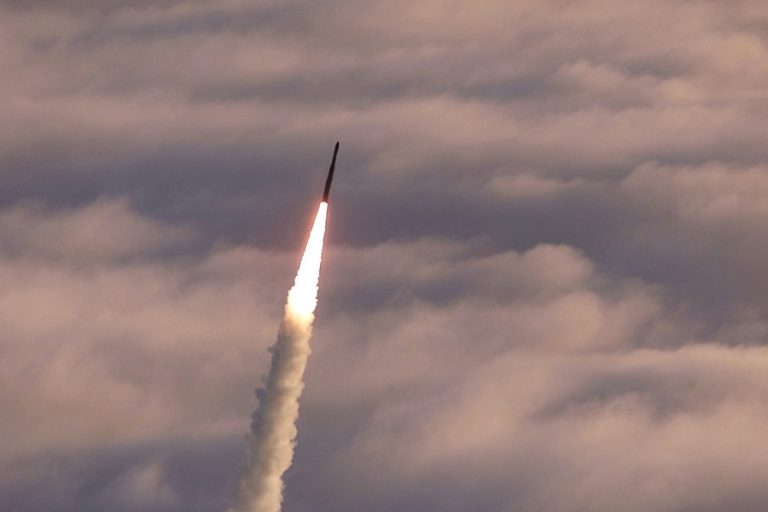
The U.S. Central Command released a video on Saturday showing that the strike destroyed multiple military facilities, including mine storage and missile bunkers, hitting over 90 Iranian military targets.
Iran, however, claims the airstrikes did not damage oil facilities. Semi-official Fars News Agency reported at least 15 explosions post-strike, targeting air defense systems, naval bases, and airport control towers.
The speaker of Iran’s parliament warned that such strikes could trigger larger-scale retaliation.

US reinforces troops in the Middle East
As tensions rise, the U.S. continues to deploy troops to the Middle East. According to The Times of Israel, a U.S. official revealed that 2,500 Marines and the amphibious assault ship USS Tripoli will be sent to the region.
The ship will operate alongside the 31st Marine Expeditionary Unit to strengthen U.S. military presence. These forces are currently stationed in Japan and have been active in the Pacific for several days. Commercial satellites spotted the USS Tripoli near Taiwanese waters, over a week away from Iranian waters.
Marine Expeditionary Units are capable of amphibious landings, embassy security, civilian evacuations, and disaster relief. The Wall Street Journal first reported this deployment.
Currently, the U.S. Navy has 12 warships in the Arabian Sea, including the aircraft carrier USS Abraham Lincoln and eight destroyers. If the USS Tripoli joins, it will become the second-largest vessel in the region after the Lincoln.
Additionally, Qatar’s Al-Udeid Air Base typically hosts around 8,000 U.S. troops, but the total U.S. troop presence in the Middle East has not been disclosed.
Conflict continues to escalate
Meanwhile, combat operations are intensifying. Iran continues to launch missiles and drones at Israel and neighboring Gulf states, while U.S. and Israeli warplanes strike military and infrastructure targets inside Iran.
U.S. Secretary of War Pete Hegseth stated that since the outbreak, U.S. and allied forces have struck over 15,000 enemy targets, averaging more than 1,000 per day.
The Israeli military also announced that in the past 24 hours, it conducted a new wave of airstrikes against Iran, hitting over 200 targets, including missile launchers, air defense systems, and weapons production facilities.
By Gao Yun