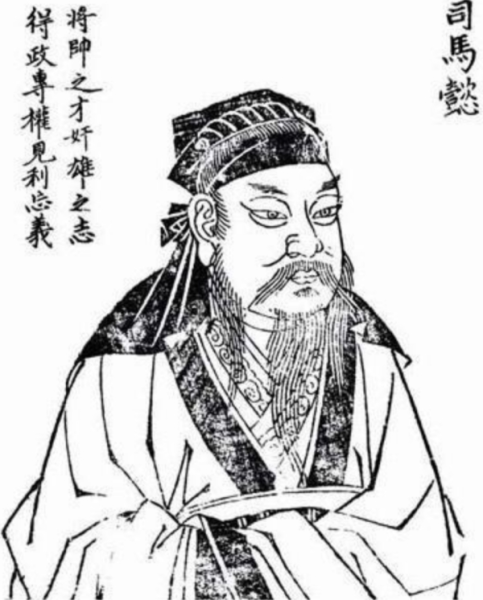
The life of Sima Yi is often regarded as one of the most successful in Chinese history. During the turbulent era of the Three Kingdoms, rival leaders such as Cao Cao, Liu Bei, and Sun Quan battled for dominance in fierce battles that went on for years on end. Yet in the end, it was Sima Yi’s lineage that would ultimately consolidate power and control over the realm.
His rise was not merely a matter of timing or fortune. It was also the result of distinct personal qualities, and most notably, an extraordinary capacity for endurance and a disciplined approach to adversity.
The power of restraint
Endurance, often described in Chinese as ren (忍), was central to Sima Yi’s character. While some interpret this as calculated concealment or political cunning, it also reflects a deeper ability to remain composed, restrained, and unreadable.
As outlined in The Art of War, “Know yourself and know your enemy, and you will not be imperiled in a hundred battles.” In both ancient warfare and modern competition, information and perception are critical. The less one reveals, the harder it becomes for opponents to anticipate or counter one’s moves.
Success
You are now signed up for our newsletter
Success
Check your email to complete sign up
Sima Yi embodied this principle. By maintaining a low profile and avoiding unnecessary confrontation, he minimized risk while preserving strategic flexibility. Even in situations of rivalry, he avoided escalating tensions into open hostility.
A well-known anecdote illustrates this approach. Sima Yi and Yang Xiu, a court official who supported a rival faction, were often portrayed as adversaries. Despite Yang’s repeated attempts to undermine him, Sima Yi refrained from retaliation.
When Yang Xiu was later sentenced to death by Cao Cao, Sima Yi requested permission to visit him. Asked why he would do so, Sima Yi reportedly replied that throughout his life, he had encountered no true enemies, only teachers and peers.
Whether apocryphal or not, the story reflects a mindset: to leave room for others, to maintain respect even toward rivals, and to avoid unnecessary enmity. This capacity for restraint allowed Sima Yi to navigate complex political landscapes with remarkable agility.
Resilience in adversity
Another defining trait was Sima Yi’s ability to withstand setbacks and learn from failure, what today might be described as “adversity quotient.”
The eventual success of the Sima family was influenced in part by the decline of the Cao lineage, but it also reflected careful preparation and leadership. Sima Yi instilled in his sons a clear principle: do not fear failure; instead, learn from it.
One story recounts a defeat against Zhuge Liang, during which Wei forces lost control of valuable grain supplies. Despite having superior numbers, the loss frustrated many officers. Sima Yi’s sons, unsettled by the outcome, sought guidance from their father. They found him calmly practicing exercises, seemingly untroubled by the setback.
He explained that before one can achieve victory, one must first learn how to lose well—without shame, without panic, and without lasting damage. Only those who can endure defeat, he suggested, are capable of long-term success.
Whether historically precise or not, the lesson is clear: Sima Yi did not define success solely by immediate outcomes. Instead, he emphasized growth through experience, even in failure. Throughout his life, Sima Yi experienced both victories and defeats. Yet it was his ability to adapt, recover, and persist that ultimately set him apart.
Lessons beyond history
Sima Yi’s story offers insight into a broader principle. While intelligence and emotional awareness are often emphasized, resilience, the capacity to endure hardship and recover from setbacks, is equally critical.
In both historical and modern contexts, those who can remain steady under pressure, avoid unnecessary conflict, and learn from adversity are better positioned to succeed over time.
Sima Yi did not rise through bold displays or dramatic victories alone. His success was built on patience, restraint, and a long-term perspective, qualities that, while less visible, proved decisive.