News analysis
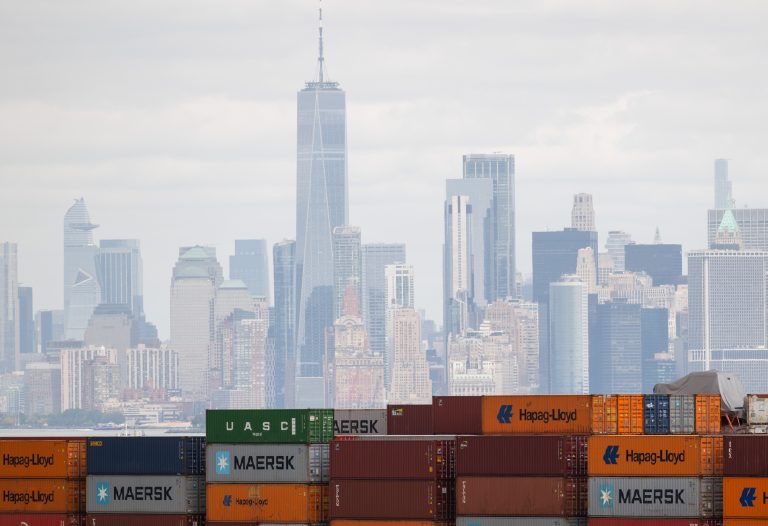
The Trump administration’s suspension of the Jones Act, the 1920 law requiring that goods moved between U.S. ports travel on vessels that are American-built, American-flagged, and mostly American-crewed, has now run for more than two months and is set to last into August.
The Department of Homeland Security issued the original 60-day waiver on March 17, acting on a request from the Department of War, weeks after the United States and Israel went to war with Iran and disruptions to energy markets sent fuel prices higher. On April 24 the administration extended the waiver another 90 days, pushing the loading deadline to August 16 and making it the longest Jones Act waiver since 1950.
By the accounting of analysts across the political spectrum, the waiver has had no perceptible effect on fuel prices. What it has produced instead is an unusually clear picture of how small the American merchant fleet has become, and that picture now sits awkwardly beside the administration’s signature maritime project.
- US Farmers Face Spring Planting Squeeze as Hormuz Closure Strands Global Fertilizer Trade
- Deep Beneath the Pacific, Japan Hunts for a New Source of Rare Earth Metals
A year before the war, Trump signed an executive order pledging to rebuild U.S. shipbuilding to counter China. This month, more than 100 shipping executives, shipyard owners, and union leaders wrote to Congress arguing that the waiver had chiefly benefited foreign and China-linked operators and was undercutting that goal.
Success
You are now signed up for our newsletter
Success
Check your email to complete sign up
To grant a waiver of this kind, the government must clear a legal bar that Congress raised in 2021. The law now requires that a suspension be necessary in the interest of national defense and address what the amended statute calls “an immediate adverse effect on military operations,” along with a finding by the U.S. Maritime Administration that not enough qualified American vessels are available to meet the need. The administration’s own legal basis for the waiver, in other words, was a formal acknowledgment that the Jones Act fleet could not carry the load.
The Cato Institute, working from the federal data published for each waiver shipment, counted 45 completed voyages and read them as evidence of demand the existing fleet had been unable to serve, for want of enough qualified ships to carry it. The statute was written after World War I to guarantee a merchant marine the country could call on in a conflict, and its first real wartime test in years was met by chartering foreign hulls.
Caught between contradictory priorities
Executive Order 14269, signed in April 2025, opens by noting that the United States builds less than one percent of the world’s commercial ships while China builds roughly half. That order, and the Maritime Action Plan that followed in February 2026, call for a larger U.S.-flagged fleet, a trust fund for domestic shipbuilding, and a port fee on foreign-built vessels; the 2027 budget request seeks about $65.8 billion for Navy shipbuilding alone, the largest such request since 1962.
The concern driving it is military as much as commercial. China’s navy already fields more warships than the United States and is projected to operate about 435 by 2030, built in dual-use yards that turn out commercial and naval vessels side by side.
- US Seeks 50% Domestic Content Requirement in USMCA Auto Overhaul Proposal
- Exclusive: Analyst Says Taiwan Must Confront Limits of US Support as $14 Billion Arms Package Remains in Limbo
Against that backdrop, the makeup of the waiver traffic has drawn the industry’s sharpest objection. By the industry coalition’s count, of the first fifteen voyages completed under the waiver, four moved on Chinese-built vessels and ten involved operators with ties to China.
The administration’s main instrument for raising the cost of Chinese shipping, a set of port fees the U.S. Trade Representative imposed last October, is itself on hold until this November after a trade truce reached between Trump and Chinese leader Xi Jinping. For now, the fees meant to raise the cost of Chinese shipping sit paused while a separate policy moves a share of American coastal cargo onto Chinese-built hulls.
The waiver expires for loading purposes on Aug. 16, and the administration must decide whether to let it lapse or extend it a third time. The maritime industry has built a national campaign around the first outcome, casting any further extension as a betrayal of the president’s own shipbuilding agenda. The pressure in the other direction is the one that produced the waiver in the first place: an administration watchful of fuel prices in a midterm election year, with a war in the Middle East still moving energy markets.