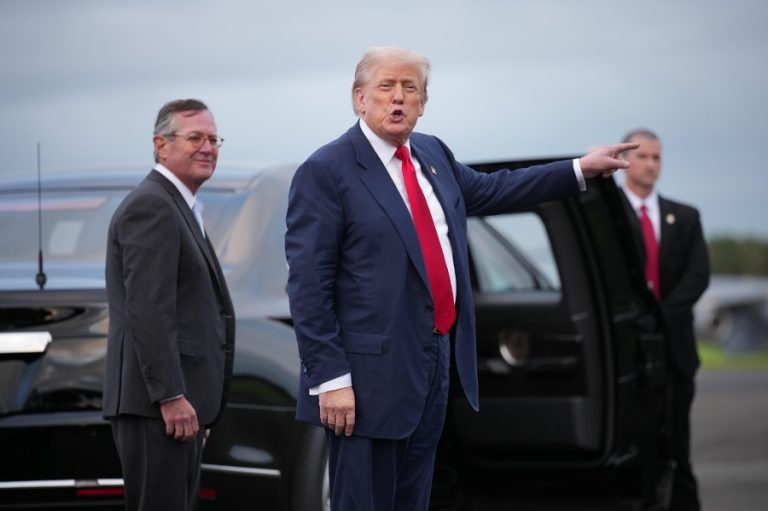
On Aug. 6, U.S. President Donald Trump signed an executive order imposing an additional 25 percent tariff on Indian exports, citing India’s ongoing purchases of Russian oil as the reason for the tariffs.
The tariffs, which are scheduled to be implemented in 21 days, will raise the total American tariffs on Indian exports to 50 percent.
When implemented, it means that India will be subjected to the highest American tariffs of any nation, sans Brazil, putting India at a distinct disadvantage when competing with regional economies including Vietnam and Bangladesh.
The 21‑day delay before implementation gives India a window to negotiate and explore alternatives to Russian oil imports, though such a shift would be slow given the nation’s substantial energy demands.
Markets, other than the oil market, have been slow to react to the news possibly because it remains unclear exactly which Indian goods will be subjected to the additional tariffs. Some key segments of the Indian economy remain exempt from the new rate including the country’s electronics and pharma industries.
Success
You are now signed up for our newsletter
Success
Check your email to complete sign up
Following Trump’s announcement, oil prices creeped up on Wednesday after a five-week low when the news of the tariffs, and why they are being imposed, was announced.
The Indian government has called the tariffs “unfair, unjustified and unreasonable.”
RELATED:
- US, Japan Reach Trade Deal, Including Lowered Tariffs and More American Exports
- Trump Admin Moves to Counter China’s Maritime Dominance With Steep Crane Tariffs
- A Recap of US Tariff Actions, Feb–July 2025
Deep relationship
In the first half of 2025 an estimated 30 to 40 percent of India’s oil imports were of Russian crude making the nation one of the world’s largest importers of Russian energy.
Previously, Indian officials have emphasized that the nation’s energy needs, long-term contractual obligations, and strategic independence remain reasons why the country would not halt Russian oil purchases.
India is also a major buyer of Russian military hardware, including S-400 air-defense systems, Su-30MKI fighter jets, T-90 tanks, BrahMos missiles, and AK-203 assault rifles, many of which are produced domestically through bilateral technology transfer programs.
India and Russia also regularly conduct joint military training operations such as the INDRA 2025 maritime exercise which wrapped up last April.
New procurements are also underway including stealth frigates and a leased nuclear-powered submarine expected by 2028.
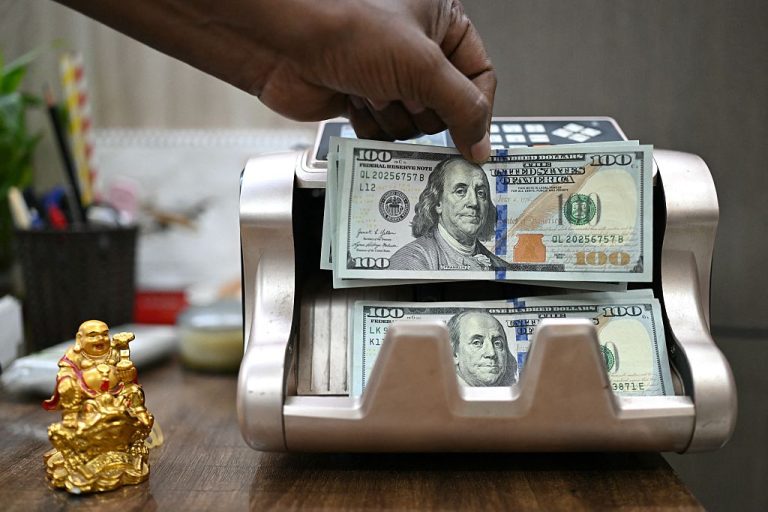
Prior to the Ukraine war, bilateral trade between the two nations was roughly $12 billion, a number that ballooned to over $60 billion by 2024-25, with a trade target of $100 billion by 2030.
Financial cooperation is also deepening between the two countries via local currency payment mechanisms (Rupee-Ruble), Vostro accounts, and talks to integrate India’s RuPay and Russia’s MIR systems to bypass sanctions.
READ MORE:
- Japan’s 2025 Defense White Paper Names China ‘Greatest Strategic Challenge’
- US State Secretary Rubio to China’s Wang Yi: Trump-Xi Meeting to Occur Under ‘the right atmosphere’
- US Targets Chinese Goods With Vietnam Trade Deal
Indian business reacts
Indian business leaders were quick to comment on the impending new tariffs with many expressing disdain.
Colin Shah, Managing Director of Kama Jewelry in India told Reuters, “The additional duty imposition of 25 percent to the existing tariff is unfortunate and a major blow to the overall Indian exports ecosystem, especially the gems & jewellery sector. As a result, this will lead to a sharp rise in duty for studded gold jewellery exports from India, leading to a further massive decline in Indian jewellery exports to one of the biggest consumer markets”
Sakshi Gupta, Principal Economist with HDFC Bank, Gurugram told Reuters, “While Trump’s order gives another 21 days for a deal to break through, in case it does not, we will have to significantly lower FY26 GDP growth forecast to below 6 percent, baking in a 40-50 bps hit. This would be double our earlier estimates (of GDP hit from higher tariffs).”
In a White House statement, Trump justified the executive order as necessary to address “the national emergency stemming from the Government of the Russian Federation’s actions taken against Ukraine.” pointing to India’s direct or indirect importation of Russian crude.
Senator Lindsey Graham (R-SC) believes the move doesn’t go far enough. He proposes tariffs of up to 500 percent on any country, including India, that continues trading in Russian energy.
Senator Marco Rubio (R-FL) has publicly backed Trump’s tariff approach, referring to the levies as a “theft tax” on countries buying Russian oil.