Some 780 million people lack access to one of our most basic needs: clean water. Modern filtration methods can be costly and impractical in many developing countries, a factor contributing to hundreds of thousands of deaths from water-born illnesses each year. What if there were a simple solution that grew on a tree — one that was well-suited for cultivation in the areas it was most needed? Perhaps you’ve heard of moringa…
While the wellness community goes wild for moringa leaves as a versatile super-food, scientists are researching another part of the plant for its unique antimicrobial activity. Often touted as the “miracle tree,” moringa has long been valued, not only for its exceptional nutritional profile and impressive healing properties, but also for its capacity to cleanse. Moringa seeds, in particular, have a long history of purification that we are just beginning to understand.
What is moringa?

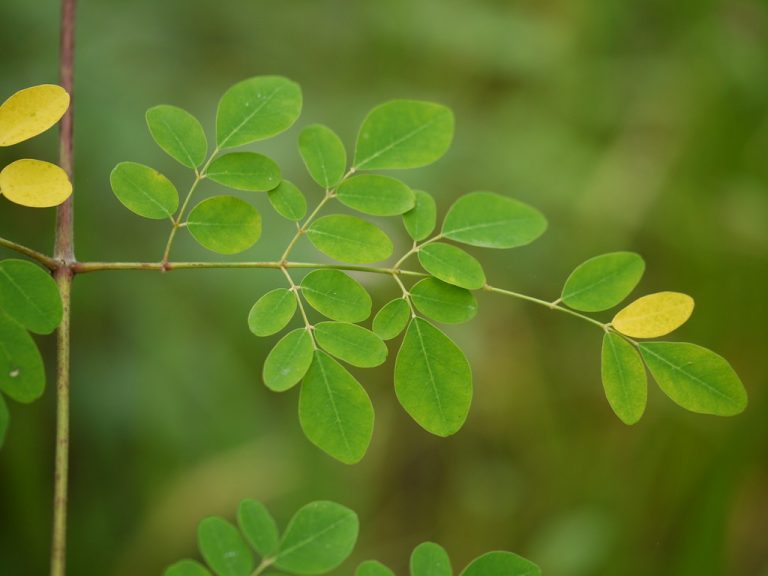
It sounds like a dance, and sometimes it is uplifting, acoustic music, but the term moringa mainly refers to a fast-growing tree native to India, Arabia and the East Indies — or the leaves of said tree. Moringa oliefera, one of 13 species in the genus Moringa, is widely cultivated for its health-boosting leaves, with a rising global market for moringa health products approaching USD 10 billion.
Actually, all parts of the tree are useful. For thousands of years, moringa leaves have provided important nutrition for man and beast alike; moringa wood is suitable for both burning and building; and the young seed pods can be cooked and eaten like green beans.
What we will be looking at today is the pea-sized, winged seeds that were used by ancient Egyptians for their purifying properties. Scientists have found that the seeds of Moringa stenopetala, a species native to Kenya and Ethiopia, are especially effective water purifiers.

Water purification with moringa seeds
Success
You are now signed up for our newsletter
Success
Check your email to complete sign up
Early Egyptian women would rub their earthen water vessels with crushed moringa seeds; powdered moringa seeds were used as an antibacterial hand wash; and thousands of years before modern water treatment was developed, crushed moringa seeds were used to filter impurities from water.
With an increasing interest in environmental concerns, scientists have been studying this natural water purification method for decades and find it to be very effective.
How does it work?
In 2016, researchers at Penn State University discovered that the moringa seed possesses a certain protein that binds bacteria together. This not only compromises the pathogens’ protective cell membrane, it also clusters them together — causing them to sink and die.
According to Manish Kumar, Associate Professor of Environmental Engineering studying moringa at the University of Texas at Austin, the seeds not only kill harmful bacteria, but also viruses and fungi, and at an astonishing rate of billions of cells per mil.
Kumar suggests most — if not all — seeds possess antimicrobial properties in their seed coat. Charged antimicrobial peptides protect seeds from succumbing to any number of microorganisms before germinating in the diverse ecosystem known as soil. Moringa seeds are special because they also work on attached surfaces, making them very useful in filter settings.

At an average ratio of one seed per liter, crushed moringa seeds mixed in a container of contaminated water can cause the contaminants to drop to the bottom within one or two hours. The clean water, strained off, is then basically safe to drink. Water can also be filtered through a prepared paste with similar results.
Three key points:
- Although dried seeds can be stored for long periods, the crushed seed preparation should be made fresh for each treatment.
- In order to be effective, the water must be moving (either agitated or poured slowly through a moringa-prepared filter).
- The sediment should be removed within a short time-frame, to prevent a re-population of bacteria from forming in the clean water.
Practical applications
On a small scale, moringa seeds can be a simple and effective way to purify water in emergency or outdoor-survival situations.
- Seeds (one per liter of water to be filtered) should be ground into a powder with a mortar and pestle.
- Mix the powder with a small amount of clean water to make a paste.
- Add the paste to the target water — stir quickly or shake vigorously for one minute, then slowly for 10 minutes.
- Allow contaminants a few hours to settle to the bottom.
- Filter off clean water promptly.

On a large scale, moringa water purification shows great potential for developing countries in need of safe drinking water. Moringa is drought tolerant, and can be cultivated in tropical, subtropical and semi-arid tropical areas. It is easy to grow, and quick to produce moringa seed — making it convenient, affordable, and reliable.
One major benefit of moringa-seed water purification is that, unlike most modern filtration systems, it does not rely on chemicals. Using natural moringa seeds instead of aluminum, iron salts, and chlorine not only saves money, it also eliminates harmful chemical by-products — making it a worthy contender against many conventional practices.
Moringa seeds are sold online mainly as health supplements, but it wouldn’t hurt to keep some on hand just in case. If you’re interested in growing moringa, but live outside of its tropical range; it is said to grow so quickly that it can be treated as an annual plant that is harvested before frost.