By Xiao Ran, Vision Times
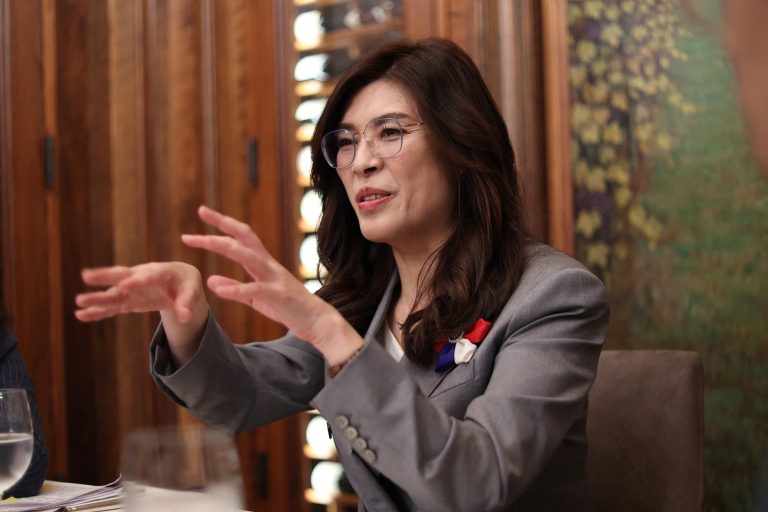
The Chinese Communist Party’s (CCP) suppression of Falun Gong has lasted for 26 years, extending far beyond China’s borders and evolving into a systematic campaign of transnational persecution. In an exclusive interview with Vision Times, well-known current affairs commentator Lao Deng drew on personal experiences and in-depth observations to provide a comprehensive analysis of the CCP’s campaign against Falun Gong and its affiliated arts organization, including Shen Yun Performing Arts.
Lao Deng described how the CCP has used intimidation, surveillance, and even bomb threats in an effort to stifle Falun Gong’s global influence and Shen Yun’s revival of traditional Chinese culture. At the same time, he voiced deep admiration for Falun Gong practitioners and Shen Yun performers. He believes that China’s true hope lies in democracy and the rediscovery of its traditional cultural roots.
A surge in faith
Before becoming a commentator, Lao Deng ran a bookstore in Beijing and personally witnessed the rise of Falun Gong in China, followed by the CCP’s brutal crackdown. He recalled that in the early 1990s, he and Falun Gong founder Mr. Li Hongzhi were once “neighbors.”
At the time, Lao Deng rented an apartment in a residential compound at Fahuasi South Lane in Beijing: “Master Li lived on the first floor, and I lived on the fourth. Neighbors said he was Master Li of Falun Gong and often went out to teach qigong.”

Success
You are now signed up for our newsletter
Success
Check your email to complete sign up
Lao Deng’s hometown is Shuangcheng County in Heilongjiang Province (now Shuangcheng District of Harbin), a county with over 800,000 residents. He explained that Shuangcheng became one of the areas where Falun Gong spread most widely: “I estimate at least one in ten people practiced it — about 80,000 to 100,000. They often held activities, renting large auditoriums, with crowds of people practicing together.”
Though he himself did not practice Falun Gong, he played a role in helping others access its teachings: “At that time, I was running a bookstore in Beijing, so I wholesaled copies of the book back home. Altogether, it must have been tens of thousands of copies.”
Falun Gong’s impact went far beyond physical health. While its reputation for “healing and fitness” attracted wide support, especially in rural areas with scarce medical resources, Lao Deng stressed that it was ultimately a belief system rooted in values: “It’s not just a sport or a way to keep fit — it’s a faith.”
He also observed that the most respected villagers were among its practitioners: “They were the most virtuous people in the village. Everyone who practiced Falun Gong was very good, and the effects of the practice were remarkable.”
Speaking out and bearing witness
Shuangcheng was also among the first areas where the CCP began suppressing Falun Gong. Alarmed by the practice’s popularity, authorities escalated their restrictions: “At first Party members and officials were forbidden to practice Falun Gong, and then it slowly expanded to banning Falun Gong altogether.”
On April 25, 1999, tens of thousands of practitioners peacefully petitioned near the State Council’s Appeals Office by Zhongnanhai in Beijing. They sought the release of detainees in Tianjin and the right to practice without harassment. Jiang Zemin later used this as a pretext to launch nationwide persecution.
RELATED: Landmark ‘Falun Gong Protection Act’ Clears House With Unanimous Approval
Lao Deng, who was then trading stocks in Beijing, recalled driving past Zhongnanhai after a friend called him: “Those Falun Gong practitioners stood there silently, forming a circle. I was deeply moved — it was peaceful, rational, and orderly. No one shouted slogans, no one acted rudely or irrationally.”
When repression intensified, he personally tried to reason with local officials. He remembered urging the county Political–Legal Committee secretary: “I told them, ‘Go easy on them — we’re all from Shuangcheng. They just want to practice for health, because they can’t afford medical care. These poor folks practice it to stay healthy — why persecute them? The Communist Party always runs movements: today suppression, tomorrow rehabilitation.’”
The resilience of practitioners left a lasting impression on Lao: “I saw Falun Gong practitioners’ unyielding spirit. They weighed down banners with stones, tied up slogans — five of them hanging from trees, lining both sides of the highway. They spread the truth, delivered DVDs; relatives of mine often had people ride up to their doors on bicycles to slip discs inside, and they even intercepted television programs.”
He added with admiration: “The degree to which these Falun Gong disciples remained steadfast, the extent to which they risked their lives, the price they paid to tell the truth — the whole county saw it. Their resilience and conviction moved me profoundly; it truly is a great spirit.”
Over time, the CCP’s methods shifted. Inside China, public propaganda attacks diminished: “(Inside China) the media used to publish endless attacks, but now they don’t dare, because the more you attack, the greater Falun Gong’s influence becomes,” said Lao Deng. “Now they can only suppress it in secret.”
To Lao Deng, the values of “Truthfulness, Compassion, Forbearance” are inherently incompatible with the Party’s ideology: “As long as a doctrine, a belief, or a practice emphasizes these three words — Truthfulness, Compassion, Forbearance — it must be good. The Communist Party, by contrast, promotes struggle, lies, and evil. It’s like an evil cult, with the Party’s General Secretary as its cult leader. Their so-called paradise is communism — they draw a big pie to make you believe.”
He dismissed the CCP’s claims surrounding staged incidents like the so-called “self-immolations”: “Why don’t such things happen abroad? Falun Gong has spread to Taiwan, Hong Kong, the U.S., and so many people practice it there, yet there have been no self-immolations. Only in China — and even there, it’s twisted or staged by them.”
For him, this fit a pattern of manufactured narratives used throughout the CCP’s history, from the Tiananmen massacre to the April 5th Movement of 1976.
Shen Yun’s global influence alarms the CCP
While persecuting Falun Gong domestically, the CCP also waged transnational repression. Overseas practitioners are monitored, harassed, and even photographed during protests outside Chinese consulates. Lao Deng revealed that the CCP has even paid Western outlets to publish hostile coverage of Falun Gong and Shen Yun, citing The New York Times as one example.
Founded in New York in 2006, Shen Yun Performing Arts aims to revive China’s 5,000-year-old traditional culture through classical Chinese dance. To Lao Deng, Shen Yun represents Falun Gong’s greatest success:
“It doesn’t just expand Falun Gong’s influence; more importantly, it promotes traditional culture — that’s what the Communist Party fears most.”
He explained why: “Although the CCP rules China, it follows Marxist-Leninist culture. Falun Gong, by contrast, is reviving traditional Chinese culture, which clashes with Marxist-Leninist ideology. That’s why they’re so wary of it. If Falun Gong were promoting Western culture — ballet, opera — the CCP might not care as much, because Western culture has little to do with China. But Falun Gong is reviving China’s roots, presenting them to the world, which places tremendous cultural and legitimacy pressure on the Party.”
RELATED: Communist China Ramps Up Efforts to Intimidate Shen Yun With Sabotage, Unhinged Threats of Violence
Unable to stop Shen Yun’s global tours, the CCP resorted to threats. In the past year alone, more than 140 bomb and death threats were made to block performances: “That’s where their hatred comes from. As Shen Yun’s influence keeps growing, they resort to the lowest tricks — sending agents, offering bribes, sowing chaos inside Shen Yun. They’ll stop at nothing to sabotage it.”

After attending a Shen Yun performance in Vancouver this year, Lao Deng was full of praise: “Back in China, I often went to performances — I’m something of a fan of the arts. But what struck me most about Shen Yun this time was how extraordinary it was! The level was so high. Whether it was the choreography, the dancers’ performance, or the live music — everything was incredibly professional, seamless, perfect, flawless.”
He admired not only the artistry but also the performers’ integrity: “These performers are not only exceptionally skilled; they also integrate the principles of Truthfulness, Compassion, and Forbearance into their art. Every movement, every story is full of meaning. They use art to spread the essence of Chinese culture. That sense of mission and professionalism fills me with respect.”
RELATED: A Path of Freedom: A Shen Yun Dancer’s Journey From Oppression to the World Stage
For him, Shen Yun’s authenticity stood out: “What’s most precious is that the entire performance is about traditional Chinese culture — something you rarely see in China today.”
The global audience response further convinced him of its importance: “The more national something is, the more universal it becomes. Western audiences understand it and are profoundly touched. They applaud enthusiastically, and in the end, everyone stands to give an ovation. You can feel the atmosphere. This art — the most rooted in our heritage, the most human, the most true and kind — is something we all share.”
As a book lover, he also likened Shen Yun to “a masterpiece of art”: “Every line, every scene makes you want to cheer!”
The future of China rests on traditional values
Lao Deng noted reports that Xi Jinping, during the 20th Party Congress in 2022, ordered security agencies to intensify their crackdown on Falun Gong and Shen Yun abroad. He sees the CCP’s hostility as rooted in its atheistic ideology: “The threat posed by Falun Gong is rooted in culture — it’s a challenge of faith, a contest between China’s traditional culture and the foreign Marxist-Leninist culture.”
Yet he remains optimistic. He envisions Shen Yun one day performing in Beijing itself: “I think it would draw massive crowds! I look forward to the day Shen Yun performs on a huge stage in Tiananmen Square, with hundreds of thousands watching. That day would not only mark democracy and freedom — it would also be the day traditional Chinese culture returns.”
RELATED: Seasonal Eating for February, and Traditional Chinese Hot Pot
For Lao Deng, China’s future rests on a cultural and moral revival: “How wonderful would it be for a society to champion truth, kindness, and tolerance?”
He concluded with deep admiration for both Shen Yun performers and Falun Gong practitioners: “Whether it’s Shen Yun’s artists or Falun Gong disciples, they all uphold a sacred mission — to spread the teachings, to carry forward Shen Yun’s work, to dedicate themselves to the practice. This undertaking is noble, lofty, and full of meaning. I have the utmost respect for their perseverance and sacrifice. They’re paving the way for China’s bright future.”
Ultimately, he believes that China’s way forward must combine political reform with cultural revival: “One is the West’s advanced political systems; the other is China’s traditional culture of Truthfulness, Compassion, and Forbearance. That’s China’s true path and its inevitable direction.”
Views expressed in this article are the opinions of the author and do not necessarily reflect the views of Vision Times.