Santiago Peña, president of Paraguay, is set to visit Taiwan on May 7, just a week before the high-stakes Trump-Xi summit, as tensions over Taiwan and Communist China’s growing global influence continue to rise.
The visit is Peña’s second to Taiwan, and underscores Paraguay’s role as Taiwan’s last diplomatic ally in South America. Paraguay remains one of only 12 countries worldwide that officially recognize Taiwan’s sovereignty.
Peña will spend four days in Taiwan with a delegation, with talks expected to focus on bilateral trade, economic cooperation, and strengthening diplomatic ties, according to Reuters.
The visit highlights the challenges of maintaining Taiwan diplomatic relations in a global economy increasingly shaped by the People’s Republic of China’s dominance in supply chains, trade, and investment flows.
READ MORE
- Paraguay’s Taiwan Ties Face Pressure as China Courts Political Influence (March 2026)
- US-China Rivalry Intensifies Inside UN Amid Funding Dispute
- Ahead of Trump-Xi Summit, US Seeks Chinese Cooperation on Iran as Beijing Presses Taiwan Issue
Taiwan is officially known as the Republic of China (ROC), being the last territory of the government that retreated from the Chinese mainland when it was militarily defeated by communist rebels in 1949. The PRC does not recognize the ROC and regards the island of Taiwan as part of its sovereign territory.
Success
You are now signed up for our newsletter
Success
Check your email to complete sign up
Paraguay — a major exporter of beef and soy — is unable to access the mainland Chinese market due to its ties with Taipei, limiting Paraguayan exports to the PRC and forcing businesses to rely on indirect trade routes that reduce their profitability.
At the same time, China continues to expand its economic presence in Paraguay. Official data shows Chinese exports to Paraguay exceeded US$6 billion, reflecting a growing trade imbalance and the broader reach of China’s global trade network.
Domestic political pressure grows in Paraguay
Courtney Donovan Smith, a political columnist with Taipei Times, said domestic economic pressure is shaping Peña’s approach.
“Pena is under pressure domestically to switch to Beijing, especially from agricultural lobbies to gain access to China’s larger market,” he said.
“Pena will likely pressure Taiwan for concessions on market access to shore up his support for Taipei against domestic critics.”
Taiwan’s Ministry of Foreign Affairs said Peña will be awarded the Order of Brilliant Jade with Grand Cordon in recognition of his support for Taiwan-Paraguay relations, according to the Taipei Times.
Peña, whose term runs through 2028, has consistently defended Paraguay’s diplomatic ties with Taiwan despite pressure from Beijing and shifting public sentiment.
However, divisions within Paraguay politics are becoming more visible as opposition groups advocate for closer ties with China.
- Xi Meeting With KMT Chair Cheng Li-wun Signals Narrative Shift Toward ‘Peaceful Reunification,’ Taipei-based Experts Say
- US Begins Refunding $166 Billion in Trump Tariffs After Supreme Court Rules Them Illegal
- US Unveils High-tech Manufacturing Zone in Philippines Under Pax Silica to Secure AI Supply Chains
Concerns over PRC influence in Latin America intensified after opposition figure Leidy Galeano joined a Chinese-sponsored visit to multiple cities in late 2025. Reflecting on the trip, Galeano said: “Everything I saw there, I wanted for my country.”
Galeano is a member of the Yo Creo party, an anti-establishment movement that has shown openness to strengthening Paraguay-China relations, in contrast to the ruling Colorado Party under Peña, which remains aligned with Taiwan and maintains strong ties with the United States.
Regional implications
A Reuters analysis noted that similar visits have increased in recent years, with at least 19 Paraguayan lawmakers and several journalists traveling to China on official invitations, highlighting Beijing’s expanding soft power and diplomatic outreach in Latin America.
Analysts say internal political divisions could influence Paraguay’s future foreign policy, particularly ahead of upcoming elections.
A shift in power toward opposition groups could lead to a reevaluation of Paraguay’s stance on Taiwan versus mainland China, potentially aligning the country more closely with Beijing’s diplomatic strategy.
Such a shift would have broader implications for Taiwan’s shrinking pool of diplomatic allies and for U.S. influence in Latin America, according to The Rio Times.
Observers say Peña’s Taiwan visit will be closely watched beyond Paraguay, particularly by countries weighing their own diplomatic alignment between Beijing and Taipei.
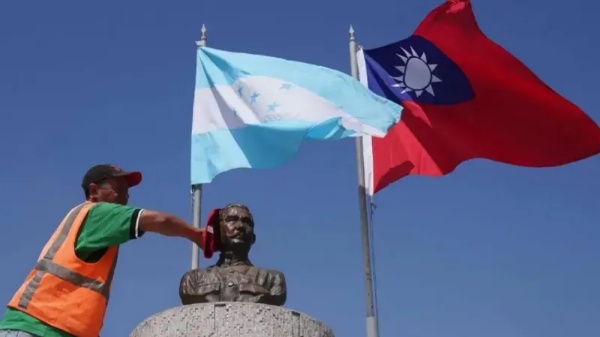
“An important question is how closely this trip will be watched by Honduras, which is mulling switching diplomatic relations back from Beijing to Taipei,” Smith said.
Honduras — which recently elected its new President Nasry Asfura — is reconsidering its diplomatic position after previously recognizing the PRC. Asfura had pledged during his campaign to restore ties with Taiwan.
The United States and its allies are reportedly supporting efforts to rebuild Honduras-Taiwan relations, signaling broader geopolitical competition over diplomatic recognition in the region.
Honduras has yet to appoint a new ambassador to Beijing following a recent government transition, the Taipei Times reported.