News analysis by Kung Hsiang-sheng
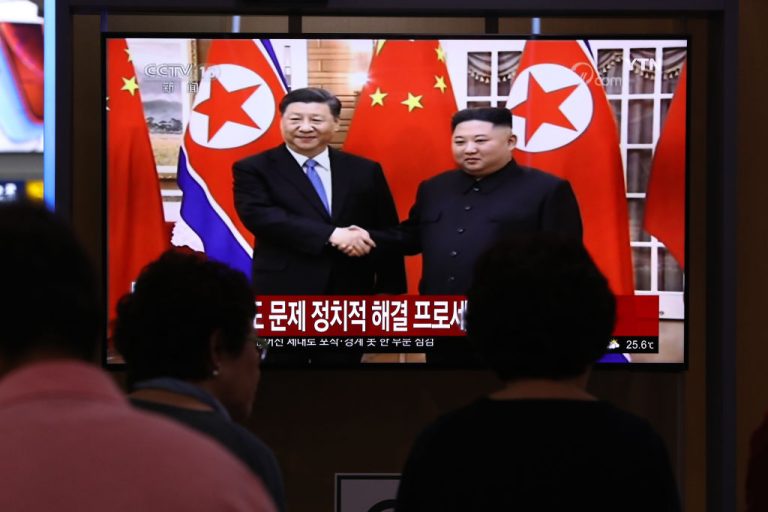
The May 14–15 summit in Beijing between U.S. President Donald Trump and Chinese leader Xi Jinping received close scrutiny in Tokyo, where officials were focused less on trade announcements than on the implications for Washington’s stance on Taiwan’s security, semiconductor export controls, and the future of the U.S.-Japan alliance.
Trump arrived in Beijing accompanied by several prominent technology executives, including Elon Musk and Jensen Huang, as reported by Reuters and other outlets. The makeup of the entourage underscored the summit’s economic and technology agenda. Ahead of the trip, U.S. officials also indicated that Taiwan and Iran would be discussed.
Taiwan stood out as a central issue for Japan, given the strategic importance of the island, which Communist China claims as part of its territory.
Pre-summit diplomacy aimed at avoiding surprises
Tokyo’s efforts to stay informed began before the summit opened. U.S. Treasury Secretary Scott Bessent visited Japan from May 11–13 for meetings with Prime Minister Sanae Takaichi and senior economic officials, The Japan Times reported.
Success
You are now signed up for our newsletter
Success
Check your email to complete sign up
Some economic disagreements surfaced during the visit. Bessent has previously criticized Japanese currency interventions supporting the yen, and Japanese media reported he raised concerns about Tokyo’s interest rate policy during talks with Finance Minister Satsuki Katayama. Japanese officials declined to discuss details publicly.
- Xi Clashed With Trump Over Japan’s ‘Rearmament’ During Beijing Summit: Insiders
- India, Japan Deepen Economic Security Ties With Focus on Semiconductors, Critical Minerals
- Japan’s PM Takaichi Visits Vietnam and Australia, Stresses ‘Free and Open Indo-Pacific’ Amidst Iran Conflict
On strategic matters, however, both sides emphasized cooperation on supply chains, economic security, and concerns over Chinese economic coercion. Japanese media interpreted the visit as an effort by Tokyo to stay in the loop about U.S. positions before negotiations with Beijing began.
That concern reflects Japan’s longstanding sensitivities to shifts in U.S.–China diplomacy. Japanese policymakers have often cited the “traumatic” shock caused by Washington’s rapprochement with Beijing in the early 1970s, when Tokyo was informed only after key U.S. decisions — such as to recognize the People’s Republic of China and back it against the Soviet Union — had already been made.
Taiwan and semiconductor policy remain Japan’s red lines
Taiwan and semiconductor export controls emerged as Tokyo’s primary areas of concern during and after the summit.
Japan has coordinated closely with the United States on restrictions targeting advanced semiconductor exports to the PRC, particularly manufacturing equipment critical to high-end chip production. According to Japan’s Institute of Geoeconomics, Japanese officials sought assurances that Washington would not significantly ease those controls in exchange for concessions from Beijing.
Post-summit statements suggested no major changes to the broader export-control framework. Discussions appeared limited to previously approved export licenses for certain lower-end Nvidia chips already permitted for sale in China.
Taiwan was viewed in Tokyo as the more consequential issue.
The PRC sees “reunification” with Taiwan — the island is formally governed as the Republic of China, which retreated there following its defeat at the hands of communist rebels on the Chinese mainland in 1949 — as non-negotiable, while the Taiwanese authorities reject any unilateral attempt by Beijing to undermine the ROC’s sovereignty.
- Japan Lifts Arms Export Restrictions in Major Post-WWII Policy Shift
- Balikatan 2026 South China Sea Exercises Highlight Growing Indo-Pacific Integrated Deterrence
Since November 2025, Prime Minister Takaichi has emphasized that a military conflict in the Taiwan Strait would pose a direct threat to Japan’s national security, and as such, would justify a Japanese armed deployment to defend Taiwan. Facing heavy pressure from Beijing, the Takaichi administration has strengthened defense planning around Taiwan, while expanding military coordination with the United States and other Indo-Pacific partners.
According to Japan’s NHK World Japan, Takaichi held a 15-minute phone call with Trump aboard Air Force One after the summit concluded. She later said Trump provided a direct briefing on the discussions and thanked Japan for its support, while both sides reaffirmed the “rock-solid, unchanging Japan–U.S. alliance.”
Japanese officials were particularly focused on whether Trump would alter longstanding U.S. ambiguity regarding whether it would back Taiwan should a conflict involving the PRC break out.
Following the summit, Trump said publicly that he does not discuss whether the United States would defend Taiwan militarily. Chinese officials reportedly pressed Washington for clearer assurances that the U.S. would stay out of a Taiwan conflict, but no formal change in American policy was announced.
A Japanese Foreign Ministry official, speaking anonymously, described the outcome as “not surprising” while confirming that Taiwan had been Tokyo’s main concern throughout the summit.
Taiwan arms sales and Japan’s expanding defense role
One issue that drew particular attention in Tokyo was the discussion of a proposed $14 billion U.S. arms sale to Taiwan, which has been delayed amidst comments by Trump regarding his negotiations with the Chinese.
Historically, U.S. arms sales to Taiwan have been governed by the “Six Assurances,” under which Washington pledged not to consult Beijing before making arms transfer decisions. During the Beijing summit, however, the proposed package reportedly became part of the broader U.S.-China discussions.
- Trump’s Warning Against ‘Taiwan Independence’ Seen as Tactical Play in Talks With Beijing: Analysts
- Xi-Putin Summit Underscores China-Russia Push for Multipolar World Order: Reports
Trump later said of the sale: “I may do it. I may not do it,” without confirming whether it would proceed.
For Japanese officials, the fact that Taiwan arms sales became a summit discussion point introduced new uncertainty into Taiwan defense planning and broader Indo-Pacific security calculations.
At the same time, Japan has been expanding its own defense export capabilities. In April 2026, Tokyo revised long-standing restrictions on military exports, allowing Japanese firms to export a broader range of defense equipment, including missiles, warships, and combat aircraft.
While Japan has never supplied weapons directly to Taiwan, analysts say the policy changes could provide Tokyo with greater flexibility if regional security conditions deteriorate or if U.S. support for Taiwan becomes less predictable.
The summit ultimately produced no major public shift in U.S. policy toward Taiwan, semiconductor controls, or China. But for Japan, the meetings underscored how closely developments in U.S.-China relations are tied to its own security planning, particularly as tensions in the Taiwan Strait continue to shape Indo-Pacific strategy.
※ Kung Hsiang-sheng (龔祥生) is an Associate Research Fellow at the Division of Chinese Communist Political-Military Affairs and Operational Concepts, Institute for National Defense and Security Research (INDSR). This article is translated and edited from the original Chinese piece published May 18, 2022, by the INDSR.